Three tips for better communication

The award-winners three tips to improve communication

Three tips for better communication
Ifentra dum furetortius, oca si peris, etil nomen klarum
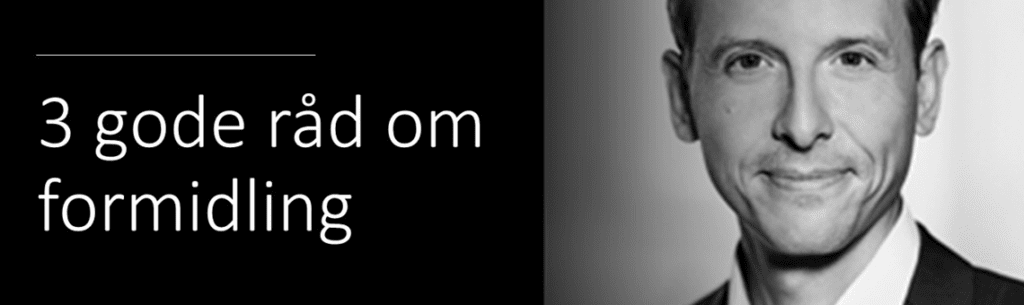
Michael Bang Petersen, recipient of The Research Communication Award 2022, presents his three best tips on how to communicate research.

The media demand short, concise answers from scientists when they participate in interviews. But how do you boil down many years of work and large amounts of detailed knowledge to a few simple messages – without compromising too much of your professionalism?

Professor Michael Bang Petersen from Aarhus University has had ample opportunity to practice exactly that. For the past two years, sometimes almost daily, he has given countless interviews to virtually every media in the country, updating us all on public support for the actions taken by the authorities against corona.

Now Michael Bang Petersen is being honoured for his public information effort with The Research Communication Award 2022, awarded by the Minister of Higher Education and Science Jesper Petersen. The award comes shortly after the Aarhus-based professor was decorated by HM The Queen with a knight’s cross of The Order of Dannebrog.

So, what has the experienced and award-winning professor and member of The Royal Academy learned about communication – and what is his advice to other scientists who want to speak briefly and clearly without violating their professional knowledge?

The Academy of Communication – a major course program under The Royal Academy, where researchers are trained in disseminating their knowledge to the general public – has asked Michael Bang Petersen to give us his three best communication tips.

Generally speaking, he says, it is about being prepared and being conscious of what you are doing:

1. Tell the journalists what to ask

“Often, researchers just answer the questions, they are asked. But you should be aware that you are not only an expert on your own research but also on what the relevant angles are. That is why you must take control of the interview situation. In this way, you can help the journalist to tell the best possible story.”

“Basically, it means that you should not only answer the questions, you are asked, but also answer the questions you should have been asked – as long as you stay within the terms of the interview, of course.”

2. Don’t stop thinking scientifically when you are communicating

“When I am interviewed, I always make sure to refer to some data or other concrete knowledge. You could say that I think in references: ‘There are some studies that show…’”

“This is important for two reasons: First, it ensures that you have support for your statement if you are asked about it in more detail later. Secondly, it forces you to stick to the professional approach.”

3. Acknowledge the uncertainties

“Many people are nervous that they will undermine their own authority if they talk about the uncertainties and unknown factors that are present in most research. They worry that the audience will think: ‘Oh well, he or she doesn’t actually know that’. But that is not the case. In fact, some communication research shows the opposite to be true: If you are open and honest about everything you do not know, it increases your credibility.”

“Of course, you should not just throw out your arms and declare ‘I don’t know’. You must point out what the uncertainty more precisely consists in, how big it is, etc. People can relate to that.”

The Academy of Communication thanks Michael Bang Petersen for the good advice. If you are a researcher and would like to improve your science communication on many different platforms, then the next course will start in the fall of 2022.

Admission criteria and application deadlines for the free offer from The Royal Academy will be announced here shortly.

Bohr’s building blocks: the physician’s success was based on collaboration and practical sense

Interview with Tomas Bohr and Emil Bjerrum-Bohr

Bohr’s building blocks: the physician’s success was based on collaboration and practical sense

Portrait of Tomas Bohr: Dennis van Esch [edited by VS]. Portrait of Emil J. Bjerrum-Bohr: Ola Jakup Joensen / NBI [edited by VS].
Niels Bohr was the architect behind the world-famous Bohr model of the atom in 1913. But which components underpinned the scientist and his genius? We put that question to the physicist’s grandson Tomas Bohr and great-grandson Emil Bjerrum-Bohr when they gave a joint lecture at the Royal Academy on their common ancestor and source of inspiration to mark the annual Research Day (Forskningens Døgn).

By Rikke Reinholdt Petersen

This year it is exactly 100 years since Niels Bohr was awarded the Nobel Prize in Physics. The Royal Academy, of which he was not only a member, but also for several years its president, is taking an active part in celebrating the anniversary. That is why Niels Bohr was the main theme of this year’s Research Day event on April 29.

In addition to a Niels Bohr-inspired tour of the premises on H.C. Andersens Boulevard, three lectures centered around Bohr were on the program. One of them was held by Bohr’s own descendants, grandson Tomas Bohr and great-grandson Emil Bjerrum-Bohr, who talked about the scientist’s influence on their own outlook on life and scientific work. Both have followed in his footsteps as researchers – Tomas as a professor at the Department of Physics at The Technical University of Denmark, and Emil as an associate professor at the Niels Bohr Institute. And according to them, Bohr’s success was far from arbitrary – on the contrary, it was based on some crucial character traits.

A unifying force

– “His great ability to bring people together and stimulate them to do their best” – is one of the qualities that Tomas Bohr mentions first.

And here Emil agrees:

– “It is very important to recognize Niels Bohr’s contribution to the way we think about research collaboration, as in the ‘Copenhagen spirit’, which was essential both for Bohr personally and for the collaboration at the Niels Bohr Institute. Today, that spirit is a source of inspiration to many research environments around the world,” he explains.

Bohr’s interest in and talent for research collaboration was also clearly reflected in his work for The Royal Academy. Together with a small circle of other members, Niels Bohr was instrumental in paving the way for electing a large number of research colleagues as members of The Academy. Many of these were big international names such as Albert Einstein, Max Planck and not least The Academy’s first female member, Marie Curie – thereby drawing dots between them and the Danish research landscape. A research landscape that quickly became much more open, vibrant, and characterized by constructive exchange with people like Bohr at the helm.

In Emil Bjerrum-Bohr’s opinion, one of the most important lessons Niels Bohr left us with is the willingness to collaborate and the premise that “debating with others is a good thing”. And he also mentions the understanding that “problems can be viewed from many angles, and that the entirety of a problem may be complex”.

Bicycle mechanic and wordsmith

Due to the enormously abstract issues that Niels Bohr dealt with in his research, it is easy to imagine him as a person who was always on a higher intellectual plane. But like Bohr’s own motto that “opposites are complementary”, he was also made of a more complex material.

– “Something that surprised even me about Niels Bohr was his practical sense, which was also important in his work. He liked to take mechanical things apart and repair them, and I know for one thing that he repaired his aunt, Hanna Adler’s three-wheeled adult bicycle when it broke,” says Emil about his great-grandfather.

In fact, this lesser-known love of mundane tasks and simplicity in other contexts of life is something that Tomas Bohr has been inspired by in his own research. According to Tomas, being able to simplify his results as much as possible and at the same time make them as general as possible is a key to good research.

In addition to the surprising practical skills, an image emerges when the family talks about Bohr of a warm and friendly family man:

– “One of his favorite expressions, perhaps especially in connection with us at times silly grandchildren, was that we were ‘giggling gaga’,” recalls Tomas, who was able to enjoy his grandfather’s company for a good part of his childhood.

Like Niels Bohr, Tomas is a member of The Royal Academy. So was Tomas’ father, Aage Bohr, and great-grandfather, Christian Bohr – that is, Niels Bohr’s father. Emil Bjerrum-Bohr is a former member of The Young Academy, which is part of The Royal Academy.

Read more about their lecture and the rest of the program for The Research Day here.

Quantum physicist receives H.M. Queen Margrethe II’s Science Award

Quantum physicist receives H.M. Queen Margrethe II’s Science Award

Photo: Lars Svankjær / Royal Academy
Peter Lodahl, Professor of quantum physics and quantum technology at the Niels Bohr Institute and Director of the Danish National Research Foundation’s Center for Hybrid Quantum Networks, is the recipient of this year’s Science Award from The Royal Academy for his pioneering basic research in experimental quantum optics.

On May 11, it is the 7th time that HM The Queen will present her Science Award. Founded by The Royal Academy, the award this year goes to the internationally renowned quantum physicist Peter Lodahl. He is Director of Hy-Q, Center for Hybrid Quantum Networks, and Group Leader of The Quantum Photonics Group, and he has conducted landmark research in the field of quantum optics, including the atom-photon interaction in solids. Lodahl has built up a large experimental research group that explores and develops completely new quantum hardware and has introduced a new research area to Denmark.

Lodahl is enormously honored by the award, but in the same breath emphasizes that experimental quantum physics is based on a team effort:

– “It is a great honor and joy to receive HM Queen Margrethe II’s Science Award. I perceive it as an amazing recognition of all the deeply dedicated, talented and original students, researchers, and colleagues with whom I have had the pleasure of exploring quantum physics,” says Peter Lodahl.

Lodahl’s research group is among the leaders in the world in a highly competitive field. This is partly due to the great breadth of the group’s work, including both fabrication, optical experiments, and theory.

– “Peter Lodahl’s research group has delivered many excellent results, most recently a deterministic one-photon light source able to implement a quantum algorithm that cannot be solved by even the largest of modern supercomputers. And as a supervisor and mentor, Lodahl has also helped build bridges and pave the way for a large number of other talents. It is quite incredible when you consider that just 17 years ago his research group started a completely new research area in Denmark. That is why Peter Lodahl is a very worthy recipient of HM Queen Margrethe II’s Science Award,” remarks Marie Louise Nosch, who as president of The Royal Academy has been involved in nominating Lodahl as the recipient of the award.

Queen Margrethe II’s Science Award will be presented by HM The Queen to Peter Lodahl at a ceremony at The Royal Academy on Wednesday, May 11, 2022.

Contact details

For press-related questions, please contact Royal Academy Communications Consultant Rikke Reinholdt Petersen at rp@royalacademy.dk or telephone +45 31 25 80 60. For questions regarding the event please contact academic staff member Birgit Olsen at bo@royalacademy.dk or telephone +45 31 49 06 02.

About Peter Lodahl


Lodahl has supervised 34 postdocs, 30 PhD students and even more MSc students. He has also published many highly cited articles as the lead author in journals such as Nature, Science and Physical Review Letters, and often participates as a speaker at international conferences. Lodahl has previously been awarded two ERC grants, a Center of Excellence grant from the Danish National Research Foundation and most recently, in 2021, a Novo Nordisk Challenge grant. Lodahl is also the recipient of the EliteForsk Award for 2016, and in 2015 he was the youngest Danish recipient of an Advanced Grant from the ERC. With his eye for putting research to practical industrial use, Peter Lodahl also founded the company Sparrow Quantum in 2016, and has so far obtained 6 patents in photonic quantum technology.

About HM Queen Margrethe II’s Science Award


The prize of DKK 100,000 is awarded once a year to an excellent Danish researcher under the age of 50, whose research is conducted within the sciences represented by The Royal Academy. The award was instituted by The Royal Danish Academy of Sciences and Letters in 2015 to mark the 75th birthday of the Academy patron, HM Queen Margrethe II. It is therefore awarded close to HM The Queen’s birthday. The award recipient is appointed by The Academy’s Presidium on the recommendation of Academy members. Previous award recipients are Lisbeth Imer, Anja Groth, Marie-Louise Nosch, Morten Heiberg, Bo Brummerstedt Iversen and Jens-Christian Svenning.

New members of the Royal Academy

Elected in 2022: The class of Natural Sciences

New members of the Royal Academy

The Royal Academy recently elected 15 new members for its Class of Natural Sciences. As of May 2022, the following scientists have been admitted:

National members: 

Associate Professor Eline Lorenzen, the GLOBE Institute, University of Copenhagen

Professor Leif Katsuo Oxenløwe, Department of Photonics Engineering, Technical University of Denmark

Adjunct Professor and Zoological Director Mads Frost Bertelsen, Copenhagen ZOO

Professor Merete Bilde, Department of Chemistry, Aarhus University

Professor N. Asger Mortensen, Mads Clausen Institute, University of Southern Denmark

Professor Ronnie Nøhr Glud, Department of Biology, University of Southern Denmark

Professor Signe Normand, Ecoinformatics & Biodiversity, Department of Biology, Aarhus University

Professor Susanne Bødker, Department of Computer Science, Aarhus University

Professor Tine Jess, Department of Clinical Medicine, Aalborg University

International members:

Professor and Director General Edith Heard, European Molecular Biology Laboratory

Professor Jan Hesthaven, École Polytechnique Fédérale de Lausanne

Professor Melissa Little, Novo Nordisk Foundation Center for Stem Cell Medicine, reNEW Copenhagen, University of Copenhagen

Professor Rasmus Nielsen, Department of Integrative Biology and Statistics, University of California, Berkeley

Professor Serge Belongie, Department of Computer Science, University of Copenhagen

Professor Staffan Persson, Department of Plant and Environmental Sciences, University of Copenhagen

The next election of members will take place in 2023, when the Royal Academy will elect new members for the Humanities and Social Sciences Class.

Please direct any questions regarding election procedures etc. to Program Consultant Trine Hagerup at th@videnskabernesselskab.dk or +45 3149 2316. 

New ALLEA report

New ALLEA report

The academic system is not exempt from imperatives to transition to climate sustainability, new report from European Academies claims

Fahroni / Shutterstock
A new ALLEA report delves into academia’s impact on the climate through its own operations from the perspective of various stakeholders that play a key role in shaping the academic system. The report goes on to make a series of tailored recommendations to mitigate detrimental effects.

5. May 2022. In a new report published today, ALLEA, the European Federation of Academies of Sciences and Humanities, examines the academic system’s negative impact on the climate through its own activities. The report takes a comprehensive outlook on the operations of various stakeholders and suggests that significant changes are necessary for the academic system to reach climate sustainability.

The report, prepared by ALLEA’s Working Group Climate Sustainability in the Academic System, stresses that in order for the academic system to transition to climate sustainability, “a change in culture is required, where individuals and institutions become aware of their climate impact and act to reduce it.”

The authors evaluate the operations of different actors that jointly set the standards and framework conditions of the academic system, namely Universities; Research Institutes; Students; Individual Academics; Funding Organisations; Conference Organisers; Ranking Agencies; Policy Makers; and Academies, Learned Societies and Professional Bodies.

By analysing available data on greenhouse gas (GHG) emissions, the report shows that air travel is one of the major GHG contributors within academia, and therefore virtual interactions will be critical for the academic system to become more sustainable.

“We envision in-person, hybrid, hub-based and fully virtual events to coexist in the future, with a careful choice of format depending on the goals and participants of a given event,” the authors conclude.

The report also emphasises that other sources, such as supercomputing, buildings, electricity, and supply-chain emissions, may be equally or sometimes even more important emission sources than air travel, depending on the sector.

Finally, the report provides a series of best-practice examples and concrete recommendations that could lead to a significant reduction in the levels of GHG emissions that the academic system produces every year.

Download the report here.

About this Report

This report has been prepared by ALLEA’s Working Group Climate Sustainability in the Academic System. Led by its member Die Junge Akademie (German Young Academy), the project lays out a proposal for a sustainable transformation of academia that is deliberated, balanced and accounts for all relevant perspectives such as to meet the challenge of a climate sustainable academia without leaving excellence in research behind and without diminishing international exchange and collaboration in academia.

Through its Working and Expert Groups, ALLEA provides input on behalf of European academies to pressing societal, scientific and science-policy debates and their underlying legislations. With its work, ALLEA seeks to ensure that science and research in Europe can excel and serve the interests of society.

The press release showed above was issued by ALLEA on 5. May 2022

Regenerative agriculture: healthy soil best bet for carbon storage

Press release from EASAC

Regenerative agriculture: healthy soil best bet for carbon storage

Iryna Imago / Shutterstock
Agriculture is the main driver of global deforestation and land conversion, and food systems account for more than a third of global greenhouse gas emissions, making it a major contributor to climate change. A new report by Europe’s National Academies of Sciences (EASAC) provides evidence that a transformation to regenerative agriculture holds promising keys to reducing climate risks while providing the growing world population with food and enhancing biodiversity.

Agriculture is the main driver of global deforestation and land conversion, and food systems account for more than a third of global greenhouse gas emissions, making it a major contributor to climate change. A new report by Europe’s National Academies of Sciences (EASAC) provides evidence that a transformation to regenerative agriculture holds promising keys to reducing climate risks while providing the growing world population with food and enhancing biodiversity.

– “Transforming agriculture is the planet’s greatest untapped treasure for coping with the climate crisis. Today’s large-scale conventional agriculture has huge negative impact on soil. Soil erosion, the loss of flora and fauna and thereby nutrients in soils, has become a major factor in Europe,” explains Prof. Thomas Elmqvist, one of the lead authors of EASAC’s first-time scientific analysis of the potential of regenerative agriculture. The report shows that restoring biodiversity in soils, particularly in grasslands can dramatically increase their capacity to capture and store carbon.

“Sawing off the branch we’re sitting on”

While being responsible for a third of global carbon emissions, agriculture is extremely vulnerable to the effects of climate change, such as shifts in temperature and rainfall. More and more farmers, and particularly the smallholders that produce about a third of the world’s food, are struggling with harvest and livestock losses while trying to adapt to the increasingly irregular weather conditions caused by a changing climate.

– “We are literally sawing the branch that we are sitting on,” says Orsolya Valkó of Hungary’s Institute of Ecology and Botany.

Need to protect scale of food production

– “There seems to be a belief that regenerative agriculture can only be applied at small scale, and that making any changes to current industrial farming practices will make it impossible to feed a growing world population”, explains Prof. Thomas Elmqvist.

– “But the opposite is true: we have maybe a decade for a massive transformation. We need to get industrial farmers on board and take a landscape perspective to reach the goals. Ultimately, we can only protect the scale of food production by moving away from only emphasizing quantity of agricultural production to more quality and nutritional value of agricultural products.”

No contradiction to modern plant and animal breeding technologies

EASAC’s results demonstrate that many of the analyzed practices show synergies between carbon capture and storage and enhancing biodiversity, while not having large negative effects on food production in the long term. The scientists underline that regenerative agriculture does not contradict the use of modern plant and animal breeding technology, tilling, use of mineral fertilizer or pesticides. Instead, it aims for a limited, more targeted use. The use of chemical pesticides, for example, can be reduced by using biological alternatives, employing gene-edited crops that are pathogen-resistant, or even introduction of predators.

Most potent carbon capture storage on the planet

Regenerative agriculture can take large amounts of CO2 out of the atmosphere and tie it back into the soil.

– “We are literally standing on the largest and most potent carbon capture storage of the planet,” Orsolya Valkó says.

– “Many field tests show how high the soil’s storage performance is. If we want not only to preserve biodiversity, expand food production and at the same time fight climate change, there is no alternative to regenerative agriculture!”

Insufficient implementation of EU’s Biodiversity and Farm-to-Fork Strategies

EASAC recommends that regenerative agriculture should be prioritized by Member States when implementing the new Common Agricultural Policy. This includes more diversification within and among crops, introduction of permanent and perennial crops, expanded agroforestry and intercropping, keeping green plant cover on all farm fields during all seasons, and reduced tillage.

EU and national governments must sharpen their instruments

The report welcomes the European Union’s Biodiversity and Farm-to-Fork Strategies as steps in the right direction but underlines that governments have done little so far to implement them.

– “We need sharp policies and sharp economic instruments,” says Elmqvist. “Targeting the farm scale is insufficient. Financial schemes should also benefit communities and associations of farmers managing landscapes in a coordinated way.”

Christian Bugge Henriksen from the University of Copenhagen has examined the report and has one significant comment: “Regenerative agriculture with the integration of trees and perennial crops will contribute to carbon storage and increased biodiversity, but only if we simultaneously reduce our consumption of animal foods and make a change to a more plant-based food system. Unfortunately, this is not clearly stated in the report.”

Read the full report from EASAC here.

Contacts:


Prof. Thomas Elmqvist

Stockholm Resilience Centre

E-mail: Thomas.elmqvist@su.se

Phone: +46 70 52 64 806


Orsolya Valkó, DSc

Research Group Leader

‘Lendület’ Seed Ecology Research Group

Institute of Ecology and Botany

Centre for Ecological Research

E-mail: valko.orsolya@ecolres.hu

Phone: +36-30-519-0316


Christian Bugge Henriksen

Associate Professor

Section for Crop Sciences

University of Copenhagen

E-mail: cbh@plen.ku.dk

Phone: +45 35 33 35 75

A scientific journey into historical monarchies

Symposium to mark the Golden Jubilee of Her Majesty Queen Margrethe II

A scientific journey into historical monarchies

At a symposium at the Royal Academy on 24 February, 14 researchers offered their historical, cultural, and literary interpretations of history’s great monarchies. The occasion marked the 50th anniversary of the accession of Queen Margrethe II, and as Patron of the Royal Academy, the Queen attended a number of the lectures.

By Rikke Reinholdt Petersen

“We put together a program that reflects the breadth of the Royal Academy’s scientific profile – offering perspectives on monarchies from the viewpoint of the humanities, social sciences, theology, law, and natural science. We covered both historical and ancient monarchies as well as today’s modern monarchies to show how the monarchical institution is a part of its own time”, explains President Marie Louise Nosch, who organized the symposium together with editor Marianne Pade.

And it was indeed a royal program in the most literal sense thanks to H.M. Queen Margrethe’s participation in the symposium titled ‘Monarchies’. With contributions from as many as 14 researchers from very different scientific fields, the Royal Academy presented a broad array of perspectives on the multitude of kings and queens of the past and the many forms, monarchies have taken over time.

“The day was a success. It featured a wide range of stimulating lectures on topics ranging from ancient Egypt to the kingdoms of the 20th century, from linguistic studies and studies of conceptual history to insights from the natural sciences, and from Dante to Grundtvig. Her Majesty the Queen participated in the symposium throughout the afternoon, where several of the lectures were about female rulers”, says Royal Academy editor Marianne Pade.

The speakers and topics as well as photos of the event are shown below.

Photos: Lars Svankjær for The Royal Academy of Sciences.

Symposium on monarchies


– marking the 50th anniversary of the accession of
Queen Margrethe II of Denmark

24 February 2022 from 9.40 am – 6.45 pm


Marianne Pade: Why are we talking about monarchies?


Marie Louise Nosch: Royal Costume of Ancient Greece (Canceled)


Vincent Gabrielsen: From Alexander the Great to Emperor Augustus: The Hellenistic monarchies and the foundation of the European monarchy


Rubina Raja: Caesar and his forum: Once upon a time there was a “king”


Mette Birkedal Bruun: The private monarch: Exhibited seclusion in the 17th century


Marita Akhøj Nielsen: Absolute monarchy through the eyes of a baroque poet – Jens Steen Sehested’s poems to Christian 5.


Jes Fabricius Møller: Grundtvig’s kings


Mogens Pelt: The Greek monarchy under the house of Glücksborg


Kim Ryholt: Being a female regent in Ancient Egypt: Hatshepsut, Nefertiti and Tawosret


Karen Skovgaard-Petersen: Margaretica


Lene Schøsler: The language of a king’s daughter. Leonora Christina’s French autobiography of 1673


Helge Stjernholm Kragh: The king as a symbol and reality in early science


Jørgen Møller: “The king is dead, long live the king”: Successions and political conflict in European monarchies, 1000-1800


Speakers at the following members’ meeting:

Gunner Lind: Friendships of Danish kings and the function of the monarchy, before and during the age of absolute monarchy


Ditlev Tamm: Dante’s Monarchy

“Look before you leap”

Press release from EASAC

“Look before you leap”

Rich Carey / Shutterstock
European Science Academies Caution against Subsidies for Bioenergy with Carbon Capture and Storage (BECCS)

As the European Union is discussing new legislation to certify carbon removal technologies, European Science Academies sound the alarm that billions of taxpayers’ money will go to technologies that risk not to deliver on their promises.

– “There is an assumption that Bioenergy with Carbon Capture & Storage (BECCS) can remove gigatons of CO2 from the atmosphere. But policymakers should look before they leap. The actual potential of BECCS highly contrasts with the prominent role it takes in many scenarios,” explains Prof. Michael Norton, EASAC’s Environment Programme Director.

A new Commentary on “BECCS and its role in integrated assessment models”, looks at the latest evidence on the ability of BECCS to deliver substantial net removals of CO2 from the atmosphere. It shows that the models which point to BECCS as a preferred negative emissions technology to deliver on climate targets may contain weaknesses that are well-hidden.

– “Many models ignore the fact that different feedstocks have different carbon payback periods, mistakenly considering that all bioenergy is carbon-neutral. But as much as there are differences in carbon content between different fossil fuels, there are significant differences in the climate impact of bioenergy depending on its origin,” explains Norton.

The Commentary also finds that BECCS may be over-emphasized in models for several reasons. One is because climate modelling tools assume high discount rates that favor deferring investments into the future (rather than spending now on more emission reductions). In addition, cost minimization models may have difficulty in anticipating the rapid reductions in other renewable energy costs.

– “Banking on future technologies such as BECCS to compensate later for inadequate emission reductions today places significant risks on future generations. Policymakers tend to assume that BECCS will not only be able to massively remove carbon from the atmosphere but will also be technically and economically feasible. However, on current evidence, BECCS projects should be of limited scale, all feedstocks provided locally and feedstock carbon payback times should be very short,” says Norton.

In addition, many scenarios for BECCS assume that unrealistic quantities of biomass will be available.

– “If we look at the science, there is a significant gap between the assumed biomass use and the quantities available that are sustainable and do not conflict with higher value uses such as food production, ecosystem retention, environmental and social constraints as well as increased demands for other uses. This gap is sometimes as high as 60 percent,” says Prof. Lars Walloe, Chair of EASAC’s Environment Steering Panel.

William Gillett, EASAC’s Energy Programme Director, adds: “We do not argue that BECCS can never become an option. But until the underlying assumptions regarding the availabilities and carbon payback periods of different biomass feedstocks used in integrated assessment models have been refined, and the benefits and feasibility of BECCS are proven, the EU and national governments should not be offering subsidies.”

Norton concludes: “Assuming carbon neutrality for BECCS and over-estimating the short-term impacts means that we are deluding ourselves. But by increasing the risk that temperatures will overshoot critical tipping points, we might soon discover that no good deed goes unpunished. If for example Europe’s biggest power stations, that rely on imported wood pellets, were adapted to BECCS, this is most unlikely to deliver any negative emissions after all the carbon leakages to the atmosphere have been considered. Instead, it would just cement in place an unsustainable energy system.”

The danger remains that BECCS will be offered to policymakers as a climate solution to avoid the more politically challenging mitigation options. To avoid this, EASAC strongly argues for national and international targets to formally separate any Carbon Dioxide Removal (CDR) targets and emissions reduction targets in their climate strategies, so that any CDR is treated as additional to emissions reduction.

To resolve the perverse incentives that the EASAC analyses have identified, the Commission should build on its cascade guidance for the use of our limited supply of sustainable forests to prioritise high value uses, and not to subsidize lowest priority uses for energy or BECCS that do little to help mitigate climate change.

This press release is written and issued by EASAC on February 27th. Click here to read the full commentary on EASAC’s home page.

The Royal Danish Academy of Sciences and Letters is a member of EASAC. For further information on the Academy’s international relations, please click here.

The Royal Academy supports statements from ALLEA, ISC, IHRN and UAI on Ukraine

All European Academies, International Science Council, International Human Rights Network of Academies and Scholarly Societies, and Union Académique Internationale on the war in Ukraine

The Royal Academy supports statements from ALLEA, ISC, IHRN and UAI on Ukraine

Gagodesign / Shutterstock
The organizations ALLEA, ISC, IHRN, and UAI have recently released statements in response to the ongoing military incursion by Russia into Ukraine. The statements express a deep concern for the safety of the country, its citizens as well as for the research and academic community in Ukraine.

The Royal Danish Academy of Sciences and Letters supports the latest statements from the organizations ALLEA (All European Academies), ISC (International Science Council), IHRN (International Human Rights Network of Academies and Scholarly Societies), and UAI (Union Académique Internationale) on the war in Ukraine.

– Click here to read the statement issued by ALLEA on the 25th of February

– Click here to read the statement issued by ISC on the 28th of February

– Click here to read the statement issued by IHRN on the 3rd of March

– Click here to read the statement issued by UAI on the 7th of March

As a scientific academy, the Royal Danish Academy of Sciences and Letters is a member of both All European Academies, International Science Council, International Human Rights Network of Academies and Scholarly Societies, and Union Académique Internationale. Click here to read more about our international collaborations and relations.

Click here to see a notice board on different initiatives to help students and scholars in Ukraine.