Join the Academy of Science Communication 26/27 – English programme

CALL FOR PARTICIPANTS: Join the Academy of Science Communication 26/27

Join the Academy of Science Communication 26/27 – English programme

The Communication Academy is simultaneously a training programme, a public engagement initiative, and a network for researchers who want to improve their communication skills and take a significant, active step into the public spotlight with their academic expertise in hand. The aim is to create more—and better—science communication in Denmark

About the Communication Academy
The Communication Academy aims to create a community with a constant focus on fostering new, meaningful connections between research and society. For this reason, you will remain a member of the Communication Academy even after the course programme ends—and we expect that, as a member, you will participate in the Academy’s activities in the years to come.

The Communication Academy is built around a range of course programmes, where participants can choose between a short online course or a longer, intensive programme with in-person attendance.
The course director is science journalist and communication trainer Peter Hyldgård. At each course session, one or more of the country’s leading experts and media professionals will also contribute, bringing specialist knowledge related to the topic at hand.

Here you can apply for admission to the longer, intensive programme in English with in-person attendance (November 2026 – May 2027).

Course content
During the course, you will meet some of Denmark’s most skilled journalists and communication professionals, who will teach and provide individual feedback on everything from public talks to social media posts.

Over the span of seven full course days, supplemented by short online sessions, you and the other participants will work with various formats such as articles, videos, presentations, social media, and media relations.

You will also develop a strategy for how science communication can fit into a busy scientific research career. Between sessions, you’ll complete practical exercises with personalized feedback.
In addition to the scheduled sessions, you will work on communication tasks between course dates – such as writing a popular science article, giving a public talk, filming a video, and maintaining an active presence on social media.

It is therefore important that you can set aside time both to attend all sessions and to complete the tasks during the programme – including providing feedback to your fellow participants on their work.
We estimate the total time commitment for each participant at approximately 20 working days over the seven-month period.

Teaching staff
Digital public affairs adviser Benjamin Rud Elberth; science communication coach and consultant Peter Hyldgård; actor Nastja Arcel; Holly Squire; editors from Videnskab.dk; and others.

Time and place
Modules run during winter and spring 2026–2027. Teaching is organised as a hybrid of in-person and online sessions. Dates are as follows:

In-person sessions:

  • Tuesday 8 December 2026, 10:15–17:00
  • Wednesday 9 December 2026, 09:00–16:00
  • Tuesday 2 February 2027, 10:15–17:00
  • Wednesday 3 February 2027, 09:00–16:00
  • Tuesday 13 April 2027, 10:15–17:00
  • Wednesday 14 April 2027, 09:00–16:00
  • Week 17: Talks and outreach activities during the sci-com festival Forskningens Døgn
  • Tuesday 25 May 2027, 10:15–20:00

Online sessions:

  • Tuesday 17 November 2026, 16:00–18:00
  • Tuesday 19 January 2027, 16:00–18:00
  • Tuesday 9 March 2027, 16:00–18:00
  • Tuesday 4 May 2027, 16:00–18:00

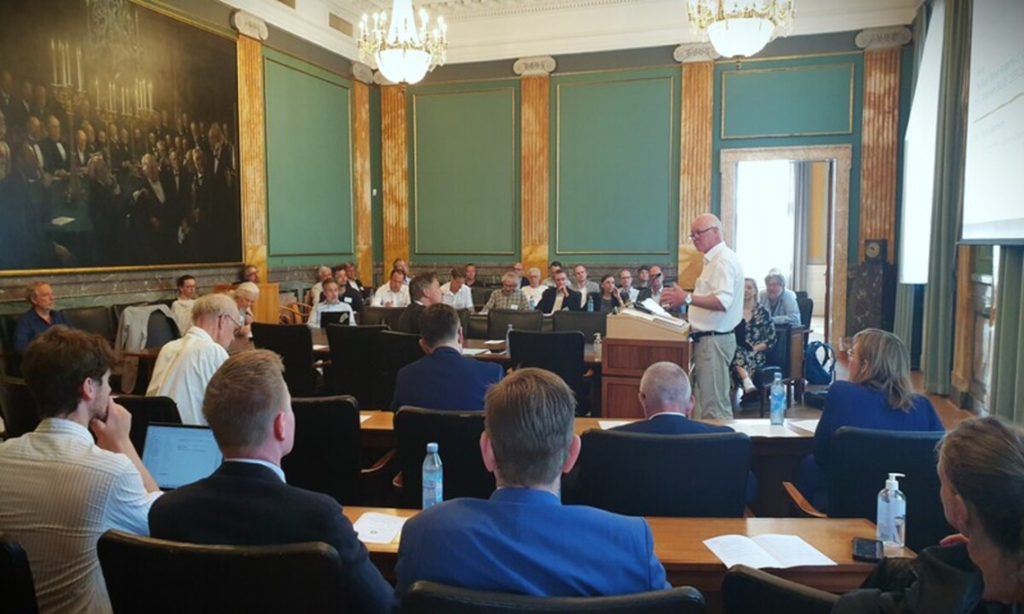
In-person course days will, as a rule, take place at the Royal Danish Academy of Sciences and Letters in Copenhagen, with a small number of off-site visits.

You must be able to take part in the “Book a Researcher” initiative during the national Festival of Research (Forskningens Døgn), held in Week 17 of 2027 (26-30 April).

Admission criteria and expectations
The Academy of Science Communication is free of charge and open to researchers from all scientific disciplines. This particular programme is aimed at researchers in Denmark who do not speak Danish as their first language, but who wish to communicate with the Danish public.

The teaching will therefore be conducted in English, and the programme aims to equip you to communicate in either English or Danish with Danish media and platforms.

All applicants must meet the following criteria:

  • You hold a position at Assistant Professor level or above (or equivalent) and have a solid research profile.
  • Experience with research-based teaching or similar is an advantage.
  • You are passionate about science and envision a future within the research community.
  • You may be employed at a university, a private research company, or a communication institution such as a museum. Membership of the Royal Danish Academy of Sciences and Letters is not required.
  •  You have gained some initial, first-hand experience with science communication.
  • You are motivated to engage in dialogue with the public.

In addition, we expect you to participate actively in all aspects of the Academy — not only on course days, but also through preparation and concrete communication activities throughout the programme.

You should only apply if you are genuinely committed and able to invest both your time and energy in the project. We also expect that, as an alumnus, you will continue to engage in the Academy’s activities in the years to come and act as an ambassador for science communication within your research environment.

In return, we offer what is likely the most comprehensive training in scientific research communication in Denmark, along with access to a unique network of skilled science communicators.

Note: It is possible to apply as a postdoc if you have a particularly strong scientific research profile and extensive experience, and if you are likely to contribute actively to science communication in Denmark through a future scientific research position. This option is most relevant in fields where permanent positions such as Assistant Professor or tenure-track roles are relatively difficult to obtain. All else being equal, and within the same discipline, researchers in permanent positions will be prioritized over postdocs.

Contact

For questions regarding the course, please contact:
• Course Coordinator Johanne Holm at jh@kdvs.dk or by phone at +45 31 55 52 02
• Course Director Peter Hyldgård at ph@kdvs.dk or by phone at +45 20 87 77 56.

You are also welcome to reach out if you or your institution are interested in collaborating with the Academy of Science Communication on developing science communication and training initiatives at a department, faculty, or similar setting.


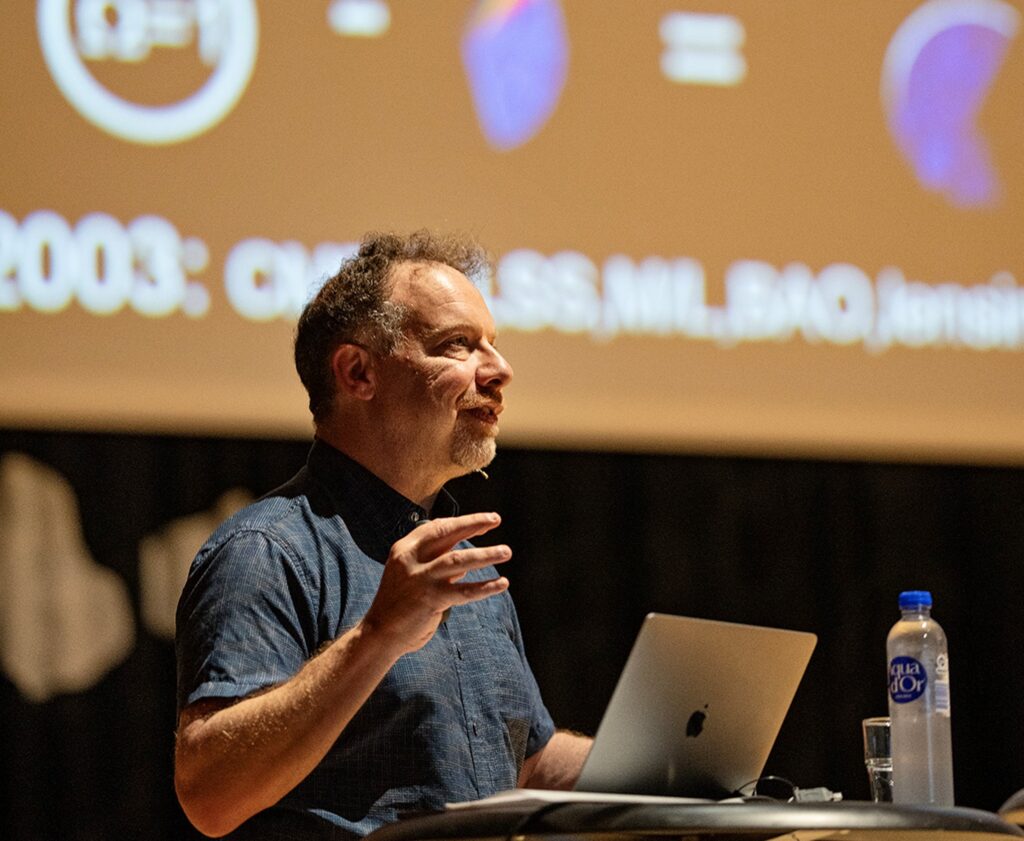
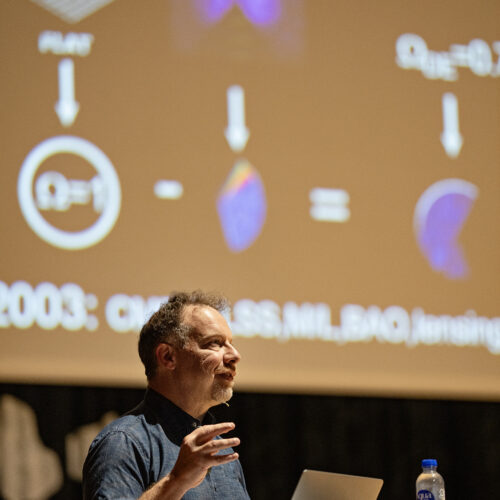
Foto: Kristoffer Szilas, Curator and Associate Professor of Petrology, University of Copenhagen. Joined the Academy of Science Communication i 2021-2022.

How to apply

Your application must include:

  • A motivated application letter (one A4 page) that addresses the purpose of the Academy and the admission criteria (PDF)
  • A short video (max. 3 minutes) in which you explain how — drawing on your field — you can contribute to improving public debate or science communication more broadly.
  • Attachments: CV including any international stays and grants (max. one page) + publication list (combined in a single PDF).

Applications will be assessed by a committee under the Royal Danish Academy of Sciences and Letters. We aim to assemble a diverse cohort across disciplines, geography, age, and gender.

You will receive a decision on your application by the end of August.

Application deadline: 14 th of June 2026

Apply now search

You, me and science: How artificial intelligence is changing our everyday lives

KnowledgeCreates (VidenSkaber)

You, me and science: How artificial intelligence is changing our everyday lives

Audience bathed in blue light at the grand finale at Aarhus University. Photo: Søren Kjeldgaard
Artificial intelligence (AI) has been around for seventy years but within the last two years ChatGPT has become a universal plaything. As a result the KnowledgeCreates project has involved 36 researchers and 8,000 people in analysing what happens when AI becomes our reading companion, doctor and judge. Explore the podcast, videos and articles below to learn more about what they discovered and what new questions were asked.

By Ghita Nidam Møller

The far-fetched idea of a dystopic future with AI has been discarded. And forget about a boycott because AI is here to stay. In fact, it has already been around for seventy years, which means a wealth of experience exists and there’s an abundance of world-class researchers in the field.

Thirty-six of these scientists toured Denmark in 2024, inviting people to participate in the KnowledgeCreates project to provide a collaborative meeting place guided by one overarching question: How is AI changing our society?

Countless opportunities and challenges have arisen since ChatGPT shook the world in 2022 and made AI public property. In one fell swoop, everything we thought possible was put on standby, a lurking vision of our worst nightmares and most amazing dreams imposed on us once the internet first became commonplace.

Is it cheating or learning, for example, if students only understand the curriculum after AI has proffered a helping hand? Is it a good or a bad thing if AI can flex its muscles to wade through public sector issues and make protracted waiting times a thing of the past? What factors drive the conversation and decision making? What biases prevail when we, almost unnoticed, invite tech giants and chatbots into our legal system, healthcare, love lives and classrooms? In other words, what do we gain and what do we lose?

It is not a zero-sum game. That’s why KnowledgeCreates has scrutinized everything we know and don’t know in a series of workshops, debates, articles, videos and podcasts. The common denominator is that science challenges and addresses the opportunities and fears that have arisen, with concrete issues pushing and pulling at science regarding office work, hospitals, courtrooms, family and our unavoidable digital companion, the public sector MitID system.

This dynamic is quite unique, asserts Associate Professor of Philosophy Sune Hannibal Holm, PhD, Department of Food and Resource Economics at the University of Copenhagen. Holm tried out the workshop format with volunteers at Mino Danmark, an interest group that works to improve opportunities for minority ethic Danies and to give them a stronger voice and participation in society.

“For me, the group was highly relevant to the work I do but one that I rarely meet in my daily work. The setup was incredibly valuable,” Holm says, emphasising that it provided a completely new form of interaction compared to traditional presentations. He adds that:

“You don’t often see this format. It worked well that, as a researcher, you were able to follow first-hand what the participants were talking about.”

This is how solutions and answers are jointly created but, just as importantly, how new questions are raised. This approach can be rewarding for all kinds of researchers, which is why Holm ardently recommends that everyone try it.

The finale: KnowledgeCreates is also a community

AI is there on our screens but KnowledgeCreates gathered participants virtually and face to face to discuss how people spend time together digitally and physically. From the towns of Aabenraa, Odder and Randers to the cities of Odense, Aarhus and Copenhagen, 36 researchers and over 8,000 people listened, played and discussed what AI has to offer. Much of the material has been stored and is freely available in our articles, podcasts and videos.

Join us, for example on a tour of various scientific disciplines ranging from computer science and language technology to art, psychology and traffic research. We’ll take you behind the scenes of an experimental space that showcases current issues and the most extreme situation where robots, deepfakes and algorithms replace our legislators, judges, doctors, teachers and artists.

Everything came together at the grand finale, which took place in two of Aarhus University’s main auditoriums, . Susanne Ditlevsen, president of the Royal Academy, conjured the spirit of the season and warmed up the stage for the final inputs from nine researchers in this round. Professor of Geosciences and Natural Resource Management Rasmus Fensholt talked about trees – or rather, he emphasised how AI can monitor whether buying carbon credits has a positive effect on the number of trees in the world. Luckily, he also elaborates on this in our podcast, where he and Professor Christian Igel unite computer science and natural science to address the issue of whether AI can save mother nature. Big gaping pitfalls exist but opportunities also abound.

All this can make your head spin, which is why KnowledgeCreates has enjoyed the presence of “The Neverending Story”, an art installation and interactive storytelling universe that communicates about AI. “The Neverending Story” has travelled with KnowledgeCreates workshops across Denmark, giving participants the opportunity to experiment with AI and contribute to one long, vibrant story told in text and images. From start to finish participants have become the co-authors of a story with today’s star of science: AI.

“The images that the model created as we tried to continue to write the story were impressive. It was incredibly interesting when we changed the parameters, and also fun and fantastic to learn about AI while playing with it,” says Vagn Niss, IT coordinator of the DaneAge Association, who left his mark on the story at the workshop in Hjallese.

This experience and co-ownership continue Science Museums as part of the “World Images” exhibition.

Although the search to find answers addressing the current theme is over for now, KnowledgeCreates will continue in 2025 to unite everyday life with science in ways that appeal to the eye, mind and heart. Sign up for the KnowledgeCreates newsletter to catch the latest news.

If you’re thirsty for more, check out KnowledgeCreates’ previous theme, which explored how science and everyday people addressed the question of how we will live in the future. To learn more see our articles, podcasts and videos.

“The Neverending Story” and the Royal Academy’s visit to Egmont Højskolen in Hou included a workshop on using AI with psychologist Sabina Pultz, Professor Thomas Hildebrandt and consultant Fahad Saeed. Photo: Martin Dam Kristensen

About KnowledgeCreates

KnowledgeCreates is a meeting place that brings people and researchers together to discuss the big issues of everyday life. We create and share knowledge when we insist on asking the following question in workshops, during discussions and dissemination activities: How do we know what we know? And we do it together with some of Denmark’s most talented researchers across scientific disciplines.


The Royal Academy’s goal with KnowledgeCreates is to bring science into everyday life and to invite everyday life into science. The aim is for more people to gain insight into how science works and how it can contribute to finding solutions to society’s major challenges.


KnowledgeCreates, which will run from 2023–2025, consists of a series of research communication activities: workshops, discussions and dissemination. Each year has its own theme, with each year ending in a grand finale that celebrates science and everything that we have learned together. In autumn 2024 KnowledgeCreates will focus on how AI is changing our society. Find out more on videnskaber.dk, which also provides information about events and access to videos, articles and podcast episodes.


Immerse yourself in the two first themes by exploring our podcasts, videos and articles:


KnowledgeCreates is supported by the Carlsberg Foundation, Novo Nordisk Foundation and Lundbeck Foundation.

Nobel Prize Day: Danish recipients and what they can teach us

Nobel Prizes

Nobel Prize Day: Danish recipients and what they can teach us

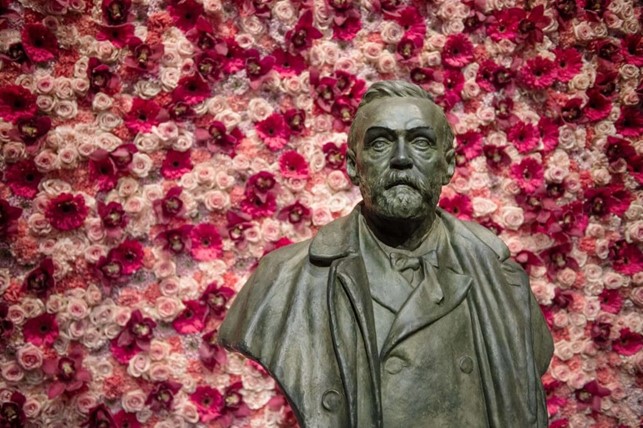
Alfred Nobel never had children and bequeathed most of his assets to establish the Nobel Prize in his last will and testament as a beacon of science. Copyright © Nobel Prize Outreach AB 2016. Photo: Pi Frisk
Since the Nobel Prize was first awarded in 1901, Denmark has had 14 recipients, nine of whom were or are members of the Royal Academy. Rats, chickens and cockroaches have all featured in an enduring and compelling story of love, war and scientific ideals.

By Ghita Nidam Møller

Polyglot, engineer, chemist, entrepreneur, industrialist, author and holder of 355 patents. A tumultuous and literally explosive life’s work that cost a younger brother his life, all in the space of just 63 years.

The famous engineer, chemist, scientist, lover of literature and “merchant of death” Alfred Nobel left us long ago. This is not news. But the passion the father of dynamite had for science across disciplines lives on. Thanks to Nobel’s will, the pioneers of science are celebrated every year on the anniversary of his death, 10 December, and this year is no exception.

That’s why the red carpet is being rolled out in Stockholm, Sweden this year and has been every year since 1901. The Royal Academy’s 208-year history has witnessed a cavalcade of scientific adventures. Honoured for leaving their mark on their own era and the future, nine of Denmark’s 14 recipients of the Nobel Prize were or are members of the Royal Academy.

Their discoveries and stories say more about our times than you might realise.

Death, war, love and nonconformism. In a work of fiction the prize winners would have played thinly disguised lead roles in a wild tale running the gauntlet from espionage and the nuclear race to cockroaches, chickens and the phenomenal success of Novo Nordisk and Wegovy®, the latest world star on the market. The beacons of the past are a constant, chosen in accordance to Nobel’s will for securing the greatest benefits for mankind.

A look back in time shows that the Royal Academy’s award-winning members have much to teach us.

Dilemmas of the past are catching up with us

Niels Bohr’s role in history raised questions that still resonate today. For example, should scientists take responsibility for their research, or is it the responsibility of those who use the research?

The physicist’s story transcends fiction at a time when powerful candidates lined up as the nuclear arms race raged and the world spilt in two during World War II. In the midst of the chaos, Bohr exhibited the very essence of the Royal Academy, of which he later became

president. He was more than just an unrivalled scientist and the 1922 recipient of the Nobel Prize in Physics for his theory of atomic structure. Albert Einstein also reportedly called him the most intelligent scientist of his time, which is quite a compliment.

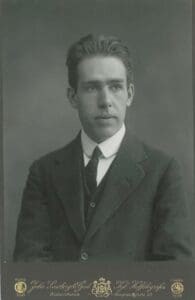
Niels Bohr as a young man in 1917, as yet unaware of the battles that lay ahead. Photo: Royal Academy Archives

Bohr was likewise a citizen of the world with the unwavering belief in the open exchange of opinions and knowledge across borders. In addition to hampering Soviet espionage he saved Jewish and Russian scientists. He was ultimately forced to choose sides. As is well known, the US won and he became part of the Anglo-American Manhattan Project to develop the atomic bomb. US President Dwight D. Eisenhower personally bestowed on Bohr the first Atoms for Peace Award, which lauds the development or application of peaceful nuclear technology.

In many ways science is once more being challenged by similar dilemmas as war and conflict escalate. The invasion of Ukraine is dividing the world again, while cybersecurity threats, dual-use technology and espionage haunt universities. Growing Danish and international investment is also setting the stage, with Denmark most recently joining the US, like Bohr in his era, by signing the Artemis Accords, a common set of principles spearheaded by the US for the peaceful exploration of deep space.

Science and researchers play an indisputably leading role in society and that’s part of their legacy. This is also the case with the Nobel Prize in Physics, where Bohr’s son, Aage, succeeded his father in multiple ways. Aage’s research, which was a natural extension of his father’s, threw him headlong into his father’s world. While in exile in the US in 1943, the father and son were also associated with the Manhattan Project. Together with Danish-American physicist Ben Mottelson and American physicist Leo James Rainwater, Aage received the Nobel Prize in Physics in 1975 for their exploration of the structure of the atomic nucleus.

Equally admired is Aage’s belief conducting open and peaceful science. Like his father Aage, he was honoured with the Atoms for Peace Award, and later the H.C. Ørsted Medal, the Ole Rømer Medal and the Rutherford Medal. The Bohr legacy lives on in Aage’s three sons, two of whom are currently members of the Royal Academy.

Under the skin and out of the box

They range from being world renowned to under the radar. Biochemist and civil engineer Henrik Dam and physician and immunologist Niels K. Jerne expanded our understanding of what happens under the skin and were awarded a Nobel Prize in Physiology or Medicine in 1943 and 1984, respectively.

Dam is the oft-unseen hero of haemophiliacs, whose condition means that the body’s ability to clot blood is impaired. Consequently they need extra assistance to stop any bleeding and vitamin K does the trick. We can thank Dam and his experiments with a group of chickens for this discovery.

Jerne also studied our internal system, applying theories that dared to challenge existing dogma about antibodies. Specifically he paved the way with three theories that have powered how we currently understand and define our immune system. He left his mark on the world as a true globetrotter who, through collaborative research, put immunology on the world map and challenged the hierarchical structure of the scientific community.

From 1956–1962 he was head of the Sections of Biological Standards and of Immunology at the World Health Organization in Geneva, Switzerland. He later took up professorships in Pittsburgh, Pennsylvania, US and in Frankfurt, Germany, positioning him as the leading international immunology theorist of the time. He also went on to head the Basel Institute for Immunology in Switzerland, which became an international centre for immunological research.

To learn more about the individual Danish winners of the Nobel Prize use the hyperlinks on their names to access Lex, which is Denmark’s national encyclopaedia (in Danish only). Timeline: Ghita Nidam Møller. Photos: Royal Academy Archives

More than love, more than Novo

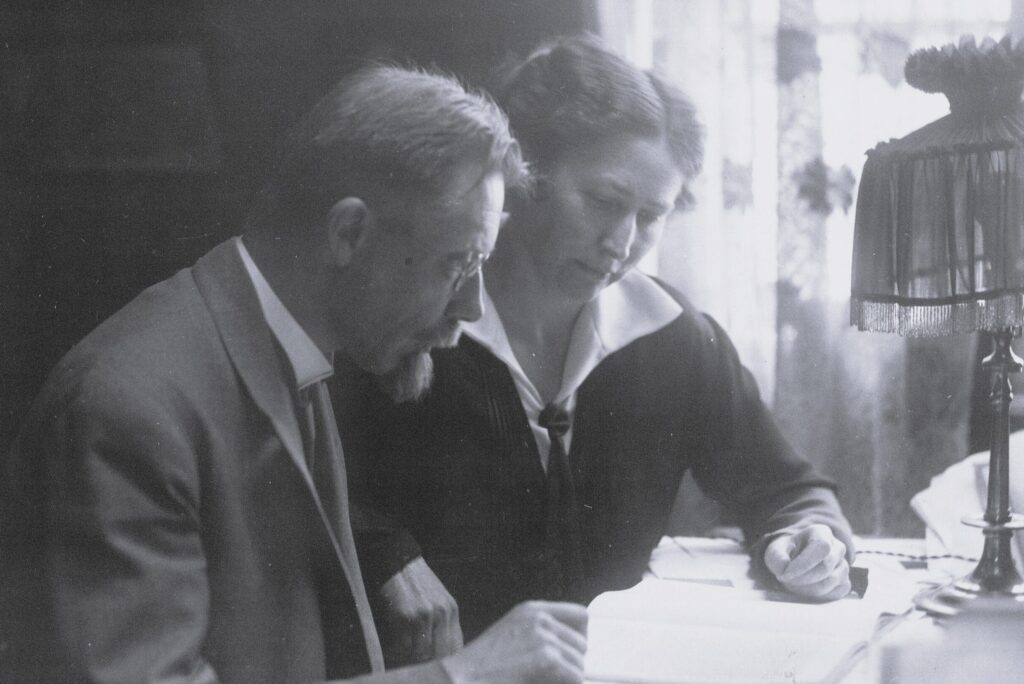
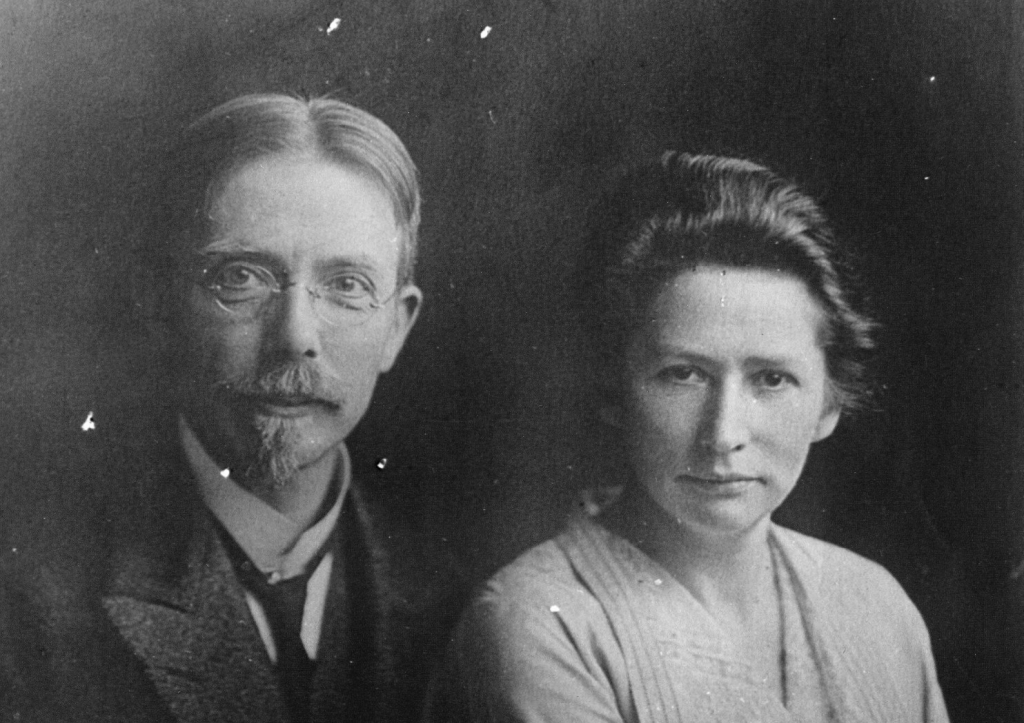
You can’t mention August Krogh without including Marie – even though only the husband in this couple received the Nobel Prize in Medicine and Physiology in 1920. The two scientists, colleagues and spouses formed a unique duo whose achievements continue to echo around the world. As a result the Royal Academy eagerly celebrated the 150th anniversary of the couple’s births.

Basically, without the Kroghs, there would be no Novo Nordisk today. What is more, they also proved and are a favourite justification for free thinking, experimental ideas, insisting on methodological innovation, and interdisciplinary collaboration. This may sound pompous but the proof is self-evident – perhaps you already know the story.

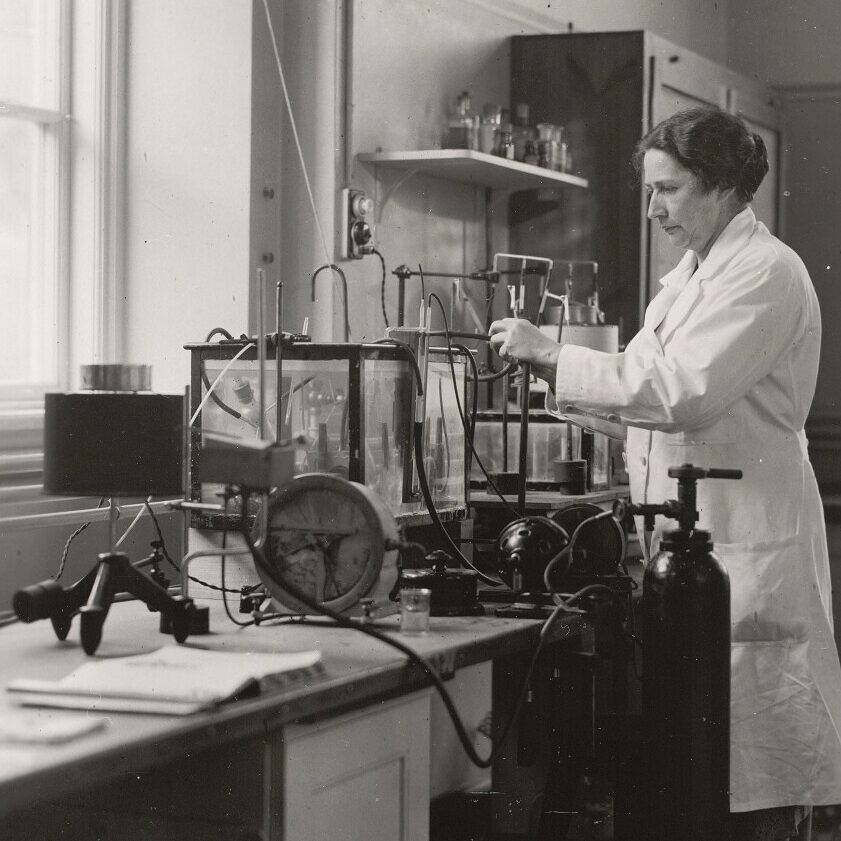
Marie Krogh is historic in her own right as Denmark’s fourth female medical physician. Moreover, she was a significant part of the powerhouse behind her husband’s success. His work as a skilled inventor, physiologist and professor of zoophysiology, with Marie at his side, proved to be a perfect combination for understanding the body’s need for insulin and developing the first diabetes medicine.

In brief, as early as 1922 August obtained exclusive rights to manufacture insulin in Scandinavia, which led to its initial production in Denmark. This development represents a highly significant precursor for the many breakthroughs leading to the development of the first Novo insulin and today’s roaringly successful weight-loss drug Wegovy®.

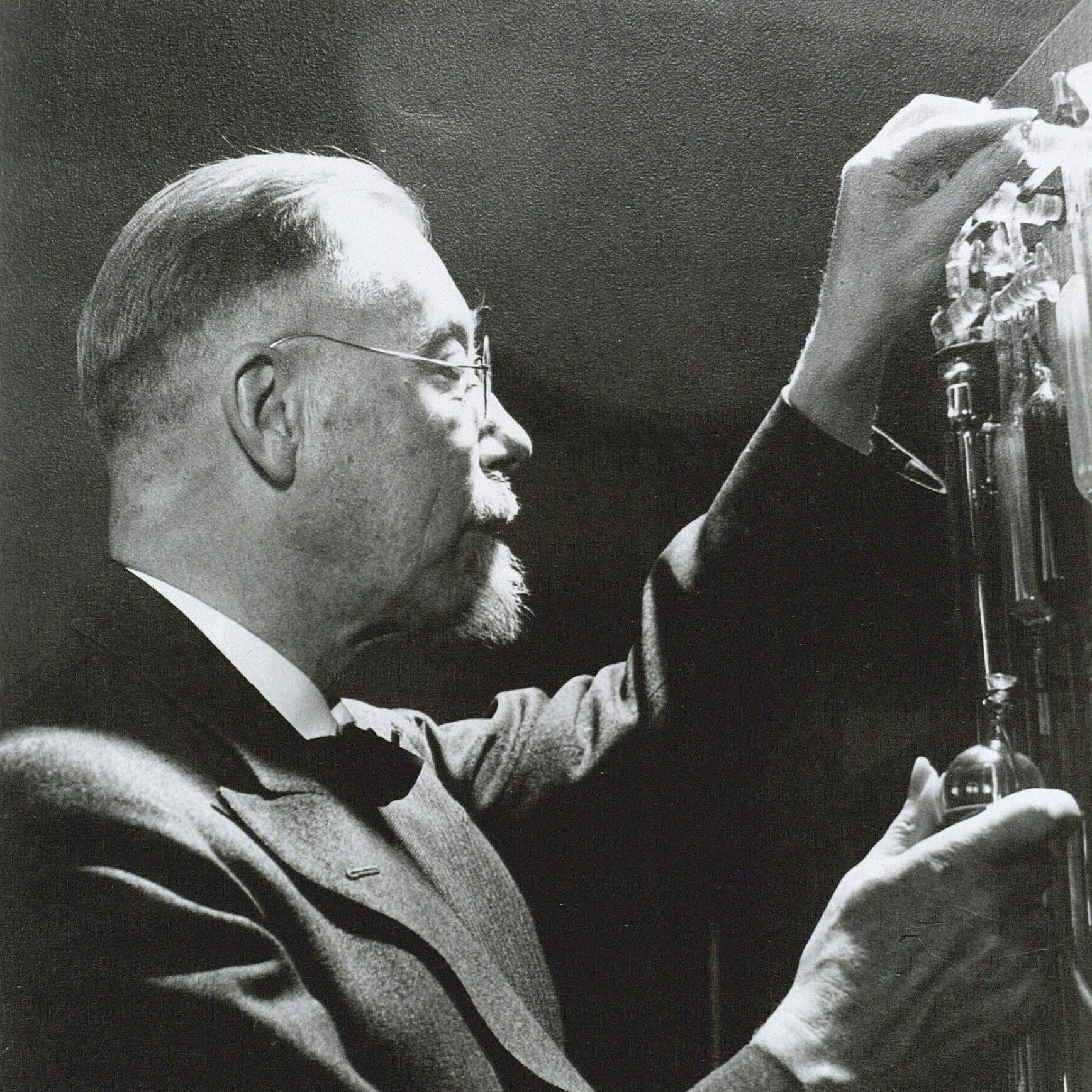
The Krogh’s story concerns more than just the history of Novo Nordisk and insulin. Today August Krogh is regarded as one of the founders of work and exercise physiology, thanks in part to both Marie and his experimental spirit – not to mention the ability to explore. They had immense freedom, the unpredictability leading to a truly amazing journey that laid the foundation for the generation of some of Denmark’s greatest wealth.

Popular rock star revitalises the research policy debate

The achievements of Nobel Prize winners have become scientific milestones but also part of the research policy debate. Physician and physiologist Jens Christian Skou won the Nobel Prize in Chemistry in 1997, giving him a platform to highlight that a key issue was long-term immersion underpinned by a strong framework.

Almost eerily, Skou aptly described the gist of today’s policy debate on issues concerning uncertainty and innumerable job changes for many young researchers, countless funding applications, and endless sector research appointments. He also argued in favour of increasing independent research funding for universities to avoid earmarked grants. Now, almost 30 years later, the same discussion is taking place about the balance between independent and strategic research.

Our most recent Nobel Prize winner, Morten Meldal, has not been shy about emphasising the role of independent research because an accidental reaction and coincidence led to the discovery of click chemistry in the Carlsberg Research Laboratory – and with it the first Danish Nobel Prize in a quarter of a century.

Meldal has stressed that his 2022 Nobel Prize is a tribute to creative freedom, immersion, excellent facilities and the entire team of PhDs, postdocs and professors who were involved in the original project. The award has once again put science in the spotlight.

They found enlightenment and rats

Spreading enlightenment has been the Royal Academy’s mission ever since King Christian VI issued an edict in this regard in 1743. Niels R. Finsen took this declaration quite literally, landing him Denmark’s first Nobel Prize in 1903.

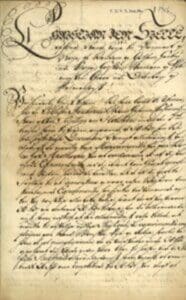
Already upon the Royal Academy’s establishment, King Christian VI instituted the Royal Academy’s mission: “To spread enlightenment”. Photo: Royal Academy Archives

Finsen’s heart was set on finding new treatments using ultraviolet light but from a young age a heart condition prevented him from joining the medical profession. It nevertheless gave him the opportunity to devote himself to researching and developing new treatments for especially cutaneous tuberculosis – a dreadful disease that can co-occur with tuberculosis in the internal organs. Finsen discovered that light was the solution.

He made a major breakthrough by discovering carbon-arc light therapy, also called Finsen therapy, which turned him into a hero and led to being awarded the Nobel Prize in Medicine and Physiology in 1903. He died the following year but his legacy lives on in the Finsen Institute in Copenhagen, which bridges the gap between the first light institute and contemporary cancer treatment. Two decades later, in 1926, the Danish doctor Johannes Fibiger became the first cancer researcher to win the Nobel Prize in Medicine.

Fibiger is purportedly the first person to use rat experiments to prove that external factors can cause cancer. His somewhat repellent experiment involved feeding rats cockroaches with a roundworm, which led to stomach cancer that spread to the lymph nodes and lungs.

His observations have since been called into question but inspired a new era of studies on carcinogenic effects. The experimental phase also points to the future, the focus of the methodological approach challenging not only what we know but also how we know it, and with it the possibility of replication testing. Some experiments to avoid repeating, however, are Nobel’s own experiments during the development of dynamite. Accidents occurred on several occasions but the one that hit him hardest personally was an explosion at a factory that claimed the life of his younger brother.

Like Nobel, the story is colourful, sometimes dangerous and continues to this day. Thank you and congratulations on today, Alfred. Rest in peace as the world turns.

How we know what we know: The Nobel Prize website, Danmarks Nationalleksikon Lex (use the timeline to learn more), the University of Copenhagen website, an interview in Science Report and an interview with the director behind the documentary Niels Bohr: The world’s best human being”.

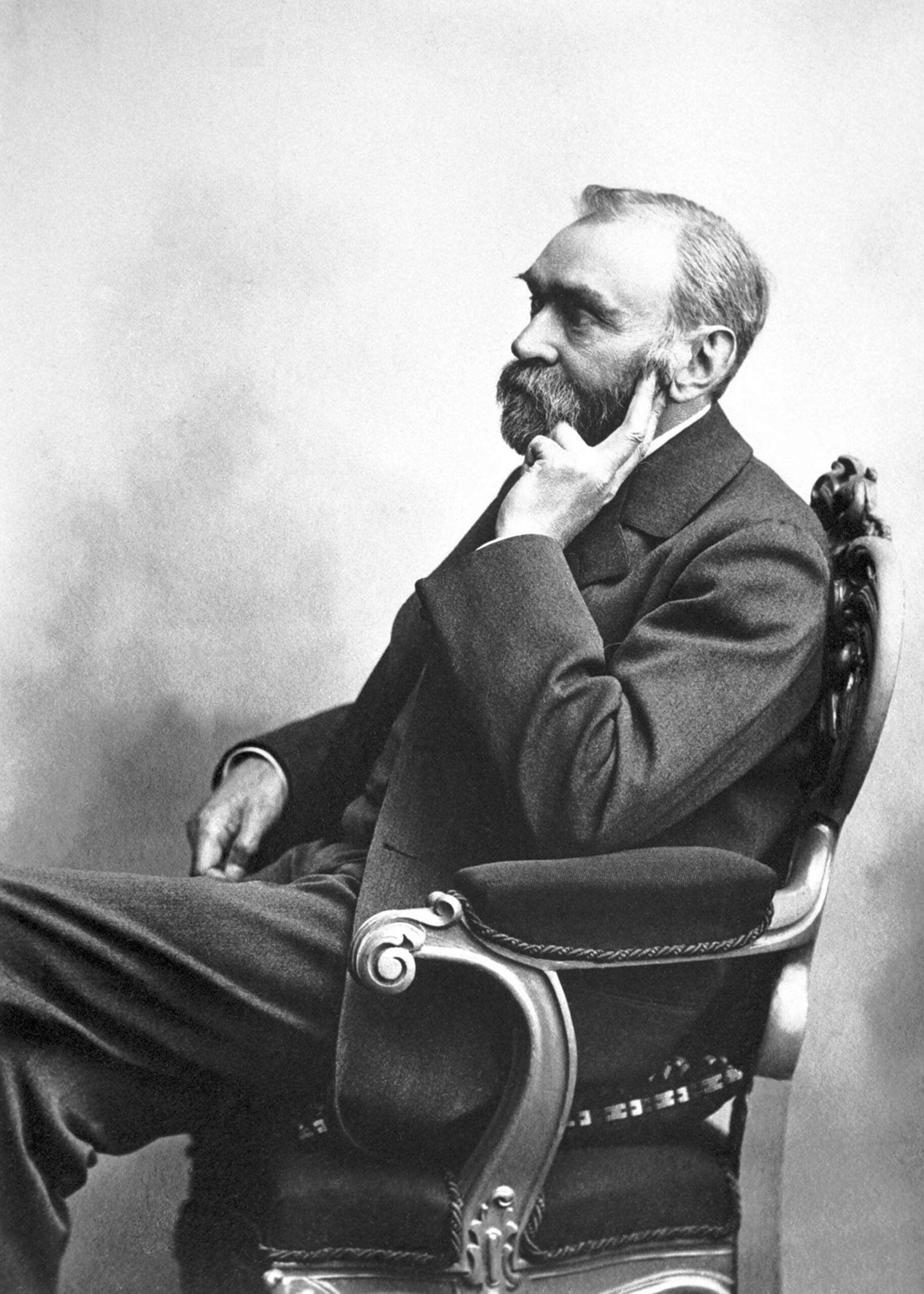
Photo: Atelier Florman, Nobel Foundation Archives

In the footsteps of Alfred Nobel

Nobel was a Swedish inventor, entrepreneur, scientist and businessman who also wrote poetry and plays. The six original Nobel Prizes reflect his diverse interests and are a worldwide honouring of outstanding achievements in physics, chemistry, physiology, medicine, literature and working for peace. The Nobel Prize in Economics has since been added.


Nobel inherited his broad interest in science from his father, who was a wealthy businessman involved in the manufacturing of arms. Nobel’s education involved the study of the natural sciences, literature and multiple foreign languages. At the age of 17 he already spoke five languages fluently.


His career was dedicated to experiments with nitroglycerine and developing dynamite, a scientific achievement that proved to be both a profitable and dangerous business. He established over 90 factories and laboratories in more than 20 countries and held 355 patents.


His success, however, came at a cost. An explosion in 1864 at the family-owned factory in Heleneborg, Sweden killed his younger brother Emil and four others.


Nobel never had children and left the bulk of his assets to establish the Nobel Prize in his last will and testament in 1895. After his death, the Nobel Prize was awarded for the first time in 1901 on 10 December, the anniversary of his death.


The will states that four of the prizes must be awarded in Stockholm, Sweden, while the Nobel Peace Prize must be awarded in Norway by a committee appointed by the Norwegian Parliament.


Source: Lex – Danmarks Nationalleksikon and Nobel Prize.

150 years with Marie and August Krogh

150 years with Marie and August Krogh

The Royal Danish Academy of Sciences and Letters celebrates two powerful voices in Danish basic research and research policy

Photo: Royal Danish Library
This month and next, the Royal Academy will highlight the significance of the Kroghs to the research world by holding scientific lectures and discussions in honour of their birthdays in November and December. Five Royal Academy members whose own research draws on this accomplished couple’s work are behind the initiative.

By Rikke Reinholdt Petersen

– “Marie and August Krogh are undoubtedly among the most important researchers Denmark has ever had. They are also of immense interest for other reasons beyond their research results, which alone are ample reason to celebrate them,” explains Professor Stine Helene Falsig Pedersen, University of Copenhagen.

Pedersen is one of a group of five planning the Krog celebration that includes Professor of Zoophysiology Tobias Wang Nielsen, Aarhus University; Professor of Integrative Medicine and Chief Physician Bente Klarlund Pedersen, Rigshospitalet – Copenhagen University Hospital; Professor of Geology Minik Rosing, University of Copenhagen; and Professor Liselotte Højgaard, MD, Rigshospitalet – Copenhagen University Hospital, University of Copenhagen and Technical University of Denmark. The festivities will commemorate the 150th anniversary of August Krogh (15 November) and Marie’s (25 December) births in 1874.

The razzle-dazzle will primarily include five public lectures on the Kroghs and the era in which they lived and did research. Topics will include the first female doctors in Denmark, the couple’s importance in contemporary research on exercise and nutrition and especially the crucial role they played in bringing insulin to Denmark. The lectures will take place in the Royal Academy’s Lecture Hall, with the first event scheduled on 12 November and the last one on 2 December.

Christiansborg Day spotlights research and the public

According to Pedersen one of the aims of the upcoming celebration is to take a closer look at the Kroghs’ emphasis on the interplay between basic research and societal applications:

– “Marie and August Krogh were passionate about both basic research and practical solutions to societal problems. They were also overwhelmingly successful with regard to both,” she clarifies, continuing that:

– “They had strong opinions about the importance of mutual respect and understanding between researchers and society and about the necessity of researchers both being involved in society and having sufficient free funding to do basic research.”

Pedersen says that this is the reason why the event taking place in the Christiansborg Common Hall on 11 November will boast four presentations and a panel debate exploring “How progress occurs when we create optimal conditions for both society and basic research”.

Photo: Underwood (1881–ca.1945) US photo agency, Royal Danish Library

The panel, which will discuss topics related to contemporary Danish society and its attitudes toward basic research, comprises research spokesperson and member of the Danish Liberal Party Stinus Lindgreen; Executive Chief Scientific Officer of Villum Foundation and Professor Thomas Bjørnholm; Professor Jesper Svejstrup, Department of Cellular and Molecular Medicine, University of Copenhagen; Head of Centre, member of the Danish Council for Research and Innovation Policy and Professor Mette Birkedal Bruun; and Chief Physician and Professor Bente Klarlund Pedersen. Journalist Lotte Folke Kaarsholm will be the moderator.

Exceptional researchers and a legendary couple

In addition to the significant amount of time the Kroghs spent devoted to involving themselves in the interaction between basic research and society, they dedicated much of their careers to the lab, producing groundbreaking results and insights:

– “August Krogh is regarded as the founder of zoophysiology, work physiology and membrane transport physiology,” says Professor of Zoophysiology Tobias Wang Nielsen, Aarhus University, who further clarifies that:

– “He also contributed extensively to both circulatory and respiratory physiology. No other physiologist worldwide has likely exerted such a large and broad influence. The foundation Krogh laid remains the cornerstone of the excellent physiology research programmes in Denmark today.”

Marie Krogh’s research also remains highly relevant:

– “Marie Krogh created a method for measuring lung function that is still used today. She also contributed to major respiratory physiology studies of the diffusion of oxygen in the lungs but otherwise chiefly focused on endocrinology, which is the hormonal regulation of metabolism in its broadest sense,” explains Nielsen, adding that:

– “Marie and August’s collaboration is legendary because they were married, colleagues and confidants. In other words, they were perfect sounding boards for one another.”

Interdisciplinary frontrunners – and a Nordic fairy tale

The Krogh’s close collaboration led to a natural circle of feedback across disciplines, where research methods from various branches of science promoted experimentation and shed light on results from a variety angles. In many ways they were interdisciplinary pioneers:

– “Biomedicine, one of the largest and most transformative research fields in recent times, developed into an independent university discipline in the 1970s after medicine, biology, physics and chemistry had been competing for almost a century,” says Professor Minik Rosing, Globe Institute, University of Copenhagen, clarifying that:

– “Marie and August Krogh were more determined and had established their own biomedical alliance when they had married two years prior to Marie earning here medical degree in 1907 while August was still mainly a biologist.”

According to Rosing the couple, who combined medicine and biology more than half a century before academia officially did the same, was also quick to look beyond their own backyard in terms of research, travelling for example to Greenland for a research trip that marked the start of their research partnership.

– “August the biologist and Marie the medical doctor were part of the open and free research environments of the time. They maintained close personal relationships with other inquisitive people across national borders, cultures and professional disciplines. So far, these environments have enriched Denmark with incredibly interesting basic research, a string of Nobel Prizes and unrivalled Nordic industrial ventures”.

The Krogh connection

In 1916 August was elected as a member of the Royal Academy. As Pedersen points out, Marie would have unquestionably been elected a member today but was unfortunately denied the honour at the time. August’s membership, however, is far from the only reason why the Royal Academy is taking such an active part in the current celebrations:

– “The role of research in society is a key issue for the Royal Academy. In this regard, the Kroghs are a shining example of researchers who combined excellent basic research with an admirable commitment to society,” emphasises Pedersen.

Commemorating the Kroghs will conclude with a celebratory symposium for members of the Royal Academy and others. In the spirit of the Kroghs, the symposium will include scientific presentations based on the couple’s research and work. The Novo Nordisk Foundation, which is indebted to this famous couple for the indisputable role they played in its existence, has provided a grant to fund the symposium.

Sign up for the Royal Academy newsletter to get the latest updates on the Krogh celebrations taking place this month and next.

Photo: The Royal Danish Library

ABOUT MARIE KROGH

  • Born Birthe Marie Jørgensen on 25 December 1874, died 25 March 1943
    First person in Denmark to study the measurement of respiratory metabolism in humans
  • Established a medical practice in 1910 as a result of travelling to Greenland
    Received her MD in 1914 from the University of Copenhagen
  • Clinical assistant in 1914–1915 on Christian Gram’s department at Rigshospitalet – Copenhagen University Hospital
  • Physiology instructor (1915) and nutritional science instructor (1931) at the Danish National College of Education
    Began using insulin on herself in 1923 as one of the first Danes to do so
  • Advocate for educational opportunities for women, including more teaching in the natural sciences
  • Married to August Krogh


Source: Lex.dk
Haastrup, Lisbeth: Marie Krogh i Dansk Kvindebiografisk Leksikon. Retrieved 20 October 2024: https://kvindebiografiskleksikon.lex.dk/Marie_Krogh

Photo: The Royal Danish Library

ABOUT AUGUST KROGH

  • Born Schack August Steenberg Krogh 15 November 1874 in Grenå, Denmark, died 13 September 1949
  • Danish physiologist and professor of zoophysiology, University of Copenhagen, 1916–1945
  • Elected as a member of the Royal Academy in 1916. Resigned his membership in an open letter to the Royal Academy in 1945 due to an electoral difference of opinion with other members of the Academy
  • Awarded the Nobel Prize in Physiology or Medicine in 1920
  • Obtained exclusive rights to produce insulin in Scandinavia; began producing it in Denmark with doctor H.C. Hagedorn
  • Married to Marie Krogh


Source: Lex.dk Larsen, Erik Hviid; Den Store Danske: August Krogh i Lex. Retrieved 20 October 2024: https://lex.dk/August_Krogh and the Royal Academy archives.

Nobel Laureate visits Copenhagen: The universe is our biggest laboratory

Royal Academy Nobel Laureate Lecture: Interview

Nobel Laureate visits Copenhagen: The universe is our biggest laboratory

Foto: Lars Svankjær/Videnskabernes Selskab
What is it like to research the unfathomable? What can we learn if we lift our eyes to the heavens and peer into the vastness of outer space? What is the best way to do this? We asked Nobel Laureate Dr Adam G. Riess about this when he presented his award-winning research on the accelerating expansion of the universe at the Royal Academy’s Nobel Laureate Lecture in June.

By Rikke Reinholdt Petersen

“Space has always seemed very mysterious to me. And so, it piques my curiosity; it makes me want to learn more about it. It touches on issues that are bigger than us, and so it just draws my fascination,” says American researcher Dr Adam G. Riess.

There is something strikingly human about Riess’ account of the personal drive behind his choice of research field, his fascination with the unknown recognisable to most of us. His laid-back, easy-going demeaner almost causes one to forget that he was the recipient of one of the most prestigious honours in the world of science, the Nobel Prize in Physics, which he shared with scientists Saul Perlmutter and Brian P. Schmidt for demonstrating that the universe is not only expanding but that the expansion is accelerating.

But make no mistake, Riess has spent hours and years trying to explain some of the most complex forces and abstract quantities in the universe. In fact the expansion of the universe and the role dark energy plays in the acceleration are something that he has dedicated his entire career to unravelling. And with good reason. According to Riess, who works at Johns Hopkins University, space is where we need to look if we want to learn more about, well, just about anything around us.

Riess maintains that the universe is the best and only laboratory we have to investigate the biggest questions in science and its most fundamental properties. Things happen on a scale that we cannot imitate in a particle accelerator on Earth.

“If you really want to push the limit of our understanding of gravity and the standard model [within cosmology] and things like that, then we have to look at space because it’s doing experiments we want – all we have to do is watch them,” he explains, adding:

“And, no, we don’t always get to set up the exact experiments we want, but if we watch carefully enough, we can learn a lot.”

President of the Royal Academy and Professor Susanne Ditlevsen presented the day’s lecture, followed by Professor of Astrophysics Jørgen Christensen-Dalsgaard describing the reason behind the lecture. Foto: Lars Svankjær/Videnskabernes Selskab

A safe investment in the future or a gamble?

But what is the best framework for using the universe as a laboratory? Should we look at specific results in limited areas, or do we get more out of looking far into the future and across immense distances to see what we (might) find? Should we focus on applied or basic research?

“They are both important in the sense that it’s like making investments that will pay off in the short term versus ones that are risky and pay off in the long term. And I think that a good portfolio needs both of those,” says Riess, continuing:

“I will say that the biggest discoveries we make are often the most unexpected. So, if you only do applied, almost by definition, you’re only going after things that you expect to make […] Basic research is kind of the deeper dives that we do into things. And I think they’re both very valuable. You couldn’t have a good science research programme without both components.”

The speaker of the day catches a snapshot of the large turnout in the Queen’s Hall at the Royal Danish Library. Foto: Lars Svankjær/Videnskabernes Selskab

Ask, observe, learn

When a research team has spent years and years pursuing what feels like looking for a needle that might be in a haystack, what does it mean when they actually find it? It goes without saying that award-winning research of Nobel quality benefits both the global community and future research. But what impact has it had on Riess?

“It has inspired me in many ways to do more because it helped me realise that, from asking questions and making observations, that we can actually learn a lot about the universe. For me personally it’s a nice kind of referendum on the work that all my colleagues and I have been doing over the last several decades,” concludes Dr Adam G. Riess, with an obvious nod to the enormous amount of collective effort behind the Nobel Prize.

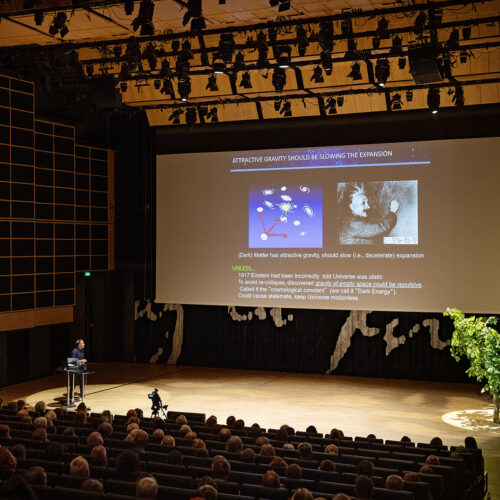
There was no less than 200 people on the waiting list for Riess’ lecture, “The Surprising Expansion: History of the Universe”, which took place in the Queen’s Hall at the Royal Danish Library on 26 June. For those unable to attend the lecture is available on the Royal Academy’s YouTube channel.

Would you like to attend the next Nobel Laureate Lecture at the Royal Academy? Sign up for our newsletter to receive information about upcoming lectures and talks.

The Royal Academy’s Nobel Laureate Lectures are funded by the Novo Nordisk Foundation.

Read more about Dr Adam G. Riess’ research.

Climate seminar highlights solutions. Topical seminar outlining today’s geopolitical reality highlights numerous solutions for the green transition

Climate seminar highlights solutions

Topical seminar outlining today’s geopolitical reality highlights numerous solutions for the green transition

Contrary to popular belief, there is currently sufficient financial resources, political will and technological know-how available to ensure a green future – if used wisely.

“I’m glad that you invited optimists here today because, well, I’m not one of them,” quipped Ulrik Vestergaard Knudsen stubbornly when he took the podium after being welcomed by Professor Thomas Bjørnholm, who is on the Climate Committee of the Royal Danish Academy. Bjørnholm had just presented the day’s seven-hour programme, which comprised presentations and activities by national and international researchers, business people and climate innovators.

Ulrik Vestergaard Knudsen, who is the Deputy Secretary-General of the Organisation for Economic Co-operation and Development (OECD), briefed the audience on current geopolitical trends and spoke about the European Union (EU) and OECD as part of the new global “disorder”. Because the world is changing. He pointed out five development trends that make up the basis for the kind of world the green transition is taking place in. In general he did not view the developments favourably as he believes that the world is moving exceptionally fast geopolitically and that we in the West are locked into a self-image that is far removed from the image others have of us. He presented five points that he called tectonic trends to outline the situation:

First, the international system is more porous than previously, especially because the US is currently weaker. The UN Security Council lacks important members, for example the world’s largest country, India. Moreover strong economies like Germany and Japan are not represented. The World Bank has similarly weak representation.

Second, open markets are no longer plan A in the EU, the US or China. In addition trade barriers and protectionism are beginning to emerge. We are heading towards partial deglobalisation and regionalisation, asserted Vestergaard Knudsen.

Third, the Global South is gaining momentum and where we see the greatest population and economic growth.

Fourth, the climate constantly seems to end up last on the world’s most serious agendas, after war, disaster and disease.

The fifth trend is the only one that Ulrik Vestergaard Knudsen believes shines some light in the darkness. The rise of generative AI represents a new technology that is transforming economies and societies, which may lead to major advances in the green transition.

Then, after the applause and a thoughtful silence, Professor of Environmental Economics Jon Hassler, Stockholm University provided a dose of much-needed optimism by addressing some of the measures that his research indicates work.

Hassler maintains that the key is to pursue a robust climate policy, which means that enough climate action must be taken today to avoid the regret of not having done more. If enough is not done at this stage, it could be exorbitantly expensive to adapt in 30–40 years. In short it is better to invest money now.

Hassler’s research shows that pursuing this type of robust transition means that reaching global net-zero emissions is possible within around 30 years but will require systems to phase out CO2. One of the most effective ways to do this is through quotas, for example by using CO2 rationing cards issued by the EU to individual countries and industries that do not permit them to emit more than the cards allow. From 2040, ration cards would be discontinued because CO2 emissions would be a thing of the past by then and the fossil fuel era would be over. According to Hassler the transition to a fossil-free society need not be astronomically expensive if technology continues to develop. He concluding his presentation with the words:

“I remain optimistic!”

What about the money?

Naturally much of the day’s discussion revolved around how to finance the green transition. Peter Mølgaard, chair of the Danish Council on Climate Change, outlined the economic reality. A United Nations Intergovernmental Panel on Climate Change report estimated that, with a 1.5°C increase, global gross domestic product will be 1.3–2.7% lower in 2050. That represents a vast amount of money and is the reason why investing now will be much cheaper than waiting.

“It’s better to have than not have an ambitious climate policy since it can serve as an insurance policy,” explains Mølgaard, echoing Hassler’s earlier presentation. Doing so, however, will of course not be free just because a potential cost today is lower than it will be in the future.

Danish climate goals call for a 70% reduction in CO2 emissions and that Denmark is a net-zero nation by 2050. According to the Danish Council on Climate Change most of the transition does not require revolutionary technological breakthroughs. The Council believes that a 90% reduction in CO2 emissions can be achieved with already available tools, for instance by switching to electric cars and storing CO2 underground. The difficult part will be reaching the last 10%, which will require new initiatives, such as innovative technologies.

The question, as always, is who will foot the bill for the green transition. The audience asked Mølgaard whether the tax burden would be passed on to consumers or to manufacturers.

The Danish Council on Climate Change recommends taxing manufacturing but also some form of consumer tax because changing behaviour, such as eating habits, is easier.

Major international investments and the overall plan

Chair of the board at CBS, the CIP Foundation and the Danish Foreign Policy Society, Thor Möger Pedersen has a broad international outlook and is involved in awarding sizeable grants worldwide for the green transition. Convinced that a lack of private investment will not be a stumbling block for the green transition he is also optimistic, at least in terms of financing the transition as he sees significant international appetite to invest. Testimony to this is the fact that green energy is currently seeing a higher level of investment than black. In addition the competitiveness of green technologies is important because it reduces the need for subsidies.

Despite the enthusiasm, major challenges still exist nationally and internationally. Denmark does not have a comprehensive plan for the green transition. As Henrik Stiesdal, one of the grand old men in the Danish transition to green energy and a pioneer in the wind turbine industry, reminds us the state naturally plays an important role. Stiesdal brought up Denmark’s success and key role in the global development of the wind turbine industry, a story that is often brought up to demonstrate how new technologies can have a huge impact on the climate. Many ideas originated in Denmark but a comprehensive government plan was required to shift wind turbines from the drawing board to production. This primarily meant that the government wanted it to happen; where there was a will there was a way. The state then ensured solid, long-term framework conditions for wind turbines and the industry. Conditions have changed, however, and getting a building permit takes 5–6 years today compared to 1–2 in the 1990s, which represents a hefty obstacle to the green transition.

At the end of the seminar Royal Academy Climate Committee member Thomas Bjørnholm took the floor to remind us of the peculiar dilemma that many people believe that others must take action, that the transition is not possible and that living standards will drop drastically. Nonetheless, as the seminar showed, opportunities and solutions do exist. Perhaps even in a world where climate change is not at the top of the agenda.

Sara Green receives the Royal Danish Academy of Sciences and Letters’ Silver Medal

Royal Danish Academy of Sciences and Letters’ Silver Medal 2024

Sara Green receives the Royal Danish Academy of Sciences and Letters’ Silver Medal

Associate Professor Sara Green’s research examines the potentials and challenges of personalised medicine. She studies how using more health data can lead to improved individualized prevention – but also to more uncertainty and overdiagnosis.

“I’m very pleased, surprised and touched that my colleagues nominated me and receiving the award is a great honour,” says Green, adding:

“I also see it as a recognition of the practice-oriented philosophy of science that I’m proud to be a part of developing.”

Green is an associate professor of theory of science at the Department of Science Education, University of Copenhagen. Her research focuses on the intersection between epistemology and ethics in the biomedical sciences. Her current research is particularly concerned with what personalised medicine means for science and society. And now she can call herself a recipient of the Royal Academy’s Silver Medal.

Awarded annually to a Danish researcher, the medal has been bestowed on Green for many reasons but according to those behind her nomination, the weightiest factors were her high degree of interdisciplinarity and cross-cutting collaboration:

“Her interdisciplinary approach and ability to collaborate closely with philosophers, sociologists, anthropologists, STS [science and technology studies] researchers and researchers from the disciplines that she studies have also been a key aspect of her work since the start of her academic career,” asserts her nomination statement, which also states:

“The fact that so many leading researchers from disciplines in the humanities, social sciences and biological and medical sciences have chosen to collaborate with her clearly reflects her exceptional talent, intelligence and energy.”

Building bridges and a willingness to compromise

Green’s research combines philosophical analysis with ethnographic methods while simultaneously incorporating philosophy of science literature into the dialogue with other studies in science and technology. Green believes that interdisciplinary collaboration is crucial to understanding the implications of new technologies for both science and society.

“I see myself as a bridge builder, which might sound a bit fluffy but it takes a tremendous amount of work to familiarise yourself with other fields of research. I’ve spent many years studying biology, reading medical journals and understanding how, for example anthropologists, biologists, doctors and STS researchers work. Moreover collaborating with researchers from those fields has shaped my thinking and methodological approach,” notes Green.

Working across disciplines and professional groups, however, is not an uncomplicated process and also comes with a price since it requires compromises, emphasises this year’s Silver Medal winner:

“It’s probably been at the expense of specialising in my own research profile in philosophy. But perhaps taking a slightly different approach has allowed me to specialise in my own way.”

Research that benefits more people

Green has found her niche and plans to continue to open the door into complex spaces in research that require versatile thinking and approaches:

“I would like to use part of the Silver Medal grant to sponsor a workshop and a writing residency to strengthen existing and new collaborative relationships,” she says, adding:

“Some of the grant will also go to dissemination activities. I think there’s a whole slew of important issues that are also relevant to students and the general public.”

The Royal Danish Academy of Sciences and Letters’ Silver Medal will be presented at a members’ meeting on Thursday 26 September, where Green will give a presentation about her research to members of the Royal Academy.

The assessment committee behind the awarding of the Royal Academy’s Silver Medal comprised chair Marianne Pade, Bjarne Grønnow, Lene Østermark-Johansen, Troels Engberg-Pedersen and Lene Koch.

For more information about the awards ceremony and selection process please contact the Royal Academy’s programme consultant Trine Hagerup at th@royalacademy.dk or +45 3149 2316. For press-related inquiries please contact communications consultant Rikke Reinholdt Petersen at rp@royalacademy.dk or + 45 3125 8064.

About Sara Green


Associate professor, Section for History and Philosophy, Department of Science Education, University of Copenhagen • Affiliated with the Centre for Medical Science and Technologies Studies (MeST), Department of Public Health, University of Copenhagen • PI of the research projects Philosophy of Personalized Medicine in Practice (PROMISE) and Consumer Medicine: Philosophical and Ethical Implications (COPE) • Part of the research project Personalized Medicine in the Welfare State (MeInWe) and other EU-funded projects: DataSpace, HYBRIDA and REDESIGN • Co-editor of the international journal Studies in History and Philosophy of Science • Member of the steering committee of the European Philosophy of Science Association • Has a background in philosophy and biology • Holds a PhD in Science Studies from Aarhus University • Postdoctoral fellow in 2014/2015 at the Center for Philosophy of Science, University of Pittsburgh.

About the Royal Danish Academy of Sciences and Letters’ Silver Medal


The Royal Academy’s Silver Medal is awarded annually to a younger researcher associated with Danish research who obtained their PhD less than ten years ago (excluding maternity and sick leave) by the application deadline. The Silver Medal is awarded for a particularly significant thesis or overall scientific endeavours that have been publicised within the last five years. The recipients rotate every other year between a humanities and a natural sciences researcher. The Silver Medal comes with a grant worth 100,000 Danish kroner to be used in the recipient’s research.

Travel diary from Ukraine: Chapter 5

Travel diary from Ukraine: Chapter 5

H.C. Andersen essays, displaced students and the cultural heritage of textiles

Photo: Unless otherwise noted, photos are taken by the delegates.

At the beginning of April 2024 a delegation comprising four researchers travelled to war-torn Ukraine under the auspices of the Royal Academy and visited several major universities. The four researchers included Marie-Louise Nosch, president of the Royal Academy, and three members of the Danish Young Academy: Birgitte Beck Pristed, Inga Kapustian and Nadiia Pavlyk. Learn more about them in Chapter 5 of this miniseries presents, which shares more from their travel diary.

In this chapter we’ll hear about an H.C. Andersen essay competition with 152 student participants, displaced researchers and students, and the cultural heritage of textiles

This is the last chapter of a miniseries from the travel diary published weekly in the month of May.

Delegate contributions are written in their own words.

Hans Christian Andersen in Ivano Frakivsk

At the National Vasyl Stefanyk Prykarpattja University in the industrial city of Ivano Frankivsk, our colleagues Professor Alla Martynets and Associate Professor Danylo Reha welcomed us. Every year, their Department of Literature organizes an essay competition for children and young people inspired by H. C. Andersen. This year’s essay competition, titled “Andersen Unites Hearts,” was held on April 6th and co-organized by Associate Professor Alla Martynets and Inga Kapustian. With 152 students participating from 17 regions of Ukraine, the event provided a unique opportunity for reflection and understanding of Andersen’s legacy among Ukrainian readers. This type of cultural exchange event not only fosters a deeper appreciation for Danish literature but also strengthens educational and cultural ties between Ukraine and Denmark.

At the award ceremony, Inga Kapustian talked about Ukrainian translations of Hans Christian Andersen’s fairy tales through the ideological filter of the Soviet era, which has cleansed them of Christianity and reference to death, and about the necessity of new translations from Danish into Ukrainian; Marie Louise Nosch presented her favorite fairy tale The Flax, “Lon” in Ukrainian, which perhaps today reminds us of recycling and sustainability but also hope and ambition. Then some of the children and young people read their essays to the audience: A little girl about having Hans Christian Andersen as a secret friend who tells stories; a teenager from Kramatorsk, now displaced in Dnipro, appeared on the screen and presented her essay on the Snow Queen, death, evil in a mirror that we hold up in front of ourselves.

[See photos below, ed.]

Displaced students, scholars and universities

Rector of the National Vasyl Stefanyk Prykarpattja University, professor Igor Tsependa, himself educated in history and political science and a former diplomat, says that the university has approx. 18,000 students, but the number is uncertain: Some have been conscripted into the army, an unknown number have fallen in war; many Ukrainian students attend classes from neighboring countries; eastern Ukrainian students have fled here; moreover, the National Vasyl Stefanyk Prykarpattja University has welcomed and now hosts the displaced East Ukrainian universities of Lugansk and Kherson, including their students and researchers.

[See photos below, ed.]

The cultural textile heritage

Wherever you go in Ukraine, you will see how young and old wear traditional embroideries, on clothing or incorporated in designs. TheVychyvanka is worn by men, women and children on festive events, but museums and costume collections show that the textile cultural heritage is much richer, more colorful and more creative than this shirt: weavings, various embroidery techniques, band weaving or tablet weave, adornments with feathers, yarns and the mollusk money cowrie (Monetaria moneta) used as shell money or decoration on costumes.

[See photos below, ed.]

Final thoughts

“You are the first international colleagues in more than two years,” a Ukrainian education manager exclaims when she sees us.

Another says “in the past, research colleagues regularly came from abroad – now only delegations from ministries come to Ukraine, we miss international researchers and students.”

This shows that science and research-based education are not high enough on the agenda in the international focus on aid and reconstruction of Ukraine. If just 1 % of Ukraine’s aid was earmarked for universities and science, Ukraine would be better equipped in the future and for EU membership. The birth rate is very low, and many young people are killed or have fled abroad, so the future small generations must become even better educated than before.

[See photos below, ed.]

Travel diary from Ukraine: Chapter 4

Travel diary from Ukraine: Chapter 4

Visiting Ukrainian Catholic University, Ivan Franko National University in Lviv – and several children’s book publishers

Photo: Unless otherwise noted, photos are taken by the delegates.

At the beginning of April 2024 a delegation comprising four researchers travelled to war-torn Ukraine under the auspices of the Royal Academy and visited several major universities. The four researchers included Marie-Louise Nosch, president of the Royal Academy, and three members of the Danish Young Academy: Birgitte Beck Pristed, Inga Kapustian and Nadiia Pavlyk. Learn more about them in Chapter 4 of this miniseries, which shares more from their travel diary.

This chapter describes their visits to Ukrainian Catholic University, Ivan Franko National University in Lviv and several children’s book publishers that publishes children’s books about the war.

A new chapter will be published each week in the month of May from their travel diary.

Delegate contributions are presented in their own words.

The Ukrainian Catholic University is a small, private elite university with only 1800 students and impressive research environments of Artificial Intelligence on a beautiful and modern campus. We were warmly greeted by the three Vice-Rectors: Yaroslav Prytula – Provost, Dmytro Sherengovsky – Vice Rector for Outreach, and Sophia Opatska – Vice Rector for Strategic Development.

The leadership explained inspiring measures both to sustain and retain the most talented students and young scholars but also measures of inclusion of vulnerable or disabled students and citizens in campus life.

[See article on visit]

Meeting students and staff of International relations at Lviv University
In a beautiful building from the 19th century at the great Ivan Franko National University in Lviv, one of Eastern Europe’s oldest universities, an interdisciplinary faculty for International Relations has been established with political science and many languages, including Estonian and Scandinavian, and professor and dean Markiyan Malskyy, former ambassador to Poland, trains a new generation of Ukrainian diplomats here. We were warmly welcomed by Dr. Borys Sulym and Professor Markiyan Malskyy who invited us to join the class and give a short talk.

However, the class was abruptly interrupted by an air raid alarm, prompting us to continue our discussion in the shelter. Despite the unexpected interruption, the students expressed great enthusiasm in engaging with us foreign guests. They were eager to discuss student life, research perspectives, European values, and strategies for developing a humanistic and democratic society. This experience underscored the resilience and determination of both the academic community and students in Lviv amidst challenging circumstances.

[See photos below, ed.]

Children’s book publishers in Lviv
Nadiia Pavlyk and Birgitte Pristed conducted fieldwork interviews with director Bogdan Trojanovs’kii and editor Lyubov Kindratovych of the Greek-Catholic publishing house Svichado, founded in 1987 as an anti-Soviet underground publisher and today housed in a beautifully renovated monastery in Lviv. Normally, the production of hand-illustrated books is a demanding and time-consuming process. But only two months after Russia’s full-scale attack on Ukraine, Svichado launched its first book about the war for children by the artist Bogdana Bondar about the famous cargo aircraft An-225 Mriya (transl. Dream: heavenly airlines) from the battle of Antonov Airport. By interpreting the meaningless of war within a religious framework, Svichado seeks to bring children a sense of hope.

At the Lviv-based creative space FEST! we visited the 2001 founded Old Lion Publishing House, one of the leading Ukrainian children’s book publishers, and interviewed director Marjana Savka and editor Natalka Maletych. The remarkable facade of the tall publishing building features a large dimensioned “book shelf” in the pop style of roadside architecture, currently displaying a cover of the story about Tor Tractor, who is Dragging Away the Tank. The publishing house is full of children, in the ground floor there is a children’s book cafe and a kindergarten, which was opened by the director to show her employees that children and career do not exclude each other.

[See photos below, ed.]

Travel diary from Ukraine: Chapter 3

Travel diary from Ukraine: Chapter 3

Reunion with colleagues, visiting the scandinavian gymnasium in Kyiv and the Danish-Ukraine youth centre, plus a meeting with politician Yevheniya Kravchuk

Photo: Unless otherwise noted, photos are taken by the delegates.

At the beginning of April 2024 a delegation comprising four researchers travelled to war-torn Ukraine under the auspices of the Royal Academy and visited several major universities. The four researchers included Marie-Louise Nosch, president of the Royal Academy, and three members of the Danish Young Academy: Birgitte Beck Pristed, Inga Kapustian and Nadiia Pavlyk. Learn more about them in Chapter 3 of this miniseries, which shares more from their travel diary.

In this chapter we will hear about their reunion with research colleagues previously affiliated with research institutions in Denmark with the support of the Scholars at Risk programme. We will also hear about their visit to the Scandinavian Gymnasium in Kyiv, the Danish-Ukrainian Youth Centre and their meeting and discussion with politician Yevheniya Kravchuk.

A new chapter will be published each week in the month of May from their travel diary.

Delegate contributions are presented in their own words.

Reunion with Scholars at Risk – Ukraine (SARU)

In spring 2022, Ukrainian scholars came to Denmark with grants from Scholars at risk, and most were hosted at Aarhus Institute of Advanced Studies at Aarhus University. Many have returned to Ukraine after their research stay in Denmark. Our Danish-Ukrainian delegation trip included a reunion with some of these colleagues, such as Vice Rector of Strategic Development at the Ukrainian Catholic University, Lviv, professor Sophia Opatska who was affiliated with the Department of Management, School of Business and Social Sciences, Aarhus University, and Dr. Anastasiia Zymaroieva who were both SARU fellows at AIAS and AU in 2022. Anastasiia Zymaroieva is an Associate Professor, Head of the Ecology Department in Polissia National University, and Senior researcher at The Chernobyl Radiation and Ecological Biosphere Reserve, Ukraine. She was affiliated with the Department of Biology, Faculty of Natural Sciences, Aarhus University. As an extra bonus, on the train in Poland, we met Dr. Alina Korobeinyk, formerly at Chuiko Institute of Surface Chemistry, in the National Academy of Sciences of Ukraine, and in Aarhus she was affiliated with the AIAS and the iNano Center. Now she is working in the University of Lublin, Poland.

[See photos below, ed.]

Teaching the Nordic languages and literature in Ukrainian schools

Since 2004, the Scandinavian gymnasium in Kyiv has taught children and youth Danish, Swedish, Norwegian and Finnish as third languages after Ukrainian and English. In Kyiv we visited the Scandinavian Gymnasium, where the school director, Tetiana E. Pushkariova, told us about the challenges of education during wartime and outlined the school’s vision for curriculum development. This vision focuses on Scandinavian languages and cultures, alongside English and German as essential international languages widely studied in Ukraine. Currently, the school has one Danish language teacher and two Swedish and Norwegian language teachers. Despite successfully continuing language education for 20 years, the pandemic and war are challenging. There is a need for updated textbooks and closer cooperation with the countries whose languages are being studied. We had the opportunity to meet children studying Danish as a second foreign language, and it was great to witness how they were communicating eagerly in Danish. We visited the school’s shelter with room for 1000 children.

Additionally, the Danish language teacher, Antonina Stopa and Inga Kapustian discussed future online possibilities for organizing seminars about the literary heritage of H.C. Andersen and their translations into different languages from Danish. The aim is to practice language skills and broaden reading horizons, enhancing students’ linguistic proficiency and cultural understanding.

During the war, the gymnasium serves not only as an educational institution but also as a community shelter for around 1000 students and mothers with children. To fulfill this dual role, the school is equipped with all necessary facilities, including water supply and electricity generators.

[See photos below, ed.]

The visionary and energizing leader Julie Arnfred Bojesen introduced us to the Danish-Ukrainian Youth House in Kyiv. It is a platform to strengthen youth participation through dialogue, capacity building and partnerships. This is where young Ukrainians meet every week to form associations and host debates.

Young people take the lead in this house and they leave their statements and artistic works on the walls. Underground is a shelter and also podcast studio where one of Ukraine’s star influencers “the red-painted fox” broadcasts her psychological analyses of the classics of literature. Soon another Danish Ukrainian Youth House will open in Mykolaiev.

[See photos below, ed.]

Our meeting with Yevheniya Kravchuk, a Ukrainian politician and Deputy Member of the Permanent Delegation to the Parliamentary Assembly of the Council of Europe (#PACE), sparked stimulating discussions and paved the way for future engagements. During our conversation, Marie Louise Nosch shared insights into research challenges, emphasizing the importance of integrating Ukrainian researchers into the European scientific community. Of special interest to us is, that Yevheniya Kravchuk is the chair of the PACE Sub Committee on Youth, and we therefore share a passion for education and youth. Nataliia Pavlyk and Inga Kapustrian underscored the significance of collaboration for advancing academic freedom, human rights, and democratic values.

Furthermore, Ms. Kravchuk expressed her intention to visit Denmark at the end of May as part of her diplomatic agenda. This upcoming visit presents an excellent opportunity to further strengthen ties and explore avenues for bilateral cooperation in research and policy development.

[See photos below, ed.]