Travel diary from Ukraine: Chapter 2

Travel diary from Ukraine: Chapter 2

Visits to the National Academy of Sciences of Ukraine, the Council of Europe office in Kyiv, children’s book publishers and more

Photo: Unless otherwise noted, photos are taken by the delegates.

At the beginning of April 2024 a delegation comprising four researchers travelled to war-torn Ukraine under the auspices of the Royal Academy and visited several major universities. The four researchers included Marie-Louise Nosch, president of the Royal Academy, and three members of the Danish Young Academy: Birgitte Beck Pristed, Inga Kapustian and Nadiia Pavlyk. Learn more about them in Chapter 2 of this miniseries, which contains a travel diary of their journey.

This chapter describes their visits to the National Academy of Sciences of Ukraine and the Council of Europe office in Kyiv. We’ll also hear about their visits to children’s book publishers regarding Pavlyk and Pristed’s research project PUBLISH, not to mention the thoughts and ideas that arose as a result of their trip.

A new chapter will be published each week in the month of May from their travel diary.

Delegate contributions are presented in their own words.

The National Academy of Ukraine is the country’s largest and most prestigious research institution with ca. 25,000 staff laboratories, institutes, libraries and botanical gardens. Since February 2022, the Royal Danish Academy of Sciences and Letters has been in contact and coordinated help with NAS. It was their president, the physicist Anatoly Zagorodny, who first alerted us to Russia’s systematic destruction of Ukraine’s universities and scientific research infrastructure. Since then, we have collaborated with the presidents of the scientific academies of the USA, Germany, Great Britain and Poland on an action plan for Ukraine’s scientific present and future: scholarships for displaced researchers, aid for infrastructure and reconstruction, free digital access to journals, to focus on that part of the physical reconstruction must be directed towards science and university teaching.

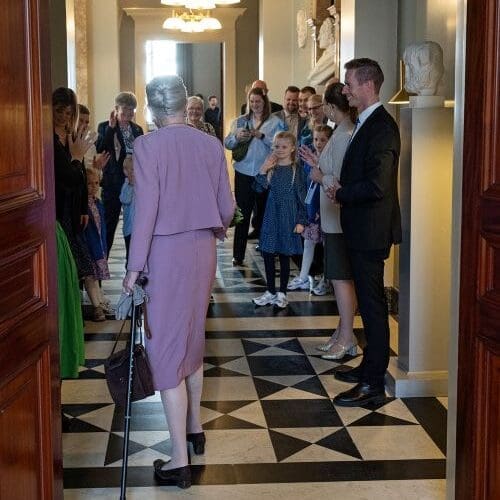
In the beautiful Academy building, we meet Academy President Anatoly Zagorodny and Vice President for the Social Sciences and Humanities Professor and former ambassador Serhii Pyrozhkov. President Zagorodny acknowledged Denmark’s support, emphasizing the Academy’s current focus on research and developments aimed at strengthening the nation’s defense capability, security, and social sciences and humanities for Ukraine’s post-war revival. We reported on ongoing networking activities between Danish and Ukrainian scholars at the Royal Danish Academy of Sciences and Letters and about new Danish-Ukranian research projects.

[See photos below, ed.]

Visit to the Council of Europe Office in Kyiv. Perspectives on research on Ukrainian youth in Ukraine and displaced children

Inspiring meeting on April 3rd with the Council of Europe in Ukraine and the Danish-Ukrainian science delegation. We discussed the excellent use of research-based evidence in the Council of Europe and the conditions of science; academic freedom; preservation of cultural heritage; knowledge-based society; the need to rebuild science institutions in Ukraine and their integration in Europe; and the inspiring “Youth for Democracy in Ukraine” project.

Erlend Falch, Deputy Head of the Council of Europe Office in Ukraine, presented the current Action Plan of the Council of Europe for Ukraine “Resilience, Recovery and Reconstruction” 2023-2026. His team is implementing no less than 27 projects, including civic participation, IDP rights, youth policy and youth work, combating violence against women, protecting children’s rights, anti-discrimination, and rights of national minorities. Erlend Falch emphasized the role of the Register of Damage for Ukraine (RD4U) and the opening of its new office in Kyiv. The office will help the Register raise awareness amongst various stakeholders within Ukraine, including regional and local authorities, businesses, civil society organizations, and the general public.

Olena Chernykh, Senior Project Officer, presented how the project “Youth for Democracy in Ukraine” contributes to the development of youth policy and youth work in Ukraine in time of war by mapping the needs and series of training programs on social cohesion, trauma-informed youth work, non-formal education. It applies an evidence-based approach to all activities by developing and conducting research on the needs and challenges of youth centres and spaces, youth councils, and youth policymakers working with young people under war conditions.

Nadiia Pavlyk, a member of the European Pool of Youth Researchers, expert of the Project, shared her experience of co-operation with the Council of Europe and her recent contribution to the study on new occupational standard “Youth Worker”, the mapping of formal education practices in the field of youth work and the Collection of youth work experience in Ukraine in time of aggression of the Russian Federation.

Erlend Falch as described the “Comprehensive assessment of the сhild-friendly justice system in Ukraine”, developed at the request of the Ministry of Justice of Ukraine and the Interagency Council on Child-Friendly Justice. The assessment examines the implementation of child-friendly justice standards, identifies the main trends and key problems in ensuring the procedural rights of the child in criminal cases, civil and administrative cases involving children and the protection of their rights and interests. Importantly, it provides recommendations for the National Strategy for reforming the justice system and protecting children’s rights in the field of justice 2024-2028.

Birgitte Beck Pristed, Associate Professor at AU, member of the Danish Young Academy, mentioned the importance of contributing to science diplomacy and forming links with different research institutions for young researchers.

Inga Kapustian, postdoc at Department of Culture and Language, The University of Southern Denmark, presented the recent study on needs and challenges children and young people from Ukraine are facing in Denmark and other Nordic countries.

Thank you to the Office of the Council of Europe, Ukraine, Kyiv and to:

Erlend Falch, Deputy Head of the Council of Europe Office in Ukraine.

Olena Chernykh, Senior Project Officer, Youth for Democracy in Ukraine project.

Liudmyla Kindrat, Project Officer, Youth for Democracy in Ukraine project.

[See photos below, ed.]

A nation in constant alert and peril. Security measures

We arrive in the capital and install Kyiv Digital, an alarm app that will notify us of air strikes, missile attacks and the nearest shelter. The app also has links to public transport, veterans’ associations, parking, concert tickets and fundraising, so it exemplifies the incredible mix of everyday life and war that Ukrainians have been living in for more than two years. On a digital map, Ukraine’s regions are shown: dark red at the front, lighter where there are daily attacks and gray where there are briefly no missiles on the way. Ukrainians also have Telegram and other feeds with information about missile types, and they are on a first-name basis with ice buckets and patriots. The app shows us whether attacks come from Russia or the Black Sea.

“It takes 2 minutes for the missile to reach Kyiv”, say our colleagues, “and 3 more minutes to reach Lviv”. We are equally startled by the loud alarm tone, worried about whether the app even works, and about the real danger of being hit by missiles or anti-aircraft fire. The alarm went off four times during our three-day delegation visit.

Children’s book publishers in Kyiv

As part of their research project “PUBLISH” which documents children’s books in the Russia-Ukraine war, Birgitte Pristed and Nadiia Pavlyk visited children’s book stores and publishers’ showrooms in central Kyiv, including the renowned A-ba-ba-ha-la-ma-ha which publishes books for children between 2 and 102. We collected and loaded our suitcases with around 30 new illustrated Ukrainian children’s books that resonate child experiences of war and dislocation. Another 60 books are now underway to the International Children’s Book Collection at the AU research library of the Danish Pedagogical University. An impressive variety of new book titles on a difficult topic, especially given how Ukrainian children’s book publishers operate under wartime conditions.

[See photos below, ed.]

Memorial sites in Kyiv. Words cannot describe the endless rows of photo portraits of the fallen soldiers

[See photos below, ed.]

Who would have imagined this? Kyiv is also a city of mural arts.

[See photos below, ed.]

Launch of 2024 theme: VidenSkaber

Artificial intelligence: on the verge of a paradigm shift – are we ready?

Launch of 2024 theme: VidenSkaber

In 2024 the Royal Academy’s dissemination project, VidenSkaber (KnowledgeCreates) will focus on artificial intelligence (AI) in a series of participatory workshops and discussions, as well as in new video series and podcast series. You are welcome to join us.

OpenAI’s launch of ChatGPT in November 2022 jump-started an AI race worldwide, the consequences of which are difficult to predict. But how frenzied will it get? And how do we take control of its development? For most of us the questions are piling up.

How will AI affect our communities and trust in one another? Can AI contribute to a better world? Accelerate the green transition? Revolutionise our healthcare system? Or will AI instead increase inequality, eliminate jobs and undermine education?

The answers are as varied as the questions are many, which is why discussion must take place across scientific disciplines and between researchers and the general public. With a theme centred on how AI is changing society the Royal Academy seeks to contribute to the discussion by closely aligning it with our daily lives and by allowing everyone to participate.

Autumn programme

In 2023 VidenSkaber hosted various events across the country, where researchers and the general public joined forces to address the issue of how we will live in the future. This year we are asking how AI is changing our society. The autumn programme will take place in locations throughout Denmark, just like in the project’s first year. There will be five workshops, four debates, two online lectures and a grand finale in the beautiful main auditorium at Aarhus University. Eager to include the public in one of the biggest issues of our time the Royal Academy will also use podcasts, videos and popular science.

“Artificial intelligence has quickly become a hot topic but most of us probably see it as another technology train, where we can either hop on board or risk getting left behind. The aim of VidenSkaber artificial intelligence but also discuss the scope people have for taking action. We will unveil the autumn programme in detail at the end of June,” explains Tina Dransfeldt Christensen, project manager for VidenSkaber.

Sign up for the VidenSkaber newsletter to stay abreast of the latest news about the programme.

About VidenSkaber


VidenSkaber is a meeting place that lets the Royal Academy bring together researchers and the public to discuss current and everyday issues. The goal is for more people to gain insight into how the various branches of science work and how they can contribute to finding solutions to society’s major challenges. That’s why VidenSkaber is constantly asking: How do we know what we know?


VidenSkaber, which will run from 2023–2025, includes various research dissemination activities ranging from being penetrating and highly interactive to debates involving large audiences to formats that provide background knowledge, such as workshops, discussions, science journalism, videos and podcasts.


VidenSkaber is supported by the Carlsberg Foundation, the Novo Nordisk Foundation and the Lundbeck Foundation.


Read more.

The Queen’s Science Award given to a civil engineer and a corona scientist

Queen Margrethe II’s Science Award 2024

The Queen’s Science Award given to a civil engineer and a corona scientist

Photo: Lars Svankjær / Royal Academy
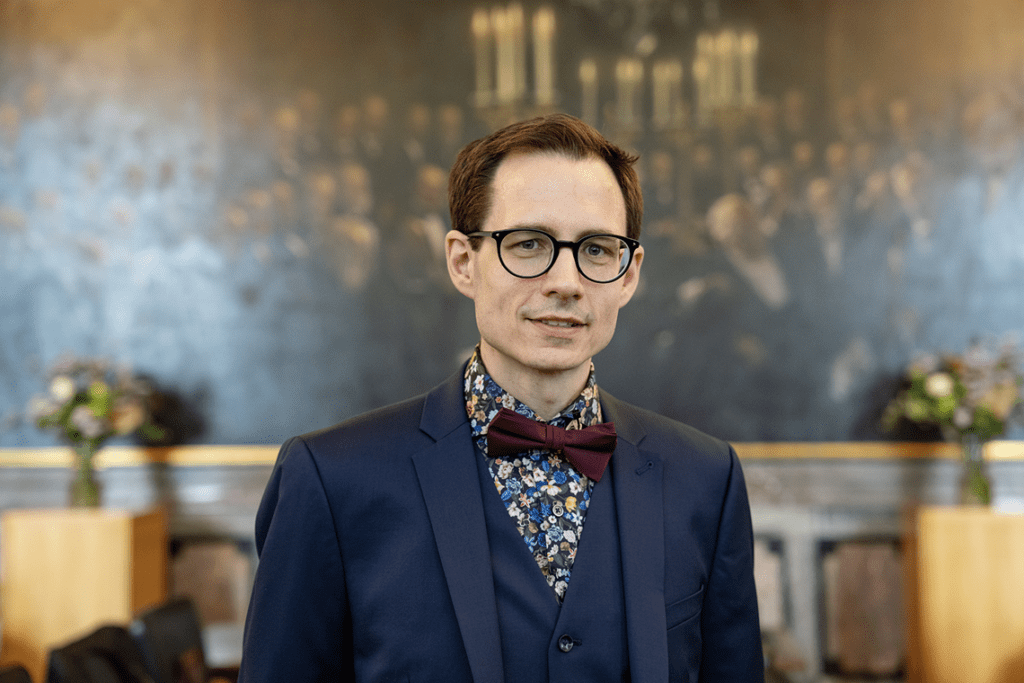
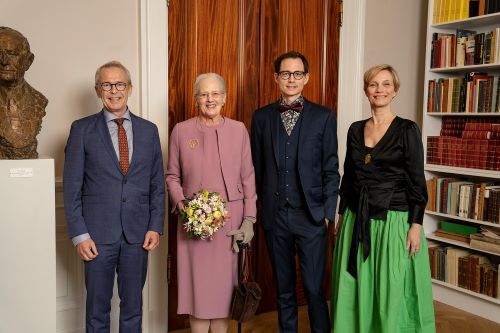
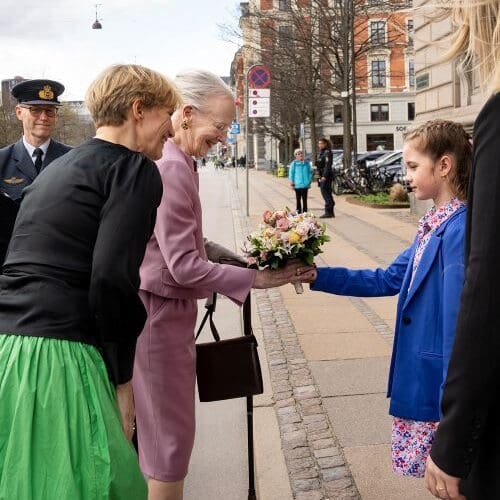
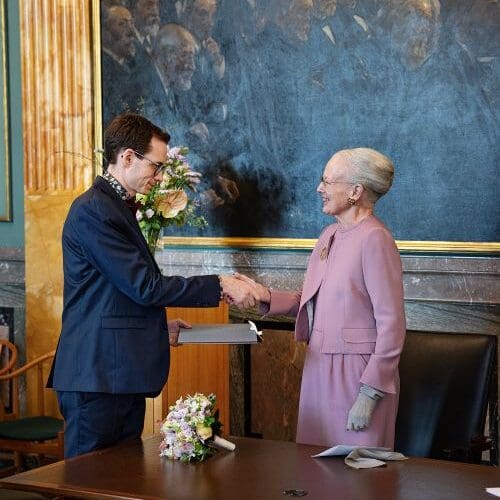
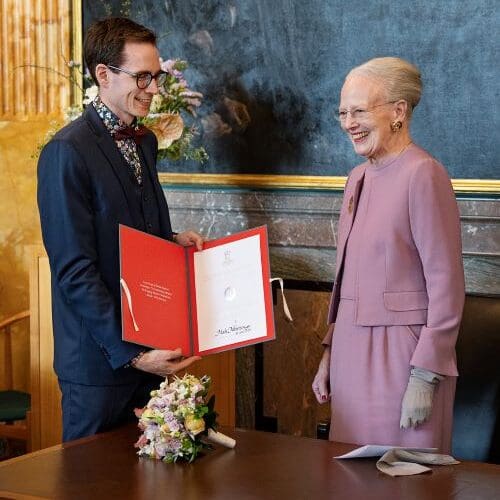
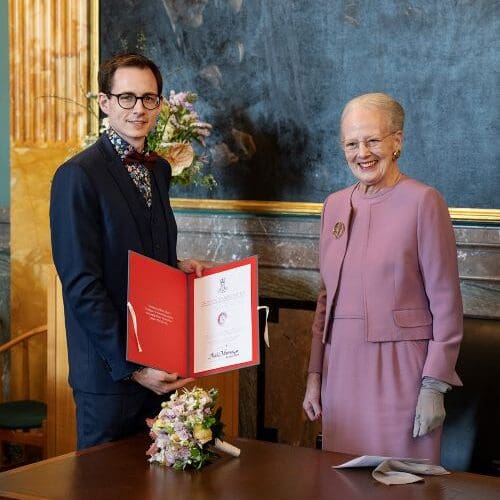
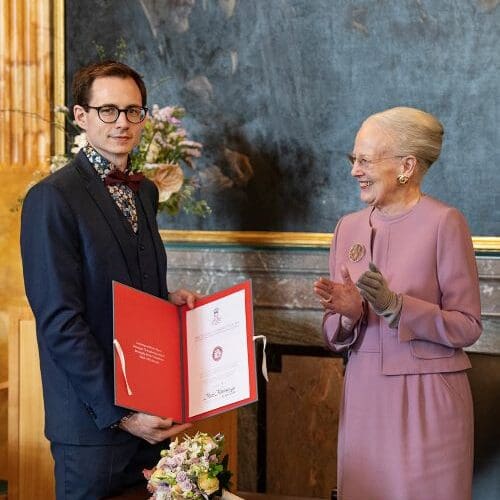
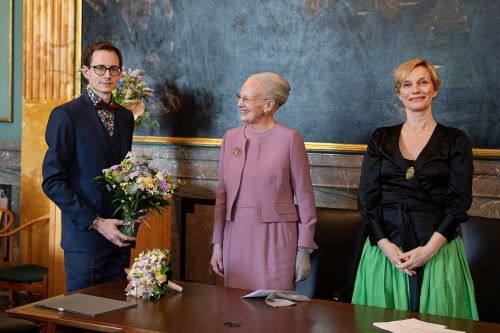
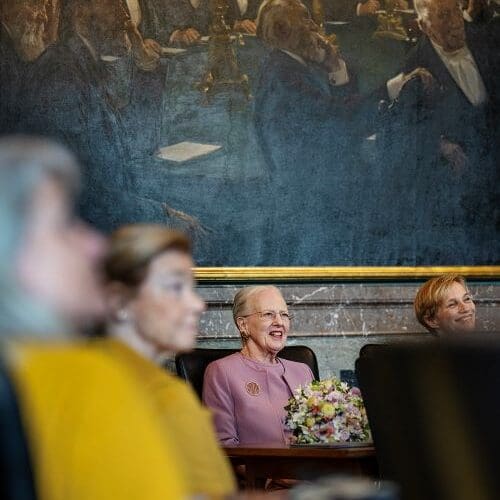
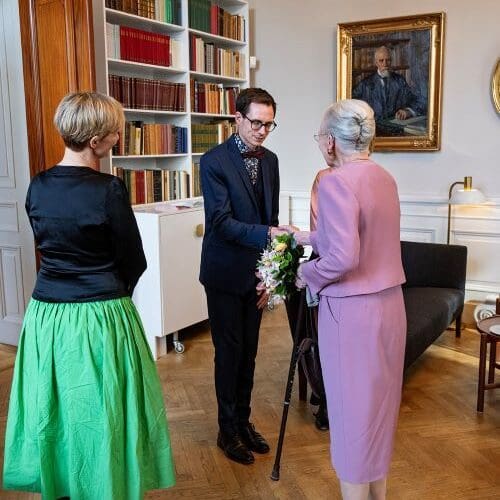
On 10 April 2024 research group leader and Professor Mads Albertsen, Aalborg University received Queen Margrethe II’s Science Award at the Royal Academy. President Marie Louise Nosch took the opportunity to pay tribute to the researchers who – together with the recipient – have played a crucial role in Denmark’s handling of the COVID-19 pandemic. Read her speech and view the photo gallery.

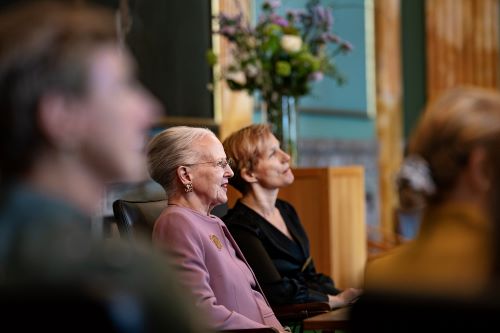
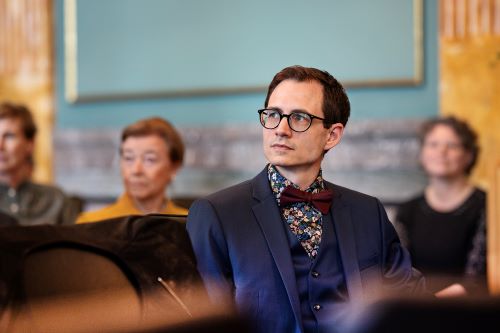
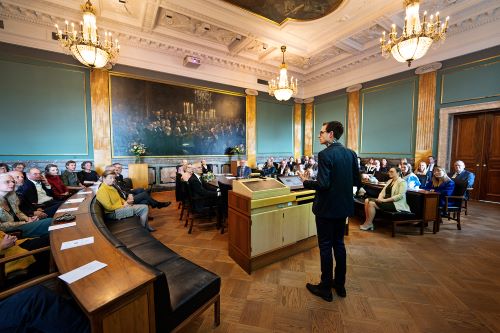
The Royal Academy’s Old Meeting Hall is filled to the brim on Wednesday afternoon but the high-ceilinged room was conspicuously quiet. The audience is awaiting the arrival of H.M. Queen Margrethe.

The camera shutters and flashes from journalists and photographers in the adjacent room break the silence in an instant. Everyone rises to their feet, including this year’s recipient, Mads Albertsen.

Science continually surprises us

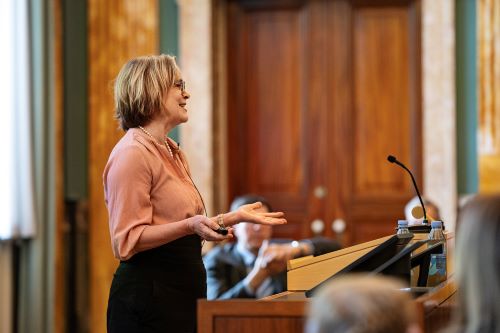
“It is a great honour to welcome you all here today for the presentation of H.M. Margrethe II’s Science Award,” begins Royal Academy president Marie Louise Nosch from the podium.

After giving H.M. the Queen and Professor Albertsen a warm welcome, she continues with a little anecdote to give the day a unique perspective:

“More than 300 years ago one of the world’s first modern chemists, Robert Boyle, recorded some of his thoughts on the potential of science in an ultimate to-do list describing his hopes in terms of what science could achieve. Included among the various ideas he presented were prolonging life; recovering youth – at least some signs of it, like new teeth and hair colour; the art of flying; a ship no winds could ever sink it; an eternal flame; the ability to cure wounds and disease from a distance, or at least with the help of transplants.

President Nosch looks out at the audience. Several people are smiling at the thought of how apt Boyle’s inventions are, some of them slightly comical. She continues:

“Today is proof of how far science has come since then. We have long since ticked off most, if not all, of the items on Boyle’s list. Science has fulfilled his dreams and then some, continuing to do so for us today.

Nosch smiles when her gaze falls on a select few people in the audience.

“During the COVID-19 pandemic science and the researchers behind it – including today’s winner, Mads Albertsen – solved some of society’s most pressing problems by rapidly providing detection methods, vaccines and evidence-based information for decision makers and the general public. Several of these corona heroes are in this room today. On behalf of the Royal Danish Academy of Sciences and Letters, I would like to take this opportunity to express an extra warm thank you to Lone Simonsen, Bente Klarlund, Susanne Ditlevsen, Henrik Ullum, Thyra Grove Krause, Kåre Mølbak, Viggo Andreasen, Camilla Holten Møller and Mads Albertsen. We of course also extend our gratitude to those who could not be present today. Thank you for the major effort that you all put into pulling us out of a historically significant time of crisis. And for reminding us that the common good is inextricably linked to our continued research, exploration and curiosity,” concludes Nosch.

A blessing in disguise

At this point Albertsen has long since returned to what he is most passionate about, which is using DNA technology to study the imperceptible diversity of bacteria. According to Albertsen, however, it was in fact this interest that allowed him and his research team to step in almost immediately during the first year of the corona pandemic.

The day after receiving the award Professor Albertsen wrote the following on social media: “When the COVID-19 pandemic hit, my team had just built a large laboratory to perform microbial DNA sequencing in connection with a mapping of Denmark’s bacteria in Microflora Danica [ongoing research project]. This meant that the lab was already ready for us to step in and help with the important task of sequencing the COVID-19 virus”.

He also once again mentions how amazing the beginning of 2024, where he received the Elite Research Award and the Queen’s Science Award, was for him as a researcher and a person, reiterating that he is very honoured and proud.

Research is a team sport

Amid the celebration Albertsen did not forget the importance of mentioning his fellow researchers, stating:

“It’s also important for me to emphasise that there are many people with whom I must share this honour. Especially with my colleagues and students at the Department of Chemistry and Bioscience, Aalborg University. Research is a team effort so the recognition I am receiving is just as much yours,” insisted Albertsen, who also thanked, for example his partners in the business community, the authorities and other Danish and foreign universities”.

Read more about Albertsen’s research in the press release for the award ceremony. View the picture gallery from 10 April.

Travel diary from Ukraine: Chapter 1

Travel diary from Ukraine: Chapter 1

Meet the Danish-Ukrainian Scientific Delegation

Photo: Unless otherwise noted, photos are taken by the delegates.

In early April 2024 a delegation of four researchers travelled to war-torn Ukraine under the auspices of the Royal Academy and visited several of the country’s major universities. The four researchers included Marie-Louise Nosch, president of the Royal Academy, and three members of the Danish Young Academy: Birgitte Beck Pristed, Inga Kapustian and Nadiia Pavlyk. Chapter 1 of this miniseries begins by briefly presenting each one of them and the purpose of their journey.

Each week in the month of May we will unveil a new chapter presented by the travellers to provide unique insight into their experiences while abroad.

Delegate contributions are presented in their own words.

We are the Danish-Ukrainian science delegation visiting Kyiv, Lviv and Ivano-Frankivsk, 2-7 April 2024; four scholars; four women; two Ukrainians and two Danes; from three Danish universities [Aarhus Universitet, Syddansk Universitet og Københavns Universitet, red.]. With the mission to exchange knowledge and learn much more. Our cross-cutting academic fields are youth, culture, academia, and humanities.

After two years of full-scale war, we went to visit Ukrainian research and education institutions. Our purpose: To demonstrate to Ukrainian scientists and research institutions our support, readiness, and desire to support the positive development of science in Ukraine.

Who are we in the Danish-Ukrainian science delegation?

Postdoc Inga Kapustian

Postdoc Inga Kapustian is a scholar at the Hans Christian Andersen Center, Department of Culture and Language, The University of Southern Denmark (SDU) since 2022. The research focuses on Translation and Social Semiotics, particularly on translations of Hans Christian Andersen’s  works before, during, and after the Soviet era. She also works on intertextuality and Cross-Cultural Influences in translation, as well as examining Readers’ reception and cultural adaptations. Now she is working on a research project titled “Hans Christian Andersen and World Literature: Ukrainian Perspectives.”


Associate Professor Birgitte Beck Pristed

Birgitte Pristed is an Associate professor at the School of Culture & Society, section of Russian and Balkan studies, Aarhus University, Denmark. [She writes, ed.]: I am a member of the DUA/DanishYoung Academy 2019-2024, and was co-chair 2023-24. I conduct research on publishers of children books about the war published in Ukraine and by independent publishers in Russia. My research interests: Book history, publishing studies, Soviet and post-Soviet book and print culture, contemporary publishing, and illustrated children’s books. Knowledge and science diplomacy, research conditions for younger scholars. I am the PI of the project: “PUBLISH: Children’s books in the Russia-Ukraine War” which investigates contemporary publishing of Ukrainian and Russian wartime children’s books that represent child experiences of war and migration, and funded by the Aarhus University Research Foundation, AUFF Nova.


Professor Nadiia Pavlyk

Professor Nadiia Pavlyk is amember of Department of Global Studies, Aarhus University, Denmark. She is a member of the Pool of European Youth Researchers (PEYR) (2024-2025), researcher of the project “Youth for Democracy in Ukraine”, former AUFF-Ukraine research fellow, Aarhus Institute of Advanced Studies (Denmark, 2022-2023), and Professor at the Department of Social Technologies at Zhytomyr Ivan Franko State University, Ukraine. [She writes, ed.]: I am a researcher of the project “PUBLISH: Children’s Books in the Russia-Ukraine War”, Department of Global Studies, Aarhus University (Denmark, 2024). My research focus: non-formal education for excluded groups, youth work and youth policy based on Council of Europe standards and approaches, shared reading for families, children’s books in the Russia-Ukraine war.


Professor Marie Louise Nosch

Professor and President of the Royal Danish Academy of Sciences and Letters Marie Louise Nosch explores traditional textiles and ancient history. [She writes, ed.]: Since 2022, I have collaborated with the other academies of Ukraine,  Poland, Germany, France, the UK, the USA and ALLEA to coordinate help and support to scientists in Ukraine. [See the, ed.] 10 points action plan.

In the Royal Danish Academy, I host a “Ukrainian Scholars’ Day” every six months to assist our Ukrainian colleagues in forming new professional networks while they are in Denmark. I also have a professional interest in Ukrainian costumes and textile techniques. With Yuliia Lazorenko, Magali-Ann Berthon, Sophia Hayda, Tatiana Krupa I published a paper: “Narrative and Material Tools of Resistance: mobilising textilecrafts, heritage and fashion in the context of Ukraine’s invasion  (2022-2023)” in Euroweb Anthology 2024. I have moreover collected short podcast narratives by Ukrainians who tell a story about a favorite piece of clothing.

Seminar on academic freedom

Seminar on Academic Freedom

The Royal Academy spotlights academic freedom and threats to the pursuit of truth

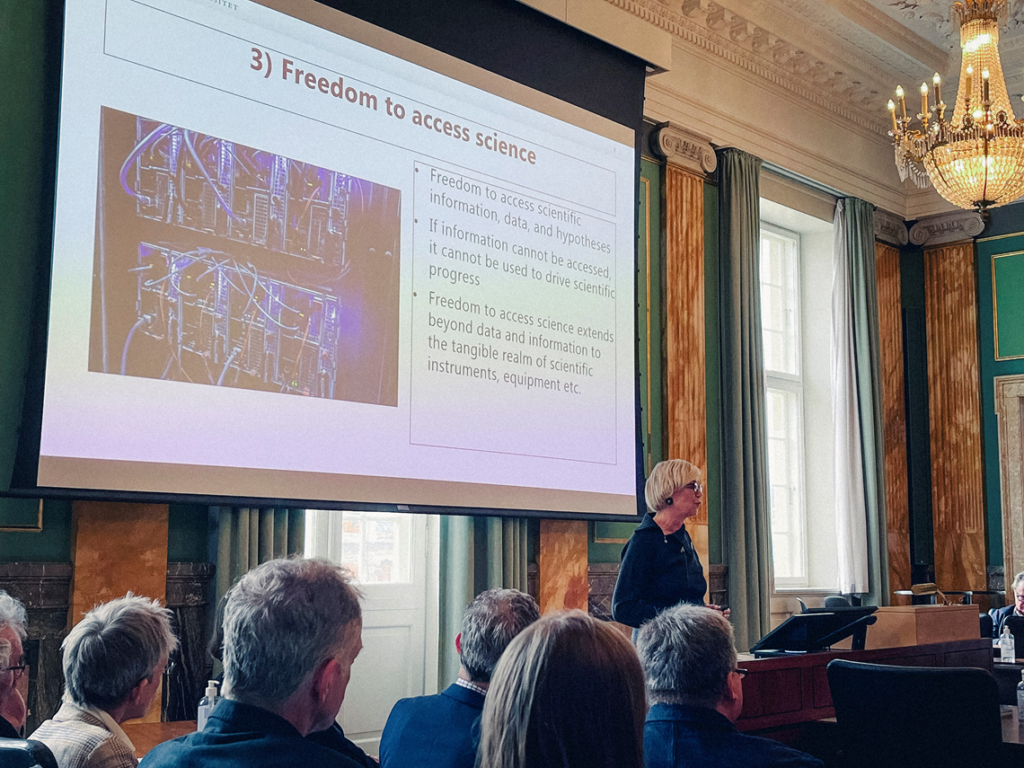
Photo from Helle Porsdam’s presentation: The Royal Academy
The Royal Academy’s first seminar on academic freedom made it abundantly clear that there are innumerable issues to be addressed. The first in a series of seminars on the topic identified and explored threats against the ideal of the unfettered search for truth but also the problems associated with it.

Academic freedom, particularly when absent, is closely linked to democracy. Speaker Pavel Tereshkovich, who elaborated on what a society without academic freedom might look like, discussed the current situation at universities in Belarus. He is the chair of the exiled Belarusian government’s Council for Education and Research. Since 2020 Belarus has seen a dramatic change in how universities are controlled. University management, which is politically appointed, is quick to sack researchers for having ideologically “wrong” opinions. That is why the number of university professors has fallen by 7.9%, the equivalent of 1,550 people, in 2021–2022. Most of these former professors are now unable to support themselves as they are banned from all forms of employment – even cleaning jobs. A few have even been prosecuted and thrown in jail.

“This is the new image of university management,” explains Tereshkovich, who shows a picture of university presidents dressed in green camouflage military jackets standing in a row, each holding a small black pistol as they practice shooting.

Danmark does not immediately face such draconian measures but events outside our borders put pressure on Danish researchers, as Marie Louise Nosch, president of the Royal Academy emphasised in her opening speech. This was recently highlighted in an advertising campaign by the Danish Security and Intelligence Service (PET) warning Danish researchers about letting their research fall into the hands of foreign powers such as Iran or Russia. With slogans such as “Avoid becoming the Russian Intelligence Employee of the Year”, PET sought to use humour to engage researchers in a debate about the international exchange of ideas and national security interests.

“By its very nature, science is without borders,” emphasised Nosch when discussing the PET case. A basic tenant of academia is to discuss, collaborate and share research results with international colleagues. But now Danish researchers are being asked to weigh this principle against the security risks of the regimes under which their colleagues work. Are their international colleagues subject to a university president who has been on a military course? For this reason the academic freedom of our foreign colleagues is directly relevant to the working conditions of Danish researchers,” Nosch pointed out.

“Which problem do you want to pick?”

Academic freedom is threatened by more than just the totalitarian tendencies of other countries. Universities also struggle with internal challenges, such as how to deal with student activism, controversial speakers and hate speech. Social pressure can push researchers to censor themselves, which is a threat to academic freedom. David Kaye, a law professor from the University of California and a former United Nations Special Rapporteur on the protection of freedom of expression, touched on these issues.

These types of challenges are closer to the reality of Danish universities than the situation Belarus faces. As a result, during the subsequent panel discussion, various members of the audience asked Kaye and the other panellists if they could elaborate on what can be done to ensure academic freedom. As representatives of Danish institutions responsible for academic environments, some of the people asking questions were keenly interested in how to protect academic freedom. Academic freedom is a broad concept, which means addressing the question is complex – even for a panel of experts in the field.

This led Kaye to exclaim, “Which problem do you want to pick?” One aspect that was emphasised is that academic freedom must be ensured at many different levels along the academic value chain.

Society’s access to research

The relationship between universities and the general public is one aspect of academic freedom that has been under pressure in Denmark in recent years. Many researchers are worried about the consequences of working on controversial topics. As Nosch pointed out in her introduction, a recent study showed that researchers fear that speaking out about controversial research will lead to bullying or harassment. Presentations by Helle Porsdam, a professor of history and cultural rights at the University of Copenhagen, and Kristoffer Kropp, an associate professor at the Department of Social Sciences and Business at Roskilde University, focused on these issues, including the challenges involved in participating in research and having access to research.

Kropp explained that not all researchers have equal access to participating and asserting themselves as researchers – in neither the scientific nor public debate. For example, there is a systematic difference in how easy it is for researchers from Northwestern and Southeastern Europe to get their research results published in the most prestigious journals. As a result, society is missing out on expert input and researchers are prevented from making meaningful contributions to society with their research.

During a conversation after the event Kropp explained that academic freedom is not just about researchers saying leave us alone but that, “It is a crucial condition for us to engage with society and fulfil our social responsibility”.

Helle Porsdam’s presentation pointed out the implications of the general public having insufficient access to research and researchers. A lack of access prevents research from contributing to the development of society, for instance by enabling decision makers to base their choices on facts and allowing private individuals to act on an informed basis. As a concrete example, access to knowledge about hurricanes and earthquakes can be important for the safety of the general population. Being aware of the threat of these natural phenomena in advance allows society to take measures to counteract them and individuals can evacuate to a safe place in a timely manner.

If scientists were the sole proprietors of this knowledge and it was not disseminated to the public or only to a select few, then an imbalance would arise in the opportunities available to people in life. Consequently, structural barriers preventing researchers from having a voice in the research world, combined with many researchers feeling inhibited by the outside world’s reactions to their research on controversial topics, can be detrimental for society.

Even in Denmark there are challenges we can address to ensure academic freedom. Discovering a solution to complex national and international issues in a single afternoon is a tall order – even for a panel of experts at the Royal Academy. As a result, the discussion on academic freedom will continue at the Royal Academy’s autumn seminar, which is open to the public and will explore the individual challenges in more depth.

Royal family patronages announced

The Danish royal family

Royal family patronages announced

Photo: Lars Svankjær / Danish Royal Academy (cropped) from Royal Academy Climate Seminar, November 2020
H.M. King Frederik X appointed patron of the Royal Academy, continuing a centuries-old tradition.

H.M. King Frederik X appointed patron of the Royal Academy, continuing a centuries-old tradition.

On the afternoon of Thursday 30 May 2024 the Danish Royal Family published a new list of patronages. H.M. the King of Denmark will now be the patron of the Royal Academy of Sciences and Letters, known informally as the Royal Academy.

“It’s a tremendous honour for the Royal Academy to once again be under royal patronage, now by H.M. King Frederik. We look forward to our collaboration,” enthuses Professor Susanne Ditlevsen, president of the Royal Academy.

“H.M. the King has previously participated in various seminars and meetings at the Royal Academy, including on the climate and physiology. We appreciate that our new patron, like our previous patron H.M. Queen Margrethe, so clearly shows his support for science and its crucial role in society,” she concludes.

With this decision the Royal Family resumes and continues a centuries-old tradition of the current regent being the patron of the Royal Society, which dates all the way back to 1742 when the Academy was established with King Christian VI as its patron.

H.M. Queen Margrethe II, the former patron of the Royal Academy, will continue to preside over the annual presentation of Queen Margrethe II’s Science Award, which was instituted by the Royal Academy on the occasion of H.M.’s 75th birthday in 2015.

Timeline of the history of the Royal Academy, including the names of previous royal patrons.

New members elected for the Royal Danish Academy of Sciences and Letters

Press release

The Royal Danish Academy of Sciences and Letters admits new members

Photo: Lars Svankjær / Videnskabernes Selskab
The more than 280-year-old academy, which has boasted illustrious  members such as H.C. Ørsted, Niels Bohr and August Krogh, welcomes 18 new members, who will join the Royal Academy’s efforts to ensure good conditions for research and scientists in Denmark.

Academy members actively endeavour to strengthen the position of science and interdisciplinary understanding in Denmark. The Royal Academy is a collaborative body and meeting place for researchers from all areas of basic scientific research. As a result, it organises member meetings, symposia, presentations and lectures, publishes, and participates in international collaborations and the Academy’s forums and committees on research and climate policy, public service and education, the dissemination of research – and much more.The more than 500 members of the Royal Academy are divided into two main areas, the humanities and the natural sciences. At its most recent general meeting on 16 May 2024 the Academy admitted 18 new members from the natural sciences since this area admits new members in even years.

In addition to the two aforementioned areas, members are also divided into ordinary and corresponding members, the former live in Denmark and are affiliated with Denmark or Danish research, while the latter live abroad and are affiliated with research outside Denmark.

New ordinary members in the natural sciences:

Mads Albertsen
Professor
Subject areas: microbiology, biotechnology
Workplace: Department of Chemistry and Bioscience, Aalborg University

Messoud Ashina
PhD, MD
Subject area: neurology
Workplace: Copenhagen University Hospital – Rigshospitalet and University of Copenhagen

Isabelle Augenstein
Professor, Head of Section, DSc, PhD
Subject area: computer science
Workplace: University of Copenhagen

Peter Ditlevsen
Professor
Subject area: physics
Workplace: Niels Bohr Institute, University of Copenhagen

Stig Helveg
Professor, PhD
Subject areas: electron microscopy, physics-chemistry, nanomaterials, catalysis
Workplace: Technical University of Denmark

Sune Lehmann
Professor
Subject areas: computer science, informatics, social networks, applied mathematics, physics
Workplace: Technical University of Denmark

Kresten Lindorff-Larsen
Professor
Subject area: biochemistry
Workplace: Department of Biology, University of Copenhagen

Mette Løvschal
Professor
Subject area: prehistoric archaeology
Workplaces: Aarhus University and Moesgaard Museum

Rikke Louise Meyer
Professor, PhD
Subject area: microbiology/nanoscience
Workplace: Interdisciplinary Nanoscience Center (iNANO), Aarhus University

Dorthe Bomholdt Ravnsbæk
Professor
Subject area: materials chemistry
Workplace: Aarhus University

Riikka Riinnan
Professor
Subject area: ecosystem-atmosphere interactions
Workplace: Department of Biology, University of Copenhagen

Peter Vuust
Professor, musician, composer, PhD
Subject area: neuroscience
Workplace: Aarhus University

New corresponding members of the natural sciences:

Ewan Birney
PhD
Subject areas: bioinformatics, genomics, heritability
Workplace: EMBL/European Institute of Bioinformatics (EMBL-EBI)

Robert Dunn
Professor, PhD
Subject areas: ecology, evolutionary biology, entomology
Workplace: North Carolina State University

Hélène Esnault
Professor, MD, honorary doctorates
Subject area: arithmetic geometry (mathematics)
Workplaces: Free University of Berlin (part-time at Harvard University and University of Copenhagen)

Naomi Halas
PhD
Subject area: chemistry and physics
Workplace: Rice University

Adeline Leclercq Samson
Professor, PhD
Subject areas: statistics, stochastic modelling, data analysis in biology and social sciences
Workplace: Université Grenoble Alpes

Guojie Zhang
Professor, PhD
Subject area: biodiversity genomics
Workplace: Zhejiang University

The new members of the Royal Danish Academy of Sciences and Letters are admitted after election and subsequent acceptance by the members. In addition to electing new members in the natural sciences, the general meeting also elected a new president and a new board member for the Carlsberg Foundation. The next election for new members, this time in the humanities, will be in spring 2025.

Please direct any inquiries regarding election procedures and the like to Royal Academy’s programme consultant Trine Hagerup: th@royalacademy.dk or +45 3149 2316. For press-related inquiries please contact communications consultant Rikke Reinholdt Petersen: rp@royalacademy.dk or +45 3125 8060.

The Royal Danish Academy of Sciences and Letters gets new president

Press release

The Royal Danish Academy of Sciences and Letters gets new president

Foto: Lars Svankjær / Videnskabernes Selskab
Susanne Ditlevsen, professor of statistics and stochastic models in biology at the Department of Mathematical Sciences, University of Copenhagen was elected president of the Royal Academy for the next four years on Thursday 16 May 2024.

Ditlevsen will be following in the footsteps of individuals such as King Christian VIII and Niels Bohr – and most recently Professor Marie Louise Nosch, Saxo Institute, University of Copenhagen.

“I’m extremely pleased and proud to be the head of such a unique organisation. I will approach the task with the utmost humility and respect for the Royal Academy’s historical legacy,” Ditlevsen explains.

Secretary General Professor Thomas Sinkjær looks forward to working with the new president:

“Susanne was elected with resounding support from Royal Academy members and is an excellent researcher whose abilities I have the greatest of confidence in to continue the positive direction the Royal Academy is headed.”

Ditlevsen has a versatile profile personally and professionally. She applies mathematical models to study a wide array of biological and physical systems, ranging from marine mammals to climate models to the brain’s processing of sensory input. Her research recently made waves nationally and internationally with an article in Nature Communications suggesting that a major ocean current could potentially come to a halt in the middle of this century.

In fact her research career started relatively late. She did not embark on a research career until after studying to be an actor and then working in various theatre companies as an actor and director for ten years.

She believes that the Royal Academy, notwithstanding its 280 year history, is highly justified today:

“More than ever the Royal Academy has an important role to play because science and interdisciplinary understanding are essential to solving society’s major challenges, such as the climate and biodiversity crises, natural disasters, security, wars, health crises, epidemics, food security and humanitarian disasters.”

For inquiries please do not hesitate to contact the Royal Academy’s Head of Communications Kristoffer Frøkjær at or by telephone on +45 3114 6101. 

About Professor Susanne Ditlevsen


1999: MSc in mathematics, Universidad Nacional de Educación a Distancia, Spain

2000: MSc in statistics, University of Copenhagen

2005: PhD in biostatistics, Department of Biostatics, Faculty of Health and Medical Sciences, University of Copenhagen

2011: Professor of statistics and stochastic models in biology, Department of Mathematical Sciences, University of Copenhagen

2016: Member of the Royal Academy


In addition:

  • Section head of statistics and probability, 11 years
  • Distinguished Investigator Grant in Data Science from the Novo Nordisk Foundation
  • During the COVID-19 crisis she was part of the Ministry of the Interior and Health of Denmark’s early warning system advisory group

ChatGPT ushers research into a new era – calling for new rules of the game

Opinion piece in Altinget

ChatGPT ushers research into a new era – calling for new rules of the game

Foto: Koshiro K / Shutterstock
Language models like ChatGPT will change how we conduct research. To ensure transparency and maintain trust in research, a code of conduct should be drawn up, writes the Royal Academy in Altinget, an online Danish political review.

Authors of the opinion piece:

  • Kim Guldstrand Larsen, professor, Department of Computer Science, Aalborg University, member of Royal Academy
  • Susanne Ditlevsen, chair of the natural sciences class at the Royal Academy and professor at the Department of Mathematical Sciences, University of Copenhagen
  • Thomas Sinkjær, secretary general, Royal Academy and professor at the Department of Medicine and Health Technology, Aalborg University
  • Kristoffer Frøkjær, former head of communications, Royal Academy

Israeli researchers recently produced a research paper in less than an hour with the help of ChatGPT.

Fluent and insightful, the article adhered to the expected format of scientific articles. The results, however, were nowhere near close to being novel. This will change in the future.

ChatGPT and similar large-scale language models will likely have a profound impact on a variety of sectors and industries, especially research.

Technology has always been an engine in the advancement of science, for example the invention of the printing press and CRISPR. Game-changing technology can open up new possibilities, influence the internal dynamics of research and set new directions for exploratory research.

In addition, it can also lead to a renegotiation of how science is conducted, particularly the underlying ethical framework. Researchers who are familiar with the new technology will be in the best position to help shape how it is used.

ChatGPT is an example of this new revolutionary technology.

The nature of research will change

Language models like ChatGPT can take research in new directions by rapidly analysing vast amounts of scientific literature, identifying relevant articles and summarizing them. They will save time and help researchers stay up to date.

ChatGPT can perform routine tasks. With language models automating tedious and repetitive tasks, such as generating reports and formatting data, researchers will have additional time to focus on more creative and complex tasks.

Language models can assist them in exploring complex datasets and generating hypotheses. Beyond writing scientific papers, the models can discover hidden patterns and relationships in data that can lead to new ideas, research questions and discoveries.

Thus, with language models like ChatGPT science is looking into a future where the nature of research and the time spent on tasks will change.

Responsibility lies with more than just researchers

The development of language models is occurring at breakneck speed. The quality of mathematical problem solving, for instance, has leapt from the equivalent of a fifth-grade level to that of a secondary school student in the space of a few years. GPT-4 now functions at the level of an accomplished first-year university student.

As a research tool, however, language models are still full of contrived, biased or ethically questionable results that can be difficult to detect but still highly convincing, for example by hallucinating or referring to non-existent research articles.

Language models generate texts based on statistical patterns in a vast amount of training data from the internet to create new, probable answers, but those answers are not necessarily true. Consequently, researchers must be critical of the answers ChatGPT produces.

But the responsibility lies with more than just the individual researchers.

Code of conduct required

Clear-cut general guideless are necessary on the use of the new technology, e.g. as touched upon by the European Code of Conduct for Research Integrity.

The code of conduct must cover what language models should – and should not – be used for in research and be incorporated in the Danish Codex for Integrity in Research.

The code of conduct should emphasise the need for full transparency on how and for what purpose language models are used in research so that other researchers can assess and reproduce the results. It also should underline the importance of transparency on the data used to train the models.

Currently, proprietary algorithms, i.e. a black box, make it impossible to know what information forms the basis for language models. All information in training sets must be accurate, unbiased and comply with data storage, rights and access requirements.

Embracing the new technology

A code of conduct must also include clear ethical guidelines for the use of language models in research to safeguard against accusations of misconduct and to maintain trust in research.

Language models represent a groundbreaking and staggeringly efficient technology, the potential of which we do not yet know, which means it is associated with immense uncertainty. Many people are discussing that the technology should be put on hold, but whether this is even possible is doubtful.

As has previously been the case with new technology, research is best served by embracing it and actively participating in managing how to best utilise it for the benefit of research.

Preferably under a common, carefully considered code of conduct.

Read the Altinget opinion piece.

Career development and entrepreneurship are essential to rebuilding Ukrainian research

Climate seminar highlights solutions

Career development and entrepreneurship are essential to rebuilding Ukrainian research

The third Ukrainian Scholars’ Days seminar focused on Ukrainian researchers developing their career path, preferably combined with a good measure of entrepreneurship.

Addressing the audience of Ukrainian researchers as dear friends, the President of the Royal Academy Marie Louise Nosch greeted them with a warm welcome to the third seminar, organised jointly with the Danish Young Academy.

Since the start of the war in February 2022, Ukrainian Scholars’ Days have been held around every six months to support Ukrainian researchers fleeing the war and to ensure that research, also during the reconstruction of Ukraine, is given a key role in creating a prosperous future-proof society. Today, in the meeting hall, 20 researchers are seated. Most of them have already participated in the former Ukrainian Scholars’ Days arrangements. They are all finding themselves in a complicated situation in which they, despite the seriousness of the situation at hand, also need to think about the future that lies ahead.

“Even though the current situation is an unfortunate one, let today focus on how we can get the best out of it,” emphasised Birgitte Pristed, as deputy chair of the Danish Young Academy.

As the central individuals of today’s programme, the Ukrainian scholars will be presented with both new insights as well as the opportunity to express their opinion towards the Danish support of Ukraine.

A broad career choice

Due to the challenges and need for reconstruction in Ukraine, Ukrainian researchers can play a decisive role in shaping the country’s future. For this reason, the first part of the seminar centred on career development and choices.

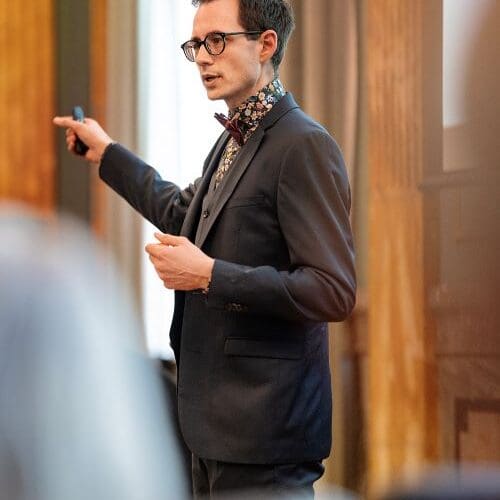
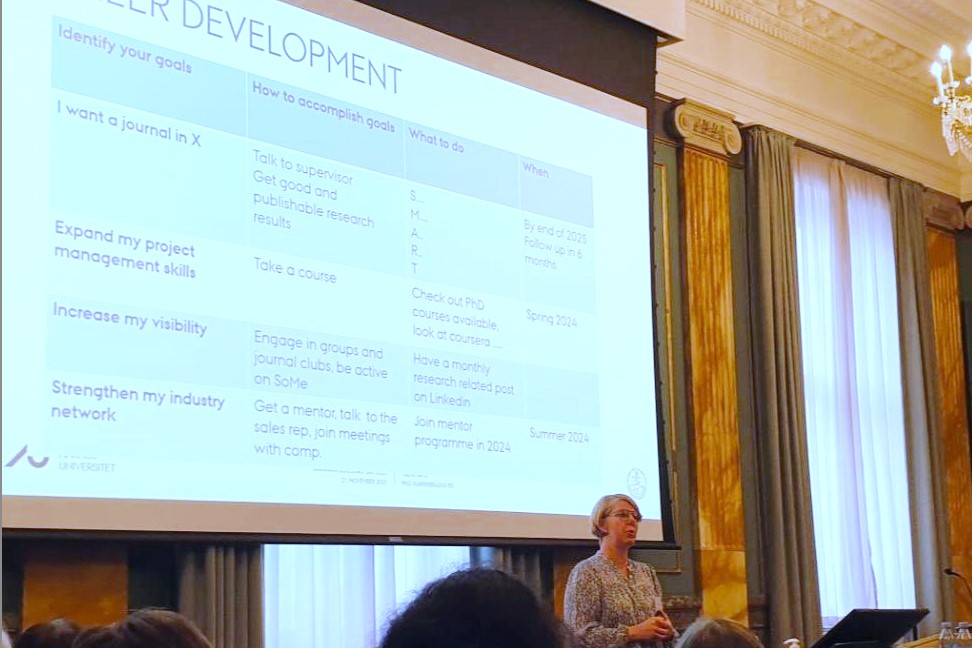
“There are fewer jobs in academia and more competition to get them,” explained Vibeke Broe, senior career counsellor for PhD students and junior researchers at Aarhus University.

Researchers are fortunately often valued employees in multiple contexts outside academia. That is why she encouraged the audience to think more broadly and to set aside time to reflect on their own abilities, goals and motivation, in addition to building a network, preferably on social media.

“It’s our own responsibility, as researchers, to think outside the box and bring our own skills and qualifications out into the world,” asserted Broe.

Only a small percentage of PhDs and young researchers go on to become professors, with figures from the Royal Society indicating that less than one percent do so. Luckily, there are many opportunities in private businesses and public institutions where the abilities that researchers develop and possess are an excellent asset, for instance their outstanding analytical skills, persistence, ability to solve complex problems and proficiency in project management. And such skills are useful when working at private companies as well as public institutions.

Before giving the floor to Professor Jes Broeng, director of the Centre for Technology Entrepreneurship at the Technical University of Denmark, Broe underlined the importance of strengthening the scientific capacity of Ukraine, for example by promoting PhD programmes, supporting research projects and establishing close links between Ukrainian universities and international institutions.

Innovation and entrepreneurship

Broeng continued where Broe left off, sharing perspectives on innovation and free enterprise as drivers of economic growth and development. In areas where Ukrainian researchers are at the forefront, they have the potential to translate their knowledge and research results into breakthrough technologies and products within research areas such as in aerospace. Researchers need to be aware of the various stepping stones that are key to increasing innovation and entrepreneurship.

“If you’ve done the research, be open about your ideas. It’s natural to wary of having your ideas stolen, but research shows that this rarely happens. If you reach out to academia and industry, but also engage in conversation with a wide range of stakeholders, then someone will take notice of your ideas,” assured Broeng.

In addition, join forces with people who have experience working professionally with innovation and entrepreneurship is a wise move. The audience, which represented a wide array of scientific disciplines, naturally asked about the role of the humanities.

“Just because you study H.C. Andersen’s fairy tales, it doesn’t mean that you’re exempt from thinking about entrepreneurship. Anthropology and psychology, for instance, often play a role in developing products, though the humanities are often co-players as opposed to initiators,” pointed out Broeng.

In the US, for instance, incorporating the humanities as a natural part of free enterprise is much more common, but this is not yet the case in Europe.

Once you have an idea and have established a setup, it is important to be aware of what roles team members have. “In short, startups require three types of personalities: a hacker who understands the technical aspects, a hustler who can sell the product, and a hipster who can tell the story,” he concluded.

Recovery and reconstruction through partnerships

Anne Kahl and Julian Petar Ilievski from the Ministry of Foreign Affairs of Denmark gave the final presentation of the day, sharing insights about the importance of collaboration between Denmark and Ukraine for the nation’s recovery and reconstruction in terms of, e.g. infrastructure, energy supply, healthcare and education.

In particular, in addition to military support in the Mykolaiv Region, Denmark provides assistance in eight areas, including rebuilding social infrastructure, water, heat and electricity supply, youth and culture. There is also concrete collaboration with the university in the region.

The researchers finally had the opportunity to share their suggestions with representatives from the Danish aid, face to face.

So, in which ways did the researchers imagine that their country best be assisted?

What seemed to be a broadly agreed general wish was to further continue a collaboration between Denmark and Ukraine in the future. And as one participant mentioned, it was interesting to meet the Danish research culture, in which equality among professors and students is very prominent.

When asked directly, another person expressed the need for equipment and access to books and other resources that have been ruined by the war’s bombings, while another asked for inspiration for creating guidelines to counter plagiarism and increase academic freedom.

At one of the earlier Ukrainian Scholars’ Days, Sophia Opatska, Vice Principal of Strategic Development at the Ukrainian Catholic University in Lviv, Ukraine, but for the time being working at Aarhus University, pointed out three areas that, in her opinion, are central to the rebuilding of the scientific landscape of Ukraine:

“I would point towards Ukrainian agriculture, the problematics of brain drain and the challenge that lies in having overheads covered as some of the greatest challenges for a solid recovery plan after the war”, she stated back in the spring of 2023.

Following the presentation, the event concluded with a networking session between the Ukrainian researchers and representatives from the Danish Young Academy.

After a successful day, the participants seemed to strongly support the organising of a fourth Ukrainian Scholars’ Day seminar in the spring of 2024.