Rejsedagbog fra Ukraine: Kapitel 5

Rejsedagbog fra Ukraine: Kapitel 5

H.C. Andersen-essays, fordrevne studerende og kulturarv i form af tekstiler

I begyndelsen af april rejste en delegation af fire forskere i regi af Videnskabernes Selskab til et krigsramt Ukraine, hvor de bl.a. besøgte flere af landets store universiteter. De fire forskere er tidligere præsident for Videnskabernes Selskab Marie-Louise Nosch, DUA-medlem Birgitte Pristed, Inga Kapustian og Nadiia Pavlyk. Mød dem her, i 5. kapitel af en miniserie og dagbog over deres rejse.

Fotos: medmindre andet nævnes, er fotos taget af de delegerede.

I dette kapitel skal vi bl.a. høre om en konkurrence i H.C. Andersen-essays med 152 deltagende studerende. Vi skal også høre om fordrevne forskere og studerende samt om kulturarv i form af tekstiler.

Kapitlet er det sidste i rækken af delkapitler fra rejsedagbogen, som er udkommet hver uge i maj.

*Teksten i serien er forfattet på engelsk og er skrevet af forskerne selv.

Hans Christian Andersen in Ivano Frakivsk

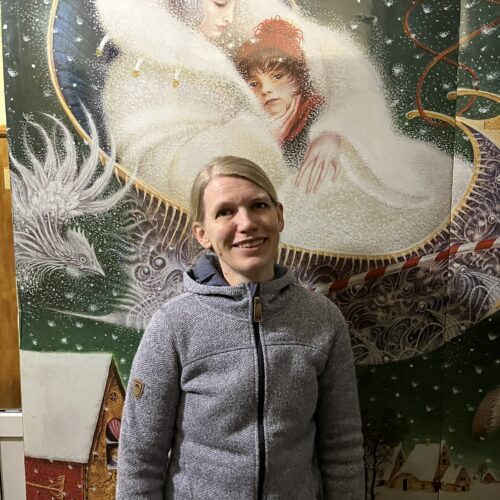
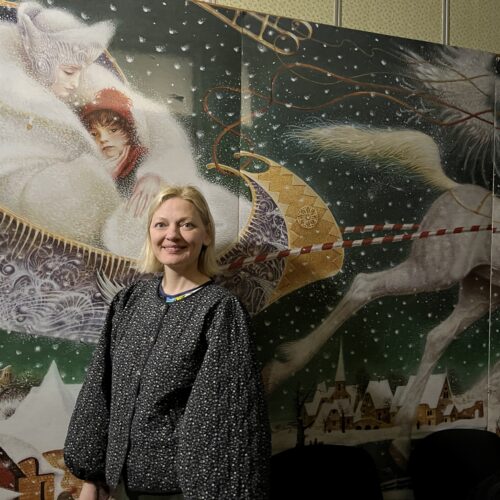
At the National Vasyl Stefanyk Prykarpattja University in the industrial city of Ivano Frankivsk, our colleagues Professor Alla Martynets and Associate Professor Danylo Reha welcomed us. Every year, their Department of Literature organizes an essay competition for children and young people inspired by H. C. Andersen. This year’s essay competition, titled “Andersen Unites Hearts,” was held on April 6th and co-organized by Associate Professor Alla Martynets and Inga Kapustian. With 152 students participating from 17 regions of Ukraine, the event provided a unique opportunity for reflection and understanding of Andersen’s legacy among Ukrainian readers. This type of cultural exchange event not only fosters a deeper appreciation for Danish literature but also strengthens educational and cultural ties between Ukraine and Denmark.

At the award ceremony, Inga Kapustian talked about Ukrainian translations of Hans Christian Andersen’s fairy tales through the ideological filter of the Soviet era, which has cleansed them of Christianity and reference to death, and about the necessity of new translations from Danish into Ukrainian; Marie Louise Nosch presented her favorite fairy tale The Flax, “Lon” in Ukrainian, which perhaps today reminds us of recycling and sustainability but also hope and ambition. Then some of the children and young people read their essays to the audience: A little girl about having Hans Christian Andersen as a secret friend who tells stories; a teenager from Kramatorsk, now displaced in Dnipro, appeared on the screen and presented her essay on the Snow Queen, death, evil in a mirror that we hold up in front of ourselves.

[See photos below, ed.]

Displaced students, scholars and universities 

Rector of the National Vasyl Stefanyk Prykarpattja University, professor Igor Tsependa, himself educated in history and political science and a former diplomat, says that the university has approx. 18,000 students, but the number is uncertain: Some have been conscripted into the army, an unknown number have fallen in war; many Ukrainian students attend classes from neighboring countries; eastern Ukrainian students have fled here; moreover, the National Vasyl Stefanyk Prykarpattja University has welcomed and now hosts the displaced East Ukrainian universities of Lugansk and Kherson, including their students and researchers.

[See photos below, ed.]

The cultural textile heritage

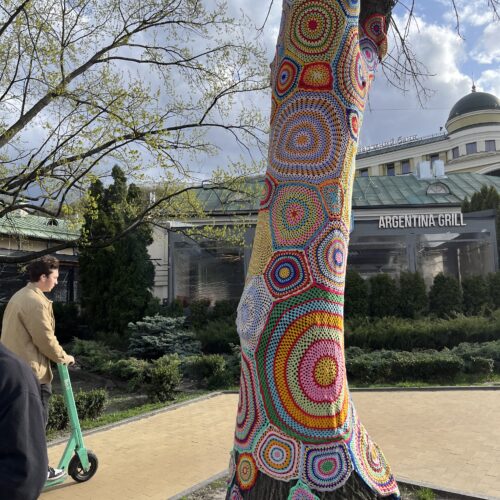
Wherever you go in Ukraine, you will see how young and old wear traditional embroideries, on clothing or incorporated in designs. TheVychyvanka is worn by men, women and children on festive events, but museums and costume collections show that the textile cultural heritage is much richer, more colorful and more creative than this shirt: weavings, various embroidery techniques, band weaving or tablet weave, adornments with feathers, yarns and the mollusk money cowrie (Monetaria moneta) used as shell money or decoration on costumes.

[See photos below, ed.]

Final thoughts

“You are the first international colleagues in more than two years,” a Ukrainian education manager exclaims when she sees us. Another says “in the past, research colleagues regularly came from abroad – now only delegations from ministries come to Ukraine, we miss international researchers and students.”

This shows that science and research-based education are not high enough on the agenda in the international focus on aid and reconstruction of Ukraine. If just 1 % of Ukraine’s aid was earmarked for universities and science, Ukraine would be better equipped in the future and for EU membership. The birth rate is very low, and many young people are killed or have fled abroad, so the future small generations must become even better educated than before.

[See photos below, ed.]

Rejsedagbog fra Ukraine: Kapitel 4

Rejsedagbog fra Ukraine: Kapitel 4

Besøg på Ukrainian Catholic University, Ivan Franko National University i Lviv – og flere børnebogsforlag

I begyndelsen af april rejste en delegation af fire forskere i regi af Videnskabernes Selskab til et krigsramt Ukraine, hvor de bl.a. besøgte flere af landets store universiteter. De fire forskere er tidligere præsident for Videnskabernes Selskab Marie-Louise Nosch, DUA-medlem Birgitte Pristed, Inga Kapustian og Nadiia Pavlyk. Mød dem her, i 4. kapitel af en miniserie og dagbog over deres rejse.

Fotos: medmindre andet nævnes, er fotos taget af de delegerede. I denne artikel tilhører udvalgte fotos, markeret med UCU’s logo, Ukrainian Catholic University

I dette kapitel skal vi bl.a. høre om deres besøg ved Ukrainian Catholic University, Ivan Franko National University i Lviv og flere børnebogsforlag, der udgiver bøger om krigen i børnehøjde.

Hver uge i maj udkommer et nyt delkapitel fra rejsedagbogen.

*Teksten i serien er forfattet på engelsk og er skrevet af forskerne selv.

The Ukrainian Catholic University is a small, private elite university with only 1800 students and impressive research environments of Artificial Intelligence on a beautiful and modern campus. We were warmly greeted by the three Vice-Rectors: Yaroslav Prytula – Provost, Dmytro Sherengovsky – Vice Rector for Outreach, and Sophia Opatska – Vice Rector for Strategic Development.

The leadership explained inspiring measures both to sustain and retain the most talented students and young scholars but also measures of inclusion of vulnerable or disabled students and citizens in campus life.

[See article from visit, ed.]

[See photos below. All pictures in the gallery below marked with the logo of the Ukrainian Catholic University belong to the Ukrainian Catholic University; the application of the logo to the pictures was done by the Royal Danish Academy of Sciences and Letters to ensure correct photo crediting, ed.]

Meeting students and staff of International relations at Lviv University
In a beautiful building from the 19th century at the great Ivan Franko National University in Lviv, one of Eastern Europe’s oldest universities, an interdisciplinary faculty for International Relations has been established with political science and many languages, including Estonian and Scandinavian, and professor and dean Markiyan Malskyy, former ambassador to Poland, trains a new generation of Ukrainian diplomats here. We were warmly welcomed by Dr. Borys Sulym and Professor Markiyan Malskyy who invited us to join the class and give a short talk.

However, the class was abruptly interrupted by an air raid alarm, prompting us to continue our discussion in the shelter. Despite the unexpected interruption, the students expressed great enthusiasm in engaging with us foreign guests. They were eager to discuss student life, research perspectives, European values, and strategies for developing a humanistic and democratic society. This experience underscored the resilience and determination of both the academic community and students in Lviv amidst challenging circumstances

[See photos below, ed.]

Children’s book publishers in Lviv
Nadiia Pavlyk and Birgitte Pristed conducted fieldwork interviews with director Bogdan Trojanovs’kii and editor Lyubov Kindratovych of the Greek-Catholic publishing house Svichado, founded in 1987 as an anti-Soviet underground publisher and today housed in a beautifully renovated monastery in Lviv. Normally, the production of hand-illustrated books is a demanding and time-consuming process. But only two months after Russia’s full-scale attack on Ukraine, Svichado launched its first book about the war for children by the artist Bogdana Bondar about the famous cargo aircraft An-225 Mriya (transl. Dream: heavenly airlines) from the battle of Antonov Airport. By interpreting the meaningless of war within a religious framework, Svichado seeks to bring children a sense of hope.

At the Lviv-based creative space FEST! we visited the 2001 founded Old Lion Publishing House, one of the leading Ukrainian children’s book publishers, and interviewed director Marjana Savka and editor Natalka Maletych. The remarkable facade of the tall publishing building features a large dimensioned “book shelf” in the pop style of roadside architecture, currently displaying a cover of the story about Tor Tractor, who is Dragging Away the Tank. The publishing house is full of children, in the ground floor there is a children’s book cafe and a kindergarten, which was opened by the director to show her employees that children and career do not exclude each other.

[See photos below, ed.]

Rejsedagbog fra Ukraine: Kapitel 3

Rejsedagbog fra Ukraine: Kapitel 3

Gensyn med kolleger, besøg på det Skandinaviske Gymnasium i Kyiv og det Dansk-Ukrainske Ungdomshus og et møde med politiker Yevheniya Kravchuk

I begyndelsen af april rejste en delegation af fire forskere i regi af Videnskabernes Selskab til et krigsramt Ukraine, hvor de bl.a. besøgte flere af landets store universiteter. De fire forskere er præsident for Videnskabernes Selskab Marie-Louise Nosch, DUA-medlem Birgitte Pristed, Inga Kapustian og Nadiia Pavlyk. Mød dem her, i 3. kapitel af en miniserie og dagbog over deres rejse.

Fotos: medmindre andet nævnes, er fotos taget af de delegerede

I dette kapitel skal vi bl.a. høre om deres gensyn med forskerkolleger, der tidligere har været tilknyttet forskningsinstitutioner i Danmark med støtte fra programmet Scholars at Risk. Vi skal også høre om deres besøg på det Skandinaviske Gymnasium i Kyiv, om det Dansk-Ukrainske Ungdomshus og deres møde og samtale med politiker Yevheniya Kravchuk.

Hver uge i maj udkommer et nyt delkapitel fra rejsedagbogen.

*Teksten i serien er forfattet på engelsk og er skrevet af forskerne selv.

Reunion with Scholars at Risk – Ukraine (SARU)

In spring 2022, Ukrainian scholars came to Denmark with grants from Scholars at risk, and most were hosted at Aarhus Institute of Advanced Studies at Aarhus University. Many have returned to Ukraine after their research stay in Denmark. Our Danish-Ukrainian delegation trip included a reunion with some of these colleagues, such as Vice Rector of Strategic Development at the Ukrainian Catholic University, Lviv, professor Sophia Opatska who was affiliated with the Department of Management, School of Business and Social Sciences, Aarhus University, and Dr. Anastasiia Zymaroieva who were both SARU fellows at AIAS and AU in 2022.

Anastasiia Zymaroieva is an Associate Professor, Head of the Ecology Department in Polissia National University, and Senior researcher at The Chernobyl Radiation and Ecological Biosphere Reserve, Ukraine. She was affiliated with the Department of Biology, Faculty of Natural Sciences, Aarhus University. As an extra bonus, on the train in Poland, we met Dr. Alina Korobeinyk, formerly at Chuiko Institute of Surface Chemistry, in the National Academy of Sciences of Ukraine, and in Aarhus she was affiliated with the AIAS and the iNano Center. Now she is working in the University of Lublin, Poland.

[See photos below, ed.]

Teaching the Nordic languages and literature in Ukrainian schools

Since 2004, the Scandinavian gymnasium in Kyiv has taught children and youth Danish, Swedish, Norwegian and Finnish as third languages after Ukrainian and English. In Kyiv we visited the Scandinavian Gymnasium, where the school director, Tetiana E. Pushkariova, told us about the challenges of education during wartime and outlined the school’s vision for curriculum development. This vision focuses on Scandinavian languages and cultures, alongside English and German as essential international languages widely studied in Ukraine.

Currently, the school has one Danish language teacher and two Swedish and Norwegian language teachers. Despite successfully continuing language education for 20 years, the pandemic and war are challenging. There is a need for updated textbooks and closer cooperation with the countries whose languages are being studied. We had the opportunity to meet children studying Danish as a second foreign language, and it was great to witness how they were communicating eagerly in Danish. We visited the school’s shelter with room for 1000 children.

Additionally, the Danish language teacher, Antonina Stopa and Inga Kapustian discussed future online possibilities for organizing seminars about the literary heritage of H.C. Andersen and their translations into different languages from Danish. The aim is to practice language skills and broaden reading horizons, enhancing students’ linguistic proficiency and cultural understanding.

During the war, the gymnasium serves not only as an educational institution but also as a community shelter for around 1000 students and mothers with children. To fulfill this dual role, the school is equipped with all necessary facilities, including water supply and electricity generators.

[See photos below, ed.]

The visionary and energizing leader Julie Arnfred Bojesen introduced us to the Danish-Ukrainian Youth House in Kyiv. It is a platform to strengthen youth participation through dialogue, capacity building and partnerships. This is where young Ukrainians meet every week to form associations and host debates.

Young people take the lead in this house and they leave their statements and artistic works on the walls. Underground is a shelter and also podcast studio where one of Ukraine’s star influencers “the red-painted fox” broadcasts her psychological analyses of the classics of literature. Soon another Danish Ukrainian Youth House will open in Mykolaiev.

[See photos below, ed.]

Our meeting with Yevheniya Kravchuk, a Ukrainian politician and Deputy Member of the Permanent Delegation to the Parliamentary Assembly of the Council of Europe (#PACE), sparked stimulating discussions and paved the way for future engagements. During our conversation, Marie Louise Nosch shared insights into research challenges, emphasizing the importance of integrating Ukrainian researchers into the European scientific community. Of special interest to us is, that Yevheniya Kravchuk is the chair of the PACE Sub Committee on Youth, and we therefore share a passion for education and youth. Nataliia Pavlyk and Inga Kapustrian underscored the significance of collaboration for advancing academic freedom, human rights, and democratic values.

Furthermore, Ms. Kravchuk expressed her intention to visit Denmark at the end of May as part of her diplomatic agenda. This upcoming visit presents an excellent opportunity to further strengthen ties and explore avenues for bilateral cooperation in research and policy development.

[See photos below, ed.]

Rejsedagbog fra Ukraine: Kapitel 2

Rejsedagbog fra Ukraine: Kapitel 2

Besøg på det ukrainske videnskabsakademi, Europarådets kontor i Kyiv, børnebogsforlag og mere

I begyndelsen af april rejste en delegation af fire forskere i regi af Videnskabernes Selskab til et krigsramt Ukraine, hvor de bl.a. besøgte flere af landets store universiteter. De fire forskere er præsident for Videnskabernes Selskab Marie-Louise Nosch, DUA-medlem Birgitte Pristed, Inga Kapustian og Nadiia Pavlyk. Mød dem her, i 2. kapitel af en miniserie og dagbog over deres rejse.

Fotos: medmindre andet nævnes, er fotos taget af de delegerede

I dette kapitel skal vi bl.a. høre om deres besøg på det Ukrainske Videnskabsakademi (NAS) og på Europarådets kontor i Kyiv. Vi skal også høre om besøg på børnebogsforlag i relation til Nadiia Pavlyk og Birgitte Beck Pristeds forskningsprojekt PUBLISH, ligesom vi skal høre om andre tanker og perspektiver, turen affødte.

Hver uge i maj udkommer et nyt delkapitel fra rejsedagbogen.

*Teksten i serien er forfattet på engelsk og er skrevet af forskerne selv.

The National Academy of Ukraine is the country’s largest and most prestigious research institution with ca. 25,000 staff laboratories, institutes, libraries and botanical gardens. Since February 2022, the Royal Danish Academy of Sciences and Letters has been in contact and coordinated help with NAS. It was their president, the physicist Anatoly Zagorodny, who first alerted us to Russia’s systematic destruction of Ukraine’s universities and scientific research infrastructure. Since then, we have collaborated with the presidents of the scientific academies of the USA, Germany, Great Britain and Poland on an action plan for Ukraine’s scientific present and future: scholarships for displaced researchers, aid for infrastructure and reconstruction, free digital access to journals, to focus on that part of the physical reconstruction must be directed towards science and university teaching.

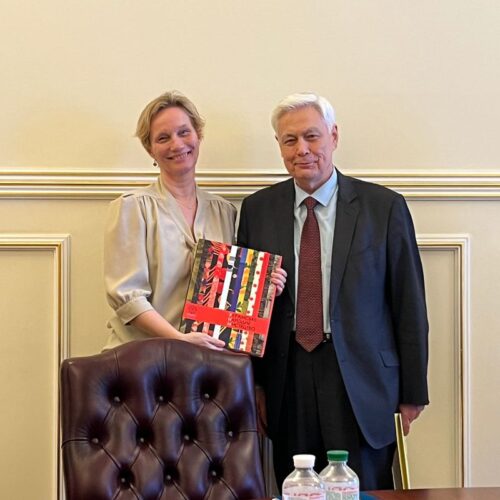
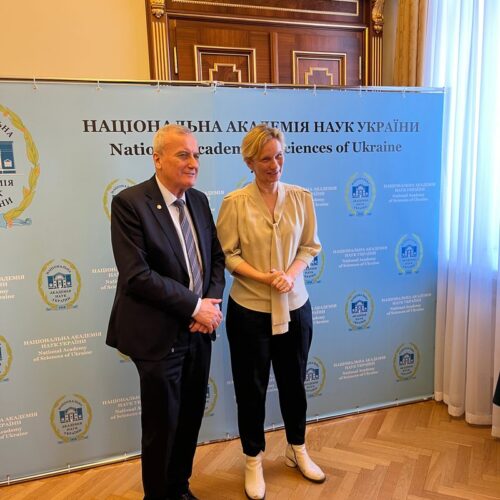
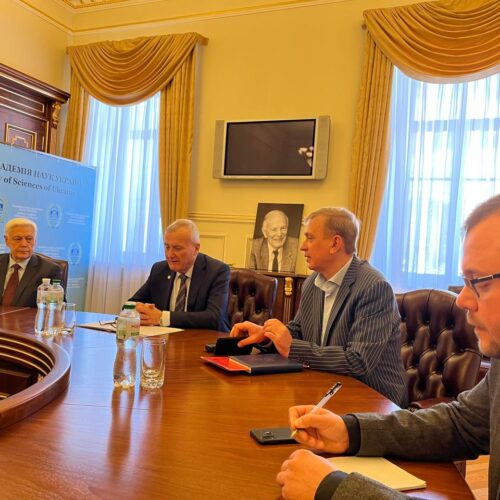
In the beautiful Academy building, we meet Academy President Anatoly Zagorodny and Vice President for the Social Sciences and Humanities Professor and former ambassador Serhii Pyrozhkov. President Zagorodny acknowledged Denmark’s support, emphasizing the Academy’s current focus on research and developments aimed at strengthening the nation’s defense capability, security, and social sciences and humanities for Ukraine’s post-war revival. We reported on ongoing networking activities between Danish and Ukrainian scholars at the Royal Danish Academy of Sciences and Letters and about new Danish-Ukranian research projects.

[See pictures below, ed.]

Visit to the Council of Europe Office in Kyiv. Perspectives on research on Ukrainian youth in Ukraine and displaced children

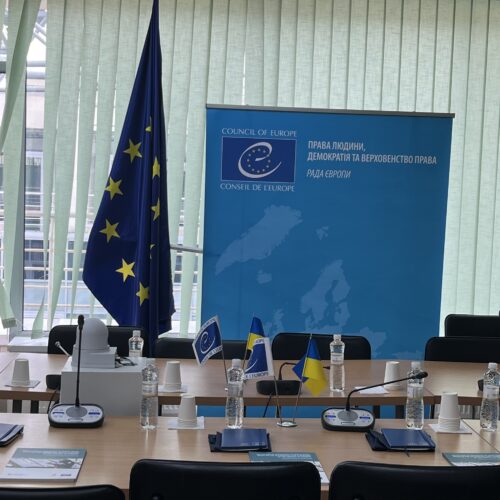
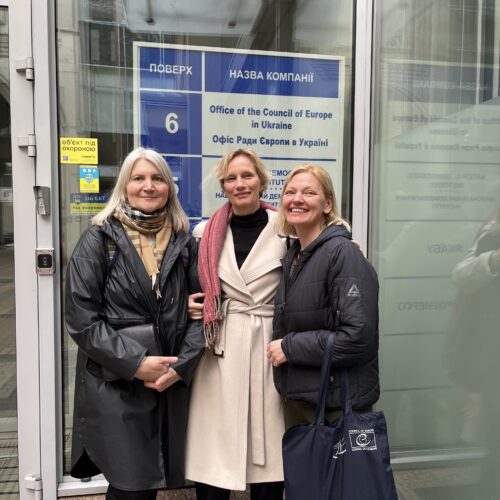
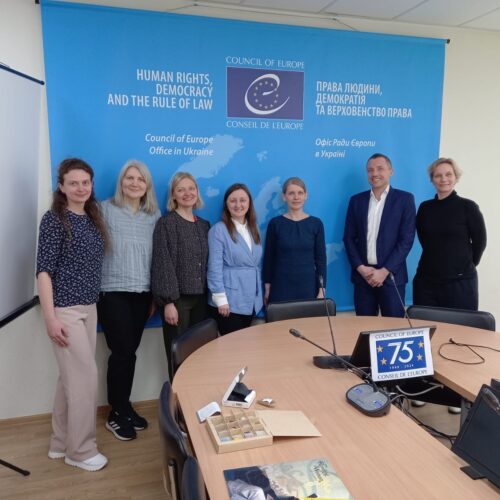
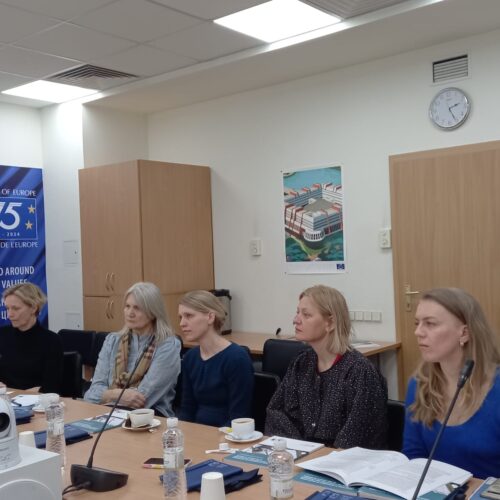
Inspiring meeting on April 3rd with the Council of Europe in Ukraine and the Danish-Ukrainian science delegation. We discussed the excellent use of research-based evidence in the Council of Europe and the conditions of science; academic freedom; preservation of cultural heritage; knowledge-based society; the need to rebuild science institutions in Ukraine and their integration in Europe; and the inspiring “Youth for Democracy in Ukraine” project.

Erlend Falch, Deputy Head of the Council of Europe Office in Ukraine, presented the current Action Plan of the Council of Europe for Ukraine “Resilience, Recovery and Reconstruction” 2023-2026. His team is implementing no less than 27 projects, including civic participation, IDP rights, youth policy and youth work, combating violence against women, protecting children’s rights, anti-discrimination, and rights of national minorities. Erlend Falch emphasized the role of the Register of Damage for Ukraine (RD4U) and the opening of its new office in Kyiv. The office will help the Register raise awareness amongst various stakeholders within Ukraine, including regional and local authorities, businesses, civil society organizations, and the general public.

Olena Chernykh, Senior Project Officer, presented how the project “Youth for Democracy in Ukraine” contributes to the development of youth policy and youth work in Ukraine in time of war by mapping the needs and series of training programs on social cohesion, trauma-informed youth work, non-formal education. It applies an evidence-based approach to all activities by developing and conducting research on the needs and challenges of youth centres and spaces, youth councils, and youth policymakers working with young people under war conditions.

Nadiia Pavlyk, a member of the European Pool of Youth Researchers, expert of the Project, shared her experience of co-operation with the Council of Europe and her recent contribution to the study on new occupational standard “Youth Worker”, the mapping of formal education practices in the field of youth work and the Collection of youth work experience in Ukraine in time of aggression of the Russian Federation.

Erlend Falch as described the “Comprehensive assessment of the сhild-friendly justice system in Ukraine”, developed at the request of the Ministry of Justice of Ukraine and the Interagency Council on Child-Friendly Justice. The assessment examines the implementation of child-friendly justice standards, identifies the main trends and key problems in ensuring the procedural rights of the child in criminal cases, civil and administrative cases involving children and the protection of their rights and interests. Importantly, it provides recommendations for the National Strategy for reforming the justice system and protecting children’s rights in the field of justice 2024-2028.

Birgitte Beck Pristed, Associate Professor at AU, member of the Danish Young Academy, mentioned the importance of contributing to science diplomacy and forming links with different research institutions for young researchers.

Inga Kapustian, postdoc at Department of Culture and Language, The University of Southern Denmark, presented the recent study on needs and challenges children and young people from Ukraine are facing in Denmark and other Nordic countries.

Thank you to the Office of the Council of Europe, Ukraine, Kyiv and to:

  • Erlend Falch, Deputy Head of the Council of Europe Office in Ukraine
  • Olena Chernykh, Senior Project Officer, Youth for Democracy in Ukraine project
  • Liudmyla Kindrat, Project Officer, Youth for Democracy in Ukraine project

[See pictures below, ed.]

A nation in constant alert and peril. Security measures

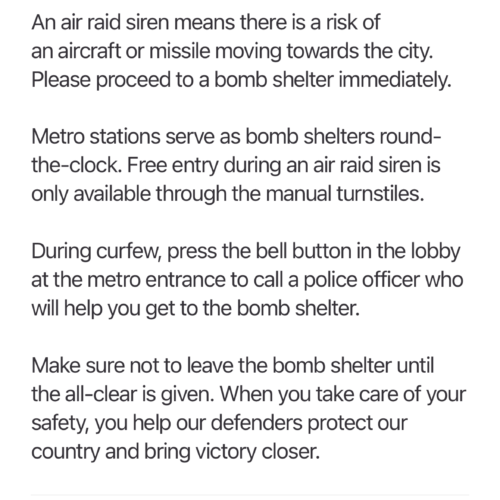
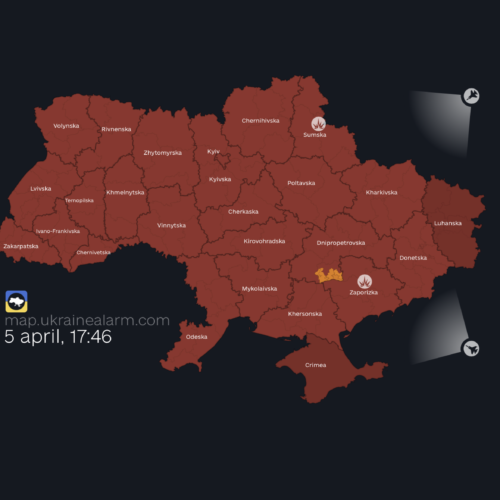
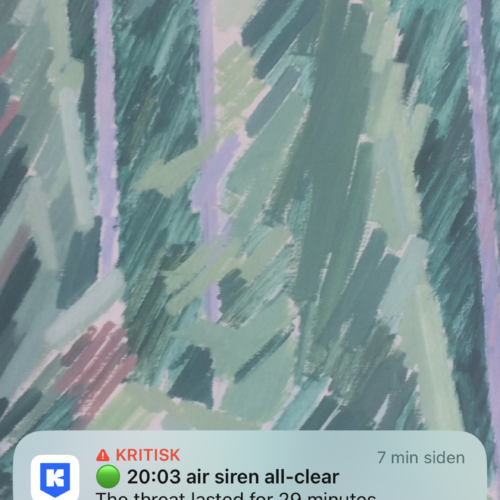
We arrive in the capital and install Kyiv Digital, an alarm app that will notify us of air strikes, missile attacks and the nearest shelter. The app also has links to public transport, veterans’ associations, parking, concert tickets and fundraising, so it exemplifies the incredible mix of everyday life and war that Ukrainians have been living in for more than two years. On a digital map, Ukraine’s regions are shown: dark red at the front, lighter where there are daily attacks and gray where there are briefly no missiles on the way.

Ukrainians also have Telegram and other feeds with information about missile types, and they are on a first-name basis with ice buckets and patriots. The app shows us whether attacks come from Russia or the Black Sea.

“It takes 2 minutes for the missile to reach Kyiv”, say our colleagues, “and 3 more minutes to reach Lviv”.

We are equally startled by the loud alarm tone, worried about whether the app even works, and about the real danger of being hit by missiles or anti-aircraft fire. The alarm went off four times during our three-day delegation visit.

Children’s book publishers in Kyiv

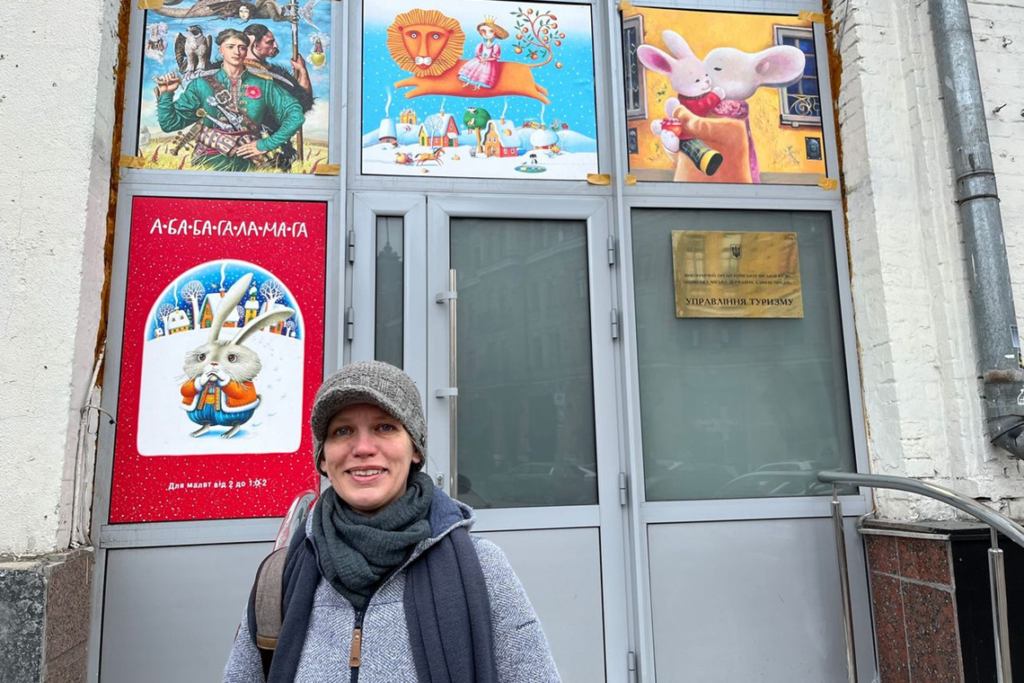
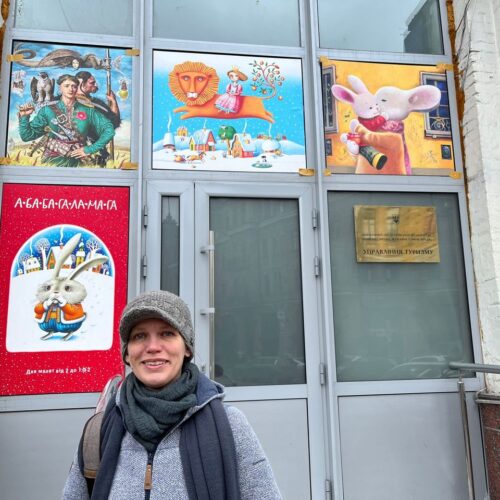
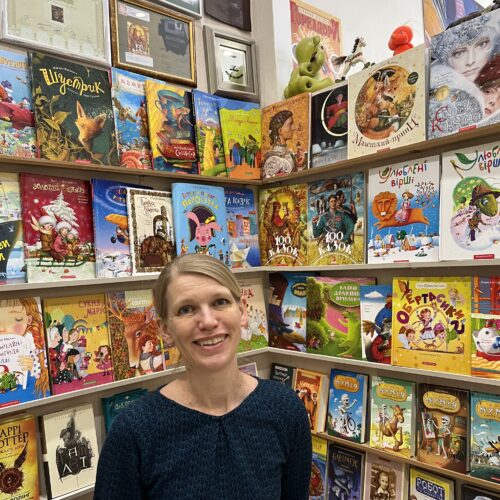
As part of their research project “PUBLISH” which documents children’s books in the Russia-Ukraine war, Birgitte Pristed and Nadiia Pavlyk visited children’s book stores and publishers’ showrooms in central Kyiv, including the renowned A-ba-ba-ha-la-ma-ha which publishes books for children between 2 and 102. We collected and loaded our suitcases with around 30 new illustrated Ukrainian children’s books that resonate child experiences of war and dislocation. Another 60 books are now underway to the International Children’s Book Collection at the AU research library of the Danish Pedagogical University. An impressive variety of new book titles on a difficult topic, especially given how Ukrainian children’s book publishers operate under wartime conditions.

[See pictures below, ed.]

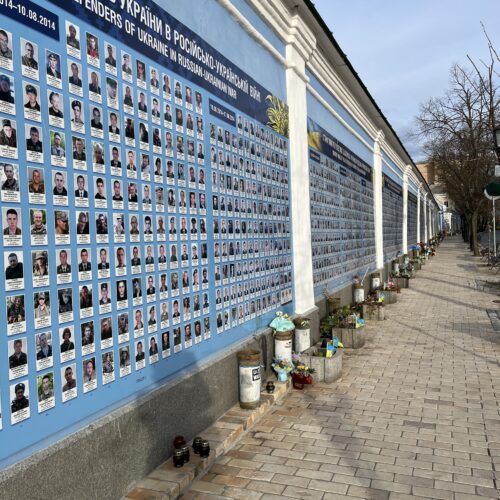
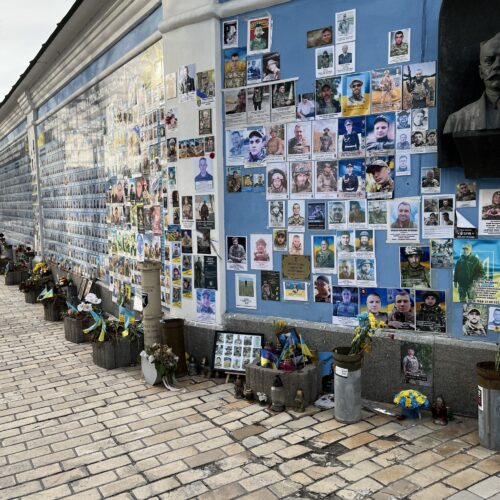
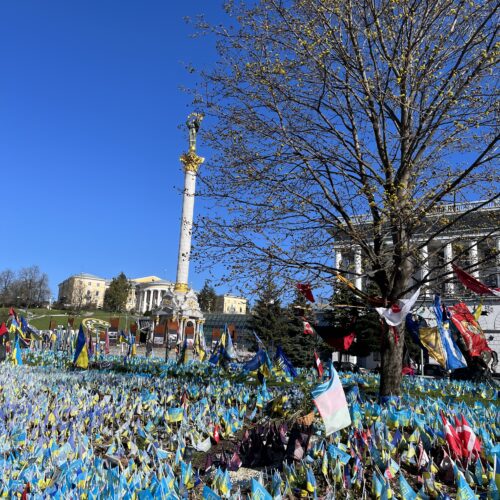
Memorial sites in Kyiv. Words cannot describe the endless rows of photo portraits of the fallen soldiers

[See pictures below, ed.]

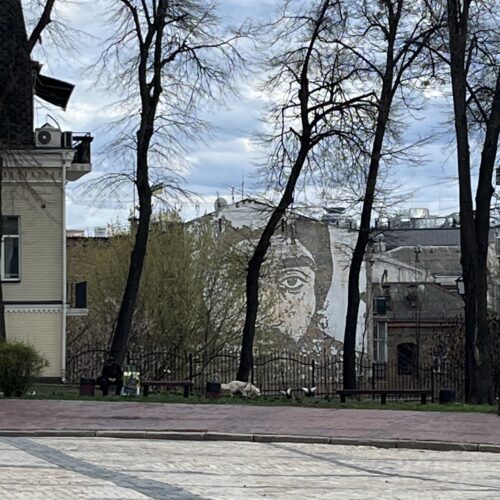
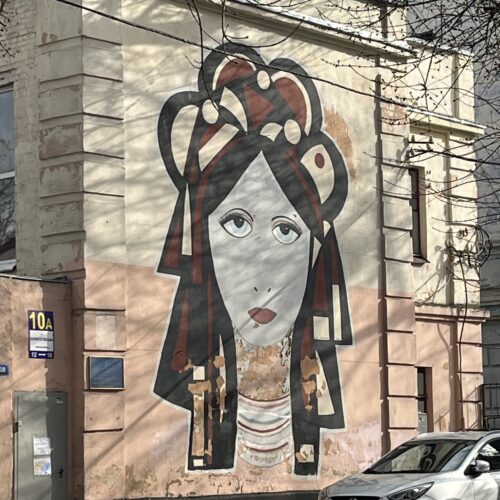
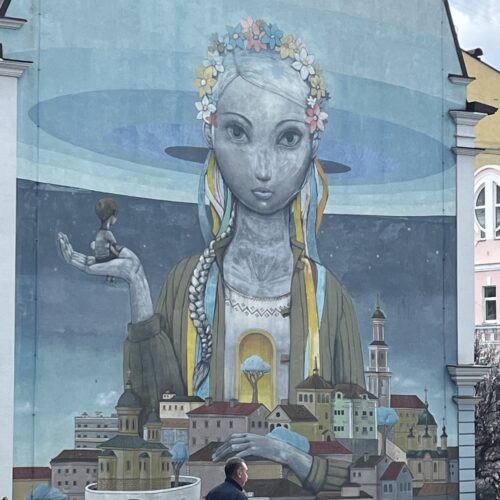
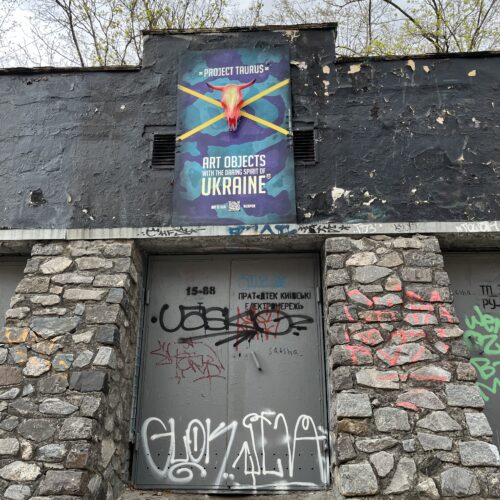
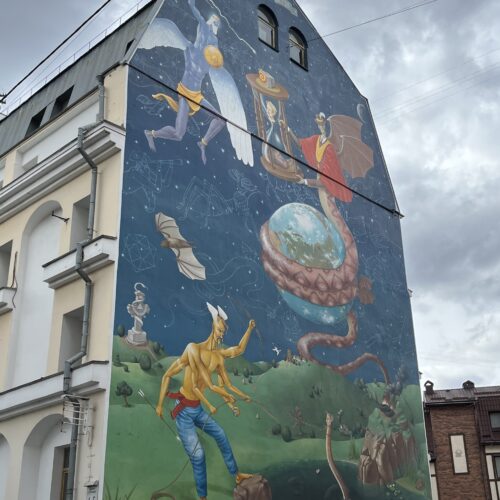
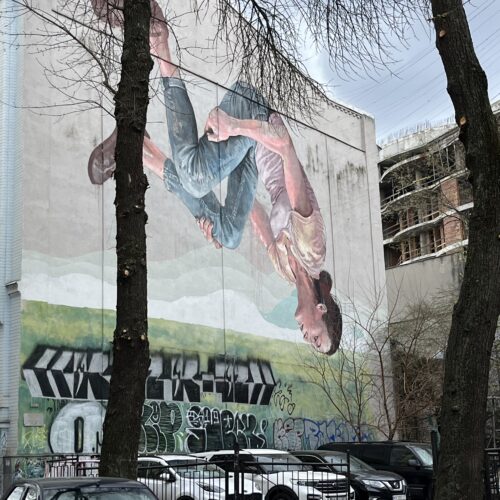
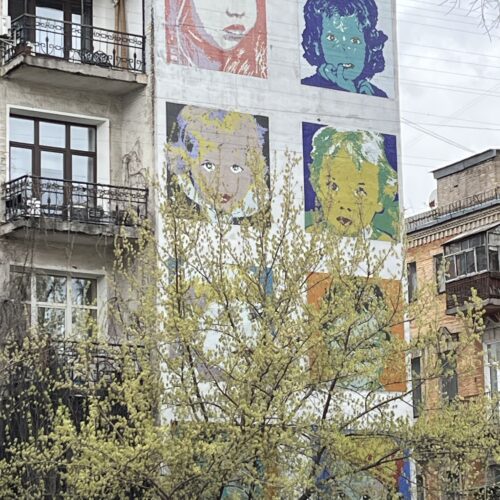
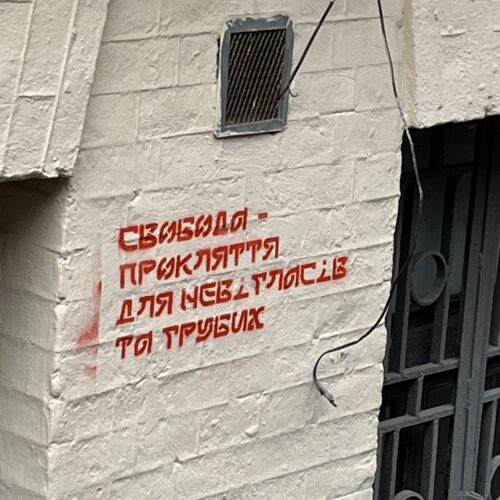
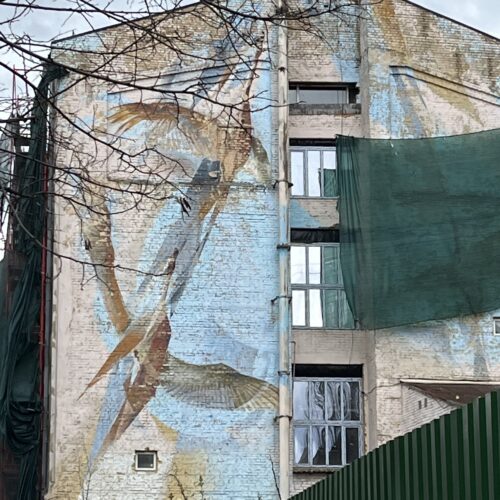
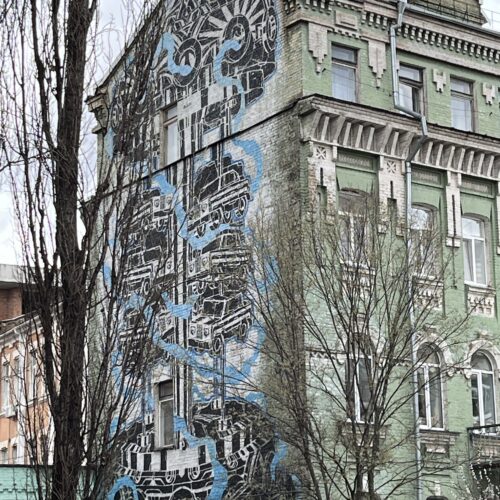
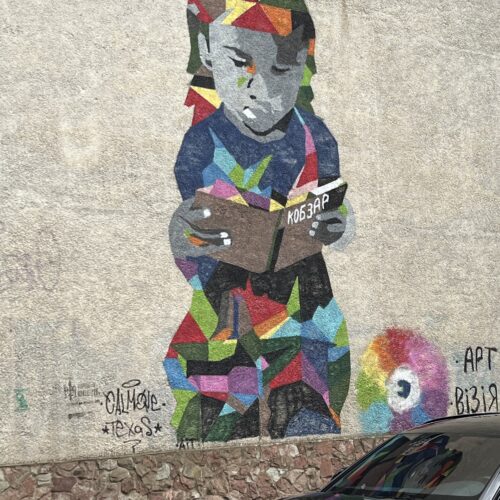
Who would have imagined this? Kyiv is also a city of mural arts

[See pictures below, ed.]

Rejsedagbog fra Ukraine: Kapitel 1

Rejsedagbog fra Ukraine: Kapitel 1

Mød den dansk-ukrainske videnskabsdelegation

I begyndelsen af april rejste en delegation af fire forskere i regi af Videnskabernes Selskab til et krigsramt Ukraine, hvor de bl.a. besøgte flere af landets store universiteter. De fire forskere er præsident for Videnskabernes Selskab, Marie-Louise Nosch, DUA-medlem, Birgitte Pristed, Inga Kapustian og Nadiia Pavlyk.

Fotos: medmindre andet nævnes, er fotos taget af de delegerede

Mød dem her, i 1. kapitel af en miniserie, hvor vi får en introduktion til dem hver især og ikke mindst formålet med rejsen. Hver uge i maj løfter vi sløret for endnu et kapitel, alle skrevet af de rejsende selv, som giver os et særligt indblik i deres oplevelser på turen.

Hver uge i maj udkommer et nyt delkapitel fra rejsedagbogen.

*Teksten i serien er forfattet på engelsk og er skrevet af forskerne selv.

We are the Danish-Ukrainian science delegation visiting Kyiv, Lviv and Ivano-Frankivsk, 2-7 April 2024; four scholars; four women; two Ukrainians and two Danes; from three Danish universities [Aarhus Universitet, Syddansk Universitet og Københavns Universitet, red.]. With the mission to exchange knowledge and learn much more. Our cross-cutting academic fields are youth, culture, academia, and humanities.

After two years of full-scale war, we went to visit Ukrainian research and education institutions. Our purpose: To demonstrate to Ukrainian scientists and research institutions our support, readiness, and desire to support the positive development of science in Ukraine.

Who are we in the Danish-Ukrainian science delegation?

Postdoc Inga Kapustian

Postdoc Inga Kapustian is a scholar at the Hans Christian Andersen Center, Department of Culture and Language, The University of Southern Denmark (SDU) since 2022. The research focuses on Translation and Social Semiotics, particularly on translations of Hans Christian Andersen’s  works before, during, and after the Soviet era. She also works on intertextuality and Cross-Cultural Influences in translation, as well as examining Readers’ reception and cultural adaptations. Now she is working on a research project titled “Hans Christian Andersen and World Literature: Ukrainian Perspectives.”

På foto: Inga Kaspustian

Associate Professor Birgitte Beck Pristed

Birgitte Pristed is an Associate professor at the School of Culture & Society, section of Russian and Balkan studies, Aarhus University, Denmark. [She writes, ed.]: I am a member of the DUA/DanishYoung Academy 2019-2024, and was co-chair 2023-24. I conduct research on publishers of children books about the war published in Ukraine and by independent publishers in Russia. My research interests: Book history, publishing studies, Soviet and post-Soviet book and print culture, contemporary publishing, and illustrated children’s books. Knowledge and science diplomacy, research conditions for younger scholars. I am the PI of the project: “PUBLISH: Children’s books in the Russia-Ukraine War” which investigates contemporary publishing of Ukrainian and Russian wartime children’s books that represent child experiences of war and migration, and funded by the Aarhus University Research Foundation, AUFF Nova.

På foto: Birgitte Beck Pristed. Foto: Lars Svankjær/Videnskabernes Selskab

Professor Nadiia Pavlyk

Professor Nadiia Pavlyk is amember of Department of Global Studies, Aarhus University, Denmark. She is a member of the Pool of European Youth Researchers (PEYR) (2024-2025), researcher of the project “Youth for Democracy in Ukraine”, former AUFF-Ukraine research fellow, Aarhus Institute of Advanced Studies (Denmark, 2022-2023), and Professor at the Department of Social Technologies at Zhytomyr Ivan Franko State University, Ukraine. [She writes, ed.]: I am a researcher of the project “PUBLISH: Children’s Books in the Russia-Ukraine War”, Department of Global Studies, Aarhus University (Denmark, 2024). My research focus: non-formal education for excluded groups, youth work and youth policy based on Council of Europe standards and approaches, shared reading for families, children’s books in the Russia-Ukraine war.

På foto: Nadiia Pavlyk

Professor Marie Louise Nosch

Professor and President of the Royal Danish Academy of Sciences and Letters Marie Louise Nosch explores traditional textiles and ancient history. [She writes, ed.]: Since 2022, I have collaborated with the other academies of Ukraine,  Poland, Germany, France, the UK, the USA and ALLEA to coordinate help and support to scientists in Ukraine. [See the, ed.] 10 points action plan.

In the Royal Danish Academy, I host a “Ukrainian Scholars’ Day” every six months to assist our Ukrainian colleagues in forming new professional networks while they are in Denmark. I also have a professional interest in Ukrainian costumes and textile techniques. With colleagues Associate Professor Yuliia Lazorenko, Postdoctoral Researcher Magali-Ann Berthon, Archaeologist Sophia Hayda, and Historian and Archaeologist Tatiana Krupa I published a paper: “Narrative and Material Tools of Resistance: mobilising textilecrafts, heritage and fashion in the context of Ukraine’s invasion  (2022-2023)” in Euroweb Anthology 2024. I have moreover collected short podcast narratives by Ukrainians who tell a story about a favorite piece of clothing.

På foto: Marie Louise Nosch. Foto: Lars Svankjær/Videnskabernes Selskab.

Se artikler om tidligere afholdte Ukrainian Scholars’ Days.