New president of the Royal Danish Academy of Sciences and Letters
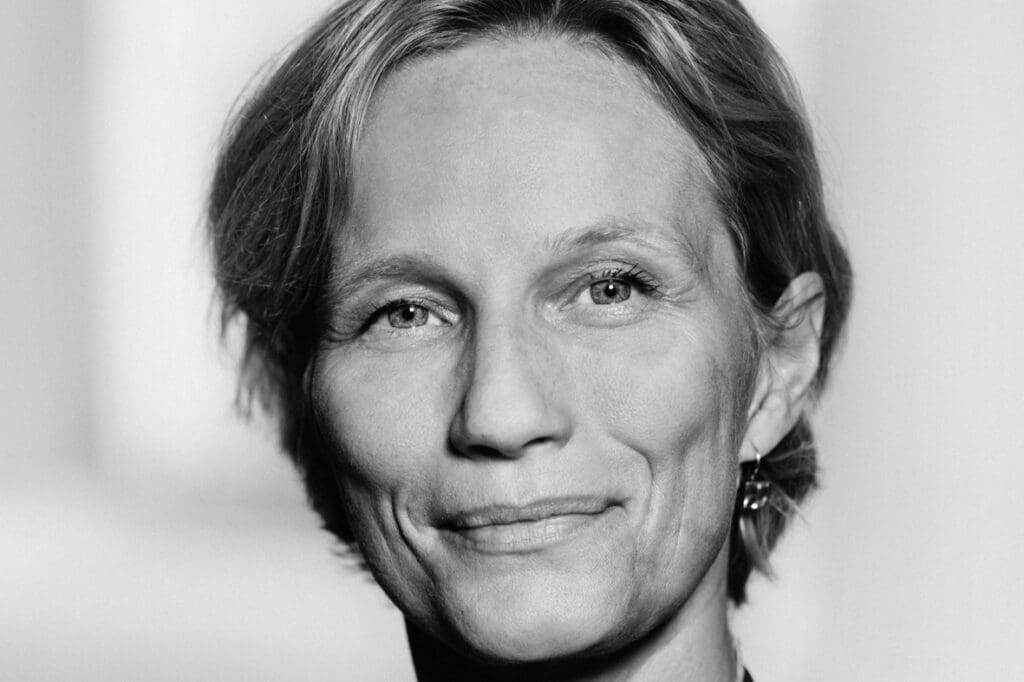
New president of the Royal Danish Academy of Sciences and Letters

The new President, elected by the members of the Academy, is Marie Louise Nosch, Professor at the University of Copenhagen, historian specialized in ancient Greek history, and textile researcher.

When the counting of the votes was finalized on Thursday night, the Royal Danish Academy, a more than 275 years old institution, was ready to welcome a new president. This meant that a new person was about to tread in the footsteps of people like King Christian VIII and world-renowned nuclear physicist Niels Bohr – and, most recently, Professor at the Niels Bohr Institute Mogens Høgh Jensen. So naturally, at the appointment of her, Professor Marie Louise Nosch made no secret of her excitement – and humility:

– “I am very pleased about the trust that the academy members have showed me, and I look forward to take on this new task in an academy so prestigious and so rich in tradition and in which the heroes and heroines of science throughout time have been regular visitors, she says.”

Marie Louise Nosch is 50 years old, she is a historian and textile researcher, and since 2009 she has also been a professor at the SAXO-Institute of the University of Copenhagen. She is a member of the board of the Velux Foundation, and throughout her career, she has spent more than 13 years studying and doing research in foreign countries, primarily in France, Italy, and Austria. In Denmark, she has previously acted as Director of the Danish National Research Foundation’s Centre for Textile Research as well as vice-president of the Danish Council for Research Policy, and she has even acted as an adviser to the German government in relation to basic research funding. Therefore, she is highly equipped to take on the presidentship which of course is political and requires excellent skills within communication and representation.

– “Right now, we live in a time with a high demand for science, and the Royal Academy manages to bring scientific research from across all fields together. The Academy works to promote basic research and to support interdisciplinary co-operation, and those are the exact values I seek to represent in my own work.”

During the last couple of years, the Academy has gone through somewhat of a modernization which, amongst other things, has brought forth an increase in communication initiatives such as events at Folkemødet on Bornholm, open house events on Kulturnatten, and the celebration of the 200th anniversary of H.C. Ørsted’s discovery of electromagnetism. Furthermore, it has added to the focus on the Royal Academy’s impact in the media as well as its political impact. This development is something that the new president hopes to sustain, just like she would also like to facilitate an even more outgoing academy:

– “We are experiencing an increase in people’s demand for knowledge and science, and the members of the academy are happy to share their knowledge and insights concerning both topics of current interest like covid-19 as well as the wonderful world that is basic science in general. It is my hope that politicians and journalists too will use the Royal Academy as a resource in relation to scientific discussions to make sure that important decisions are scientifically based and made on a well-informed background.”

The election was originally supposed to have taken place in May earlier this year, but because of covid-19 it was postponed until September. The new president will take office as of today. She will be taking over the job from Professor at the Niels Bohr Institute Mogens Høgh Jensen who has acted as president since 2016 and who has, moreover, also acted as Secretary General of the Academy from 2012-2016.

For more information on the above, please contact Head of Communications at the Royal Academy Kristoffer Frøkjær on kf@royalacademy.dk

About Marie Louise Nosch


50 years old, historian specialized in ancient Greek history, and textile researcher. She was elected Director of the Danish National Research Foundation’s Centre for Textile Research in 2005, and since 2009, she has been a Professor at the Saxo-Institute, University of Copenhagen. Today, her title is ‘Professor in Ancient History’ at the University of Copenhagen. She has lived and worked in more than 13 foreign countries, primarily France, Italy, and Austria, and she is also a member of the Austrian Academy of Sciences. From 2011-2014, she acted as vice-president of the Danish Council for Research Policy, and furthermore, she is a member of the Exzellenzkommission that advices the German government on basic research funding, and a member of the board of the Velux Foundation.


In addition to this, she has (with Professor Jens Hjorth) established the talent programme at the University of Copenhagen called ‘UCPH Forward’, and she regularly participates in the public debate and press. Nosch has been a member of the Royal Danish Academy of Sciences received research awards from Einar Hansens Forskningsfond, from the Danish Association of Masters and PhDs, as well as the Anneliese Maier Award from the Alexander von Humboldt Foundation, the Tagea Brandt Grant, and the Iris Foundation Award from Bard Graduate Center, New York. She has been appointed Chevalier dans l’Ordre des Palmes académiques de la République Française and she accepted the Science Prize of Dronning Margrethe II in 2019.

New publication on models for measuring the behavior of animals

New book from the Royal Danish Academy of Sciences and Letters

Attempted solution to a fundamental psychobiological problem

Photo: Front page of publication
Iven Reventlow: Attempted Solution to a Fundamental Psychobiological Problem. How to Determine Individual and Milieu Parameters from Species-Typical Behaviour of Animals in Their Natural Environments.

The book sets out to find descriptive models for hierarchically organized behaviour using the relatively simple behavioural repertoire of the three-spined stickleback (Gasterosteus aculeatus L.) as a test case, but with potential generalizations to other species, including humans. In collaboration with statistician Georg Rasch, Reventlow arrived at determining quantitatively, for the first time in the study of behaviour, the relative effect upon a resulting, observed behaviour from the animal’s sensitivity, motivation etc. (individual parameters) on the one hand, and those of the natural environment (milieu parameters) on the other.

Of special interest for the psychobiology of sticklebacks are his results concerning the motivational systems, that ethologists presume control two kinds of overt behaviour, as he presents experimentally based arguments for the existence of a third autonomous motivation-system for the male stickleback’s building and maintenance of its nest which, together with the previously established two primary systems for mating and territorial defence, better explains the existing results than the ethologists’ two-system’s motivational hierarchy alone seems to be able to do.

As something also new, compared to traditional ethological methods, Reventlow presents a mathematical two-parameter model for the temporal development of motivation during an ongoing activity for the individual fish.

The ensuing Commentary and Postscript by Professor Jens Mammen address a number of problems inherent in the employed model and concludes that a ‘waiting-time’ model of the Weibull-type would be more advantageous for calculating the parameters and thereby quantifying the interaction between the individual and the milieu.

In fact this issue was intensely debated at the time in connection with the empirical investigations and raised some basic questions about demands to mathematical models and to collaboration between mathematicians and other scientists which were not fulfilled, leading to suboptimal conditions for the research project.

In the Postscript possible causes to these problems are discussed, building on available sources, including some biographical material. Also a simple way to use the proposed Weibull-model, applicable on both the original and possible new data, is presented.

The book can be purchased here.

Attempted Solution to a Fundamental Psychobiological Problem

Edited and translated by Arne Friemuth Petersen.

With a Commentary and a Postscript by Jens Mammen.

The Royal Danish Academy of Sciences and Letters.

Scientia Danica. Series H, Humanistica, 8 vol. 18.

2019. 136 pages. Illustrated. 100 DKK. Paperback.

New book

New book from the Royal Danish Academy of Sciences and Letters

Women, children and family in ancient Palmyra

Photo: Front page of publication
The spectacular ancient desert city of Palmyra was heavily destroyed during the Civil War in Syria. Shortly before the conflict escalated in 2011, the Palmyra Portrait Project was initiated. The research project is funded by the Carlsberg Foundation and headed by Professor and Centre director Rubina Raja.

The project’s important work with the Syrian cultural heritage has since been widely published, and the latest edited volume within the project is now available as part of the series Palmyrene Studies published by The Royal Dansih Academy of Sciences and Letters.

The new publication covers the roles of women and children within the family in Palmyra during the Roman period (1st–3rd centuries CE). The nine chapters are written by leading scholars of Palmyra, who all participated in a two-part workshop held at Aarhus University, under the auspices of the Palmyra Portrait Project in October 2016 and February 2017. The chapters discuss different aspects of family constellations and assess which implications different representations of women and children may have carried in relation to the Palmyrene family structure and wider Palmyrene society. By looking at portraiture and the written evidence from the city, this volume adds further aspects to our understanding of how women and children were perceived in Palmyra and how identity aspects were included in their portraiture and the written evidence.

The book can be purchased here.

Women, children and the family in Palmyra

Edited by Signe Krag and Rubina Raja

The Royal Danish Academy of Sciences and Letters.

Scientia Danica. Series H, Humanistica, 4 · vol. 10. Palmyrene Studies vol. 3.

2019. 228 pages. Lavishly illustrated. 250 DKK

ISSN 1904-5506 · ISBN 978-87-7304-419-3

Leading Danish scientist receives Niels Bohr International Gold Medal

Leading Danish scientist receives Niels Bohr International Gold Medal

Photo: Lars Svankjær / Royal Academy
One of the world’s leading researchers on catalysis, Prof. Jens Kehlet Nørskov from the Technical University of Denmark (DTU), received the Niels Bohr International Gold Medal on 7th october 2018, on Niels Bohr’s birthsday. The medal was founded by the Danish Society of Engineers, IDA, and it was presented by HM Queen Margrethe at an event at the Carlsberg Academy in Copenhagen.

Jens Kehlet Nørskov is the twelfth in the series of prominent physicists and engineers to receive the medal, which was established in 1955 as a tribute to the Danish physicist, Niels Bohr.

Jens Kehlet Nørskov has a comprehensive scientific production behind him, and is one of the world’s most cited researchers within his field. Following a long professorship at Stanford University in California, in 2018 he returned to Denmark in order to build a new centre for catalyst theory at the Technical University of Denmark (DTU).

The focal point for Jens Nørskov’s research is understanding physical and chemical processes on the surfaces of materials. His concepts and models constitute an important basis for understanding heterogeneous catalysis and they are widely applied within science and industry.

To quote the recommendation for the winner: “Jens Nørskov’s work has enormous social significance. The development of new catalysts to convert energy from the sun into green fuels and chemicals is of the utmost importance in avoiding the extensive use of fossil fuels, which is so destructive for the environment and climate. Jens Nørskov is at the scientific forefront of such efforts”.

This is the first time a Dane has received the gold medal since Niels Bohr himself received it in 1955. The award means that Jens Nørskov joins a prominent group of recipients, as over the years the medal has been given to no fewer than nine Nobel laureates.

This year’s award was a collaboration between the Danish Society of Engineers, IDA, the Niels Bohr Institute, the Royal Danish Academy of Sciences and Letters, and the Carlsberg Foundation, which has donated the EUR 100,000 that come with the medal.

Read more about the medal here.

Alert concering widespread rights abuses in Nicaragua

Human rights network alert

Widespread rights abuses in Nicaragua

Photo: International Human Rights Network [YouTube]
The International Human Rights Network of Academies and Scholarly Societies (H.R. Network) is an alliance of more than 80 national academies and scholarly societies that defends the fundamental rights of fellow academics and health professionals worldwide and supports academic and medical institutions that are under threat. We, the members of the H.R. Network’s Executive Committee, are deeply concerned about recent well-documented reports of widespread rights abuses in Nicaragua.

These abuses have been associated with attacks on institutions of research and higher education and interference with the work of health care personnel.

Since mid-April 2018, violence connected to social protests has reportedly led to the death of over 100 individuals, mostly students and other young people, and resulted in the injury and arbitrary detention of hundreds more. According to the preliminary observations of an Inter-American Commission on Human Rights (IACHR) working visit to Nicaragua (May 17-21), the situation has been characterized by the use of excessive force by State security forces and armed third persons with the aim of “dissolving the protests and inhibiting citizen participation”. Several UN human rights experts have also highlighted violence and harassment by the government against protestors. These actions are inconsistent with Nicaragua’s binding obligations under the American Convention on Human Rights and the International Covenant on Civil and Political Rights, which guarantee the rights to life, liberty, freedom of speech, and freedom of assembly.

Many of the brutal attacks that have occurred since April have taken place on or around university campuses, and university personnel who have spoken out about such attacks have been the target of threats and harassment. The erosion of safety and security in Nicaragua’s universities has already had a negative impact on the state of research and education in the country, and it threatens to have broader adverse consequences for Nicaraguan society.

We are also alarmed by reports that the above-mentioned incidents of violent repression have been compounded by interference with the principle of unhindered access to medical care and treatment of individuals in need, and that some public hospitals have refused emergency care to individuals injured in demonstrations. In the case of demonstrators who have died, some public hospitals have also reportedly refrained from arranging autopsies to document the cause of death.

We therefore call upon Nicaraguan authorities, in line with the country’s international legal obligations, to guarantee the exercise of the rights to freedom of expression and assembly and to put an end to the violence, arbitrary detention, threats and harassment used to inhibit individuals from expressing their views on social issues. We also request that Nicaraguan authorities take immediate steps to prevent interference with access to health care by individuals in need, as well as interference with cause-of-death documentation.

We strongly urge all individuals in the country to abstain from attacks on research and higher educational institutions in the country, to allow teachers and students to pursue their work in safety.

Finally, we ask that Nicaraguan authorities provide for an independent, transparent investigation into human rights abuses in the country and hold accountable those found to be responsible.

The researcher-based education

The annual science-policy meeting 2018

The theme for the Royal Academy Annual Science Policy Meeting and the White Paper 2018 is ”Researcher-based education at universities”. Not just research-based, but researcher-based because it is the individual researcher who disseminates knowledge based on their own, and others, research. Teaching and transfer of knowledge from researcher to students has taken place at quality universities for almost a thousand years. Not just as one-way communication, but as a true academic dialogue between students and and educators.

Program for the meeting:

  • Mogens Høgh Jensen, President of The Royal Danish Academy of Sciences and Letters: Welcoming speech
  • Liselotte Højgaard, Chairman of the Science Policy Committee: The annual meeting
  • Søren Pind, Minister for Higher Education and Science
  • Ann Arvin, Stanford University, Vice Provost and Dean of Research: Stanford’s recipe for the research-based education
  • Mette Bybjerg Brock, Student of engineering and former president of The Student Union, Technical University of Denmark: The Value of education
  • Coffee break
  • Andreas Roepstorff, member of the Science Policy Committee introduces key points from the White Paper
  • Panel discussion, introduced and chaired by Liselotte Højgaard
  • Refreshments and networking

Participation by invitation only.

Download the White Paper here.